
Tiny Tactics: 5 Tricks for Catching More Winter Trout on Midges

Image by Jillian Schuller
For most of the year, I’m a big-fly guy. During the spring, I drift large rubber-legged nymphs beneath indicators and splash hefty streamers down against the bank. In the summer, I twitch and skate big foam dry flies, and in the autumn, I fish baitfish patterns the size of Christmas stockings in search of something monstrous. Yet as soon as winter rears its frosty head, my plus-size fly-fishing mentality is set aside, and I hit the water with a more minuscule approach—fishing midges.
Midges are tiny, mosquito-like insects that continuously drift through the current and will even hatch on the surface during winter, providing a bit of action for anglers when they need it most. However, fishing these patterns can be incredibly frustrating. The tiny bugs don’t behave like the flies you imitate in warmer months, and there are times when trout flat out refuse to eat them no matter what you do. Yet there’s a certain satisfaction that comes from fooling a winter trout on such a tiny insect that makes the frustration worth the reward. In fact, so long as you keep a few things in mind, this style of fishing can give you some of the best angling action of the entire year.
Pick the Right Day
Even though winter trout will readily feed on midges when nothing else seems to be working in cold water, even the hungriest fish have their limits. During those brutal days when water temperatures have dropped significantly or when a low-pressure system has moved in to fill the river with ice and snow, trout will glue their bellies to the bottom and barely feed at all. Even if you make a perfect drift with a perfectly matched nymph right off a trout’s nose, it will likely stay lockjawed and stubborn until conditions improve. So, if you want consistent success, you have to pick the right days to go fishing.
Those perfect winter days—sun shining, air temps in the 40s and 50s—are obviously ideal. But there are other times when you can have a lot of luck. For starters, anytime you have an increase in air temperature, it can trigger feeding activity, even if temps rise only by a few degrees. If you’re experiencing a long cold front, that one 25-degree or 30-degree day during a week when temps have been hovering in the lower 20s can be all you need to hook up with a ton of hungry trout.
This same feeding-window idea applies to any day after—or even a few hours after—a low-pressure system has moved out of your area. After such a long period of holding fast and not feeding, slight changes in barometric pressure can trigger a frenzy. Midges both below and on top of the surface will be at the top of the menu.
So, while you can catch a few fish all winter long, it’s a good idea to keep your gear by the door and your eyes on the weather channel. Hit the water as soon as there’s a change. It can lead to some seriously hot fishing action on a cold winter day.
Drift the Edges
When you’re nymphing during summer, running your bugs along the bottom of deep holes and through the center of faster-moving water is often the best strategy. In winter, though, the small size of the flies and the positioning of the trout often means you have to fish the more cooperative edges of these locations.
In deeper water, active trout will often move out of the holes and into shallower water around the rim or edges of the drop-off, where stronger currents will consistently bring them more food. Fish these spots with an adjustable indicator rig that lets you slide your indicator closer to your flies. Hit the edges of the hole first to target the more active fish, then move your indicator higher up the line and drift the deeper water through the center.
Likewise, in faster-moving water, sluggish cold-water trout will rarely hold in the center of the current like they do in summer. Instead, they’ll move to the slower edges of rapids and plunge pools, picking off midges that get blown into the fringes. These spots are ideal for nymphing—the smaller patterns are much easier to control in slower water. Fish these areas by casting your rigs upstream into the faster current, then mending left or right so your flies get pulled into the slower seams along the edges.
Once your indicator slows down, raise your rod tip and strip in slack as your flies drift back downstream. This helps you maintain tension and create better hook sets as soon as you see your indicator twitch, flutter, or disappear.
Fish High and Low
One of the most challenging things about winter midge fishing is that, unless you see rises, you never really know where the trout will be feeding. Sometimes they’re gulping down emerging bugs right beneath the surface. Other times, they’re snapping up drifting larvae along the bottom with their noses practically touching the rocks. To circumvent the guesswork and stay on top of the fish, you often have to cover both zones at once by fishing a long leader with a lighter pattern and a heavier dropper.
Fishing two areas of the water column this way is a little different than fishing a pair of larger nymphs. It needs to be done on an extremely light leader and tippet—between 6X and 8X—which will have very little resistance in the current and drift more naturally.
Here’s the setup: Add two to three feet of tippet to your leader with a surgeon’s knot, leaving a long four-inch to five-inch tag end. Tie a slightly weighted or unweighted nymph such as a Zebra Midge or Disco Midge to the tag end. Then add a heavily weighted pattern—a Dawkins DD, Expresso Midge, or Wire Midge—to the end of your leader, and you’re ready to fish.
You can drift this high/low rig on a tightline or under a small indicator, casting a wide open loop to ensure the flies stay separated as they enter the water. After your cast, add a large upstream mend to create slack and allow the heavier pattern to sink to the bottom before beginning your drift.
Wait It Out
The best thing about fishing midges in winter is that trout will rise to them. Seeing those gentle, dappling ripples on the surface during the dead of winter is like suddenly finding a pulse in something you felt was long gone—and you can’t wait to make your first cast. However, waiting is often exactly what you need to do.
When trout are rising in the low, clear water of winter, they’re spookier than field mice who just heard the hoot of an owl. One stumbling step in the river or one overly splashy cast is all it takes for the fish to completely shut down. So instead of rushing in and hurling your flies at risers, you have to employ a bit of patience and wait for your moment.
When you first spot a couple of trout rising, move in slowly behind them, then hunker down and wait. As they feed and as air temperatures rise, more insects will begin to hatch and more fish will move into the area. In most spots, if you’re patient enough, you can turn two or three risers into 10 or 11 by simply holding out until every fish is keyed in on the hatch.
Once you have a good number of trout working in front of you, you’ll still want to wait until you’re in position behind the pod. Get everything ready, then cast toward the fish feeding at the back of the pack. When you hook up, you won’t spook the others—allowing you to systematically work through risers for as long as they’ll cooperate.
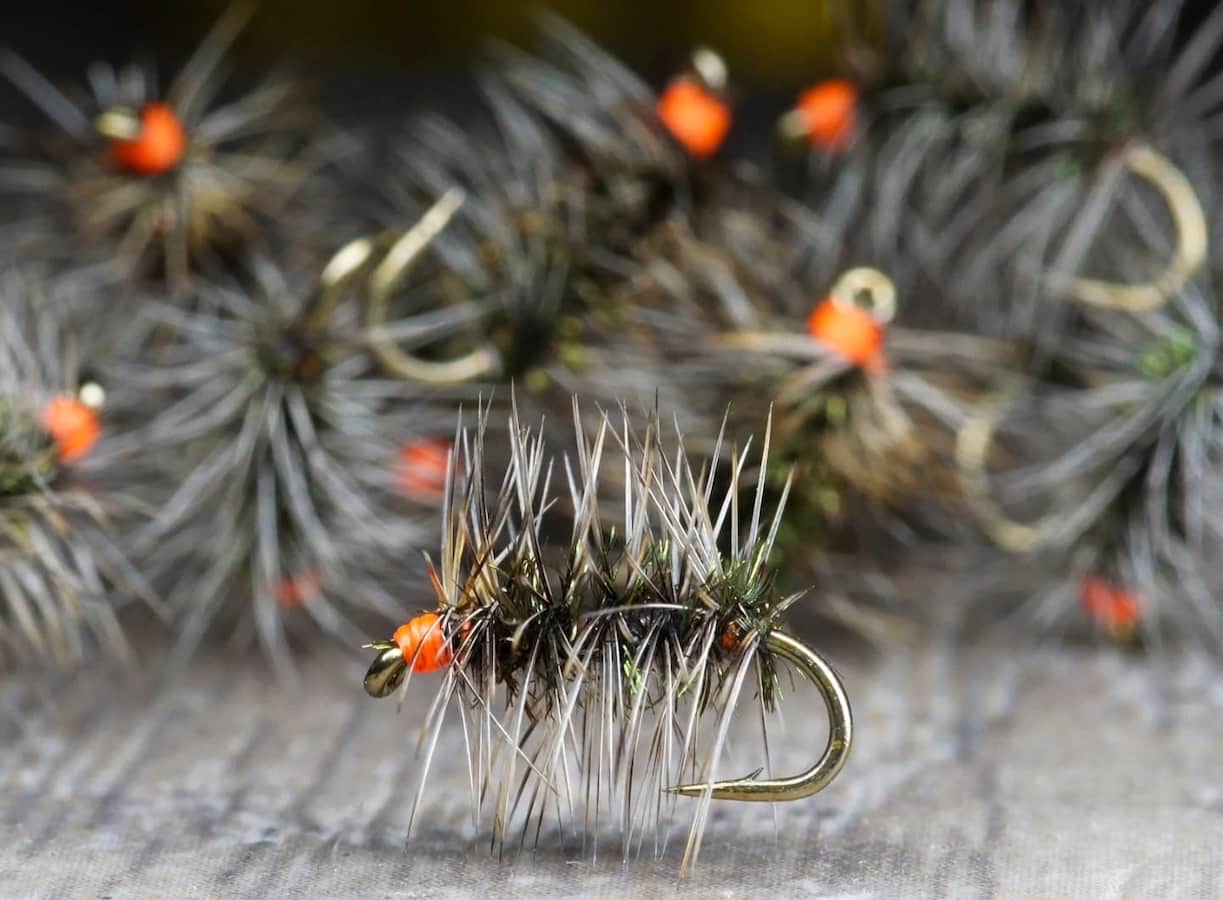
Hotspot Griffith’s Gnat tied and photographed by Peter Steen
Drys and Droppers
One of the biggest issues winter anglers have when fishing to rising trout is that they stick to a single fly. Whether it’s a cluster imitation or (for those who can keep track of it) a lone midge pattern, the small size combined with spiderweb-thin tippet simply makes one fly easier to work with. But if you’re only fishing one fly, you’re limiting yourself. While it may seem difficult, mixing it up with multiple drys and dry-dropper combos is easier than you think—and when you do it right, it may even double your hookup rate.
The easiest way to double up is to add a small, unweighted nymph to a larger cluster pattern. Flies like Bucky’s Cluster Midge, Stalcup’s Cluster, or even the classic Griffith’s Gnat are all surprisingly buoyant and can float with an unweighted nymph such as a Disco Midge or Bling Midge hanging beneath them. This combo can be deadly—hesitant trout that move in to check out the cluster will almost always be unable to resist the drifting nymph below.
You can also have a lot of luck pairing a cluster pattern or a larger single fly, such as a Bunny Midge or Parachute Midge, with a tiny emerger like a Secret Midge or Fripple Midge as a dropper. This setup is especially effective in back eddies or extremely slow-moving water where trout have plenty of time to look things over before eating.
Thinking Small
There’s a certain magic to catching big winter trout on a tiny fly. The fact that down in that dark, cold water, a fish can somehow see and eat something so small almost seems miraculous. It can be a frustrating and trying process, but every time you land a winter trout on a midge, you experience a feeling of wonder and disbelief that may even change your big-fly habits for the better. When you fish with winter midges, you find out that it’s a small world after all.


Show Comments

Introducing Midcurrent Plus
Full Access to Premium Content
- Detailed Monthly Guides for Your Region
- Weekly Newsletters About Your Interests
- "Ask MidCurrent" Expert Answer Service
- Exclusive Articles and Field Reports
- Ad-Free Reading Experience
- 15-30% Members-Only Gear Discounts