
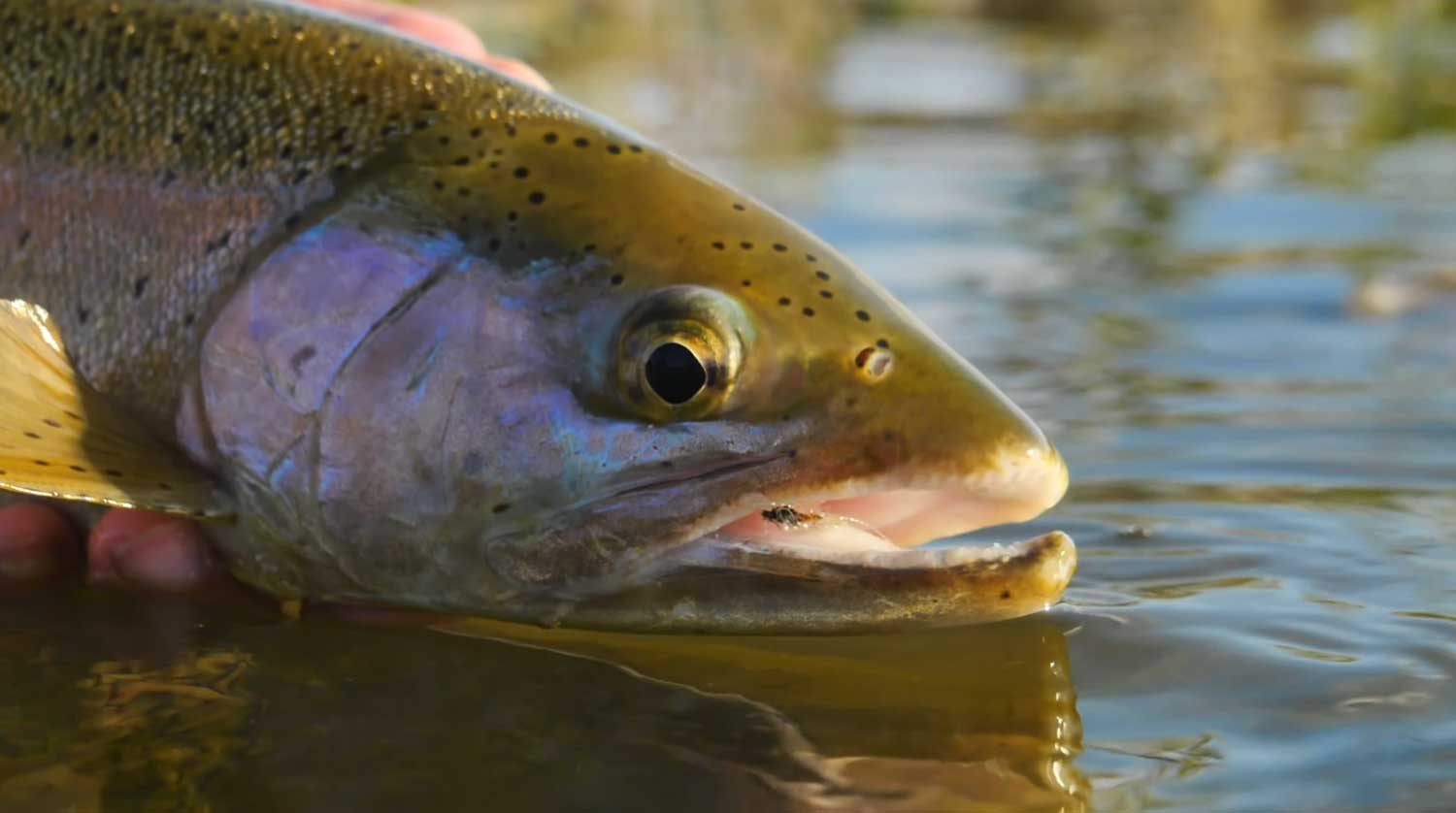
A #14 Rusty Spinner on 6X, fished flush in the film at 8:45 p.m. when the air is 67°F and the wind has finally dropped — that is the solid May recipe that wins more big eastern trout than any other evening rig. Knowing how to fish a spinner fall means knowing why each of those numbers matters: the size matches Ephemerella subvaria (Hendrickson) or early E. invaria (Sulphur), the 6X defeats the selectivity of flat light, the 67°F clears the swarming threshold, and the windless minute is the difference between a fall that happens and one that stays in the trees.
Watch the Swarm, Not the Water
The most reliable early signal of a spinner fall is overhead, not underfoot. Spent mayflies lie prostrate in the film with nothing visible above the surface. The mating swarm, by contrast, is visible long before the fall begins — Tom Rosenbauer’s core diagnostic is to watch swarms descend from treetop level toward the surface. Peer-reviewed field observations place swarms anywhere from 0.3 to 2 meters above ground at the low end and 3–10 meters at the upper end, depending on terrain markers. When the column starts working down, you have minutes to get into position. If you wait for visible rises, the best water is already occupied.
For Hendricksons in May, the hatch window is governed by water temperature — consistent daily emergence generally requires sustained 52–55°F — but the spinner fall is gated by air temperature and wind. MidCurrent’s Hendrickson guidance flags 65–70°F air as the threshold for heavy evening falls, and notes mating swarms require gradient winds to drop before they’ll form.
Other relevant articles on MidCurrent: “The Hendrickson Hatch: A Field Guide to Fishing the First Major Mayfly of Spring,” and Phil Monahan’s “How to Fish the Hendrickson Hatch.”

Read the Subtle Rise and Fish Flush
The spinner-fall riseform is a “quiet dimple or soft swirl,” per Carl Richards in Selective Trout — almost always smaller-looking than the fish producing it. Richards’s own Au Sable example had #18 hen spinners eaten on 6X at 9:30 p.m. and another notable rise at 10:00. If the rises look like six-inch fish and the surface looks empty, you’re almost certainly watching the best trout in the run feed on spinners you can’t see.
The fix is a pattern that rides flush: a Rusty Spinner in #12–16 for Hendricksons, #14–16 for E. invaria Sulphurs, #18 for E. dorothea. If you don’t have true spinners in the box, trim the hackle off a standard dun to force it into the film — Rosenbauer’s field-grade workaround. Leaders run 9–12 ft tapered to 5X; step down to 6X for clear tailwaters and any flat spinner water. In broken water or with wing-twist problems, a 5X copoly (~0.14 mm) degreased every few casts trades some finesse for drift integrity.
Present Fly-First with a Downstream Drift
Spinner falls are one of the few surface events where presentation order outranks finesse. A downstream presentation shows the fish the fly before the leader — critical because the spent insects are immobile, the drift is glassy, and a line-first inspection is a refusal every time. On a rising pod, hooking an outside fish from downstream peels him away from the group; hooking an upstream fish runs him through it.
Direct downstream casts tighten fast, so slack is mandatory. Use an in-air reach, then feed two feet of line at a time with controlled mends rather than shaking the rod. A clean seven-second drift beats a twenty-second drift with a belly.
Next Steps
Arrive before the duns finish. Carry a thermometer and use it on both water and air. Watch the swarm — binoculars help — and tie on a flush rusty spinner the moment the hatch thins. Identify the rhythm of the best riser in the run before you cast. If the wind doesn’t drop and the air doesn’t clear 65°F, accept that some nights the fall doesn’t happen and use the evening to mark the water. The nights that do happen reward anglers who were ready ten minutes early.
FAQ
What size rusty spinner should I use for a Hendrickson spinner fall?
Use a Rusty Spinner in size 12 to 14 for Hendrickson (Ephemerella subvaria) falls. The 14 is a reliable default on most eastern rivers, with a 12 matching larger individuals on the Delaware and Catskill systems. Tie patterns flush in the film — no upright hackle.
What time does a spinner fall happen?
Most spinner falls occur at dusk, typically 30 to 60 minutes before dark through full dark. Heavy falls often require air temperatures of 65–70°F and winds that have dropped. On warm, calm days, Hendrickson spinners on rivers like the Farmington and Delaware can fall in mid-morning or afternoon instead — check the thermometer, not just the calendar.
What tippet size is best for spinner falls?
6X fluorocarbon is the default for selective trout in smooth water during a spinner fall, stepping to 7X only for very picky tailwater fish in full light. In wind, chop, or fading light, 5X copoly tippet (~0.14 mm) resists twist from the spinner’s flat wing profile and often outperforms finer diameters. Degrease tippet every few casts to cut surface glare.
Upstream or downstream presentation for spinner falls?
Downstream presentation is preferred for spinner falls because it shows the fish the fly before the leader, which matters more when prey is immobile and the drift is glassy. Use an in-air reach and controlled mends to feed slack; a shorter clean drift beats a longer dragging one. Upstream casts can work in pocket water or when downstream positioning isn’t possible.
How do I know if a spinner fall is actually happening?
Watch the air, not the water. Mating swarms start high — sometimes at treetop level, often over open shoreline or meadow — and descend toward the surface as the fall begins. Swallow activity over the water and any visible swarm descent are the earliest reliable indicators. Spent insects in the film are nearly invisible; by the time you see them, the fall is already on.