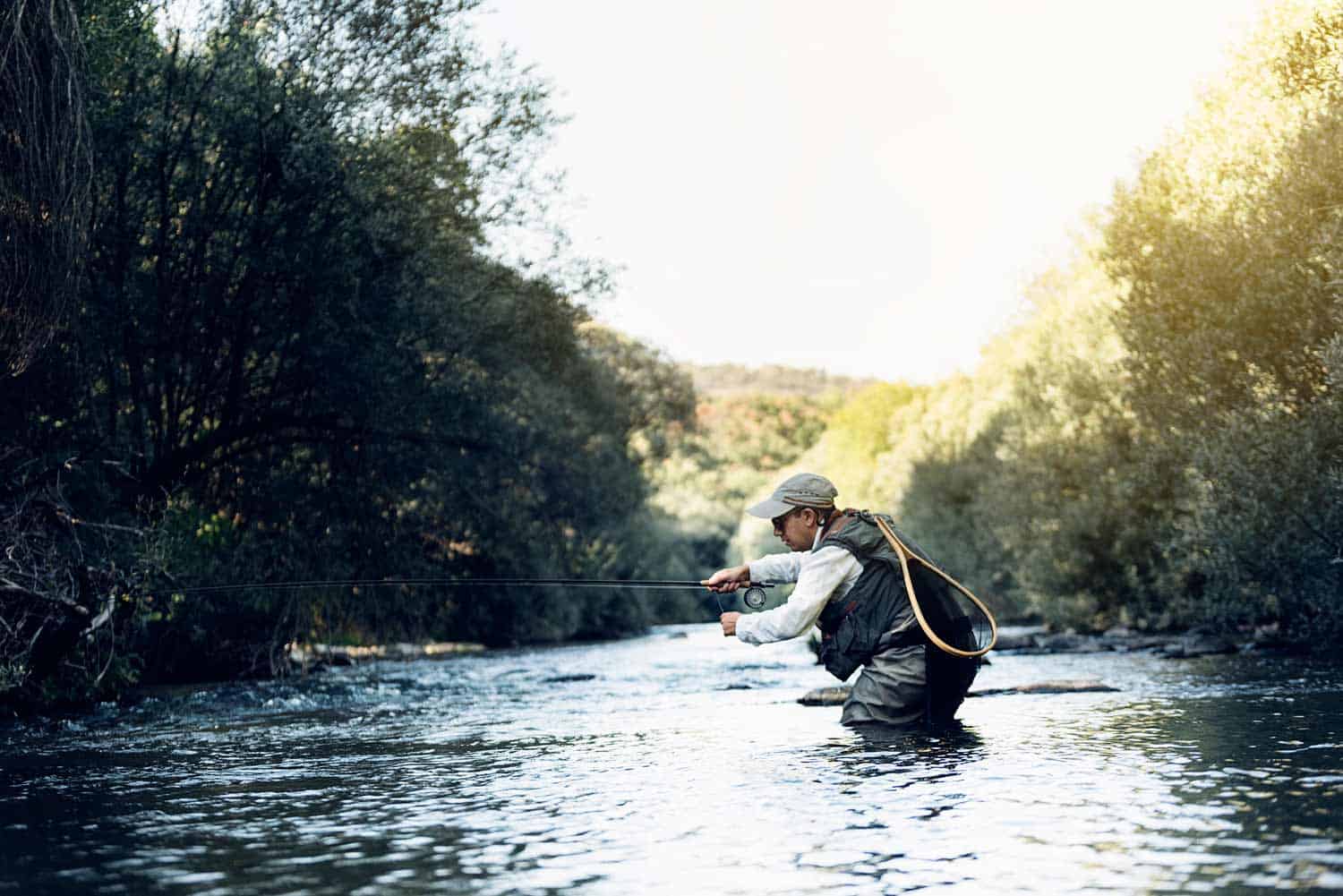
A 3-weight fly rod is the right tool for most May small-stream trout fishing because it handles the short-range casts, tight-canopy deliveries, and light tippet these waters demand — and Yellowstone Angler’s 2025 shootout confirmed the shift by scoring 56 3-weight rods specifically at 20 to 40 feet. For May, the best all-around choice runs 7’6″ to 8’6″ in length, paired with a true-to-standard WF3 line and a 7.5-foot leader to 5X or 6X.
Why a 3-weight fly rod works for May small streams
Small streams in May typically demand casts of 15 to 25 feet, often under low canopy, with frequent roll casts and slingshot deliveries. A 3-weight fly rod loads at these distances better than a 5-weight because there’s less tip mass to overwhelm a short carry. The AFTMA standard puts a 3-weight line at 100 grains in the first 30 feet versus 140 grains for a 5-weight — a 40-grain difference that translates directly into softer landings and better micro-accuracy inside 25 feet.
May conditions make the case even stronger on certain waters. Iowa Driftless spring creeks run a stable 45 to 55°F year-round, with Sulfur (size 16–18), March Brown (10–12), Light Cahill (12–16), and American Grannom (12–14) hatches active in May–June. These are exactly the presentations a 3-weight is built for.
The exception is runoff-dominated water. Rocky Mountain headwaters often run high, cold, and muddy from late May through late June, and a 3-weight is the wrong rod for bank-casting weighted nymphs in heavy flows. In the southern Appalachians, May can whipsaw from 139 cfs on a Friday to 1,410 cfs three days later — the low-water half of the month is 3-weight territory; the other half often isn’t.
The best 3-weight fly rods for 2026
Yellowstone Angler’s 2025 shootout, which tested 56 rods, named category winners across price bands that are worth using as a starting shortlist:
- Echo Lift 8′ 3-weight — $124.95. Inexpensive category winner with a wide casting envelope for the money.
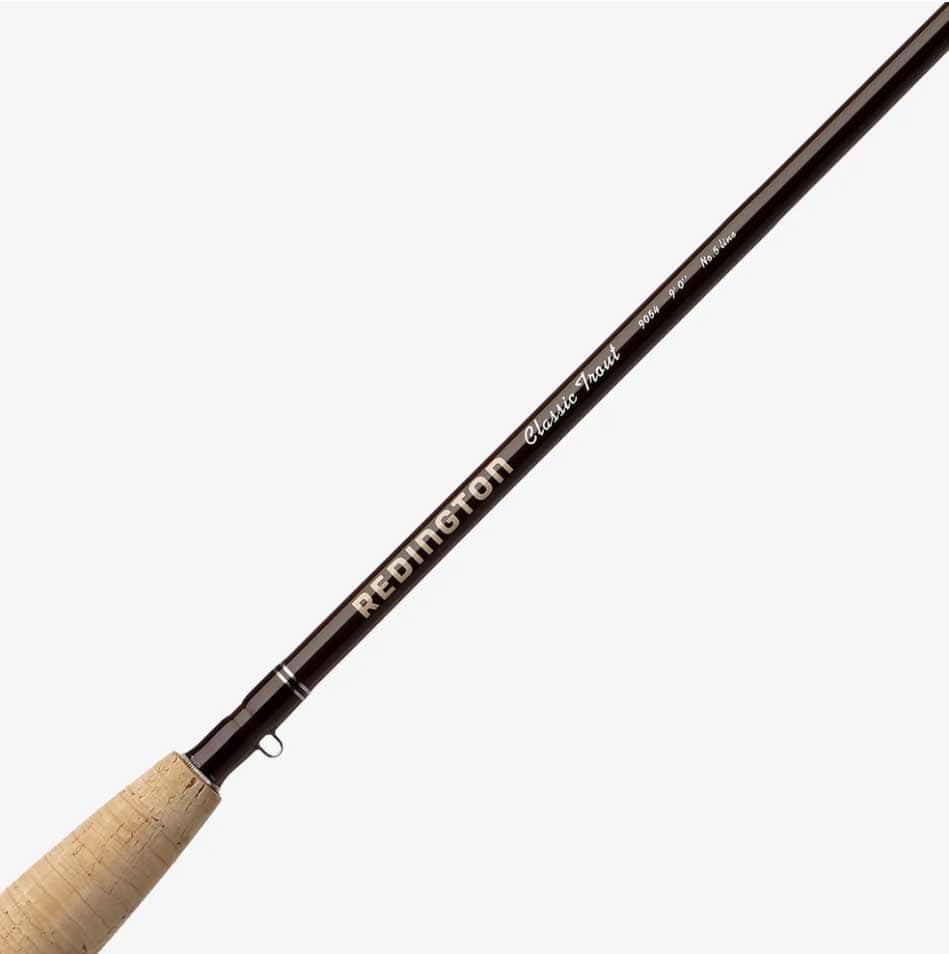
- Redington Classic Trout 7’6″ or 8’6″ 3-weight — $199.99. Lifetime warranty, medium action, and the 8’6″ version excels in pocketwater where keeping line off turbulent seams matters.
- Orvis Clearwater 7’6″ 3-weight — $298. Medium action, 25-year guarantee on a nominal shipping charge.
- Orvis Superfine 7’6″ 3-weight — $598. Yellowstone Angler’s mid-priced shootout winner.
- Winston Pure 2 6’9″ or 7’9″ 3-weight — $995. Shootout pick for small mountain streams and smaller eastern rivers.
Line and leader: where the real decisions live
Rod choice matters less than most buyers think. Leader and line often do more of the work. Orvis’s small-stream instruction puts most small-stream leaders in the 7.5-to-9-foot range, and MidCurrent’s own reporting has documented a trend toward 6-foot leaders for rods under 7 feet, including Scientific Anglers’ Absolute Creek Trout Leader (3X–6X) as a purpose-built short-leader product. For most May small-stream work, 5X or 6X fluorocarbon is the right tippet choice — 6X runs about 0.005″ in diameter with roughly 3.5 lb breaking strength on Orvis’s chart. Don’t drop to 7X out of habit; the drift problems micro-tippet “fixes” are usually line and leader design problems in disguise.
On the fly line, the 2026 recommendation is a true-to-standard WF3 with a short, aggressive head — often labeled a “creek taper” — rather than a blanket “overline to a 4” move. Modern lines drift heavier than the traditional grain table, so a WF4 can silently become closer to a WF5, which is too much mass for short-range delicacy.
Next steps
Start with an 8′ 3-weight in a middle price band (Redington Classic Trout at $199 or Orvis Clearwater at $298), pair it with a creek-taper WF3, and tie on a 7.5-foot leader to 5X. That setup handles the majority of May small-stream situations across the Appalachians, Driftless, and Upper Midwest. Upgrade length to a 9-footer if you fish meadow creeks where reach casts and dapping matter; go shorter (6’9″ to 7’6″) if you fish tight Appalachian tunnels.
FAQ
What is the best 3-weight fly rod for small streams?
The Winston Pure 2 at 6’9″ won Yellowstone Angler’s 2025 shootout category for small mountain streams, but the best value pick for most anglers is the Redington Classic Trout 7’6″ 3-weight at $199.99, which carries a lifetime warranty and a medium action well-suited to roll casts and short-range delivery.
Should I overline my 3-weight with a 4-weight line?
Not by default in 2026. Many modern fly lines are manufactured heavier than the traditional AFTMA grain standard, so a labeled WF4 can behave like a WF5 on a 3-weight rod. A better move is a true-to-standard WF3 in a short-head “creek taper” design, which loads the rod at 15 feet.
What leader length should I use on a small-stream 3-weight?
Use a 7.5-foot leader for most 7’6″ to 8’6″ 3-weights, and a 6-foot leader for rods under 7 feet. Orvis small-stream instruction puts the standard range at 7.5 to 9 feet; shorter leaders turn over better under canopy and reduce snagging on backcasts in tight quarters.
Is a 3-weight good for Rocky Mountain small streams in May?
Often no. Rocky Mountain spring runoff typically runs late May through late June, with streams running high, cold, and muddy. For RMNP and similar high-country drainages, small-stream season is usually July through September — if you’re going in May, expect to fish tailwaters below reservoirs rather than freestone headwaters. Barbless hooks are required in RMNP catch-and-release waters.
What tippet should I use on a 3-weight for small-stream trout?
Use 5X or 6X fluorocarbon for most May small-stream situations. 6X runs about 0.005″ in diameter with roughly 3.5 lb breaking strength. Dropping to 7X (0.004″, ~2.5 lb) is rarely necessary and often masks drift problems that are actually line or leader design issues.