

Ask MidCurrent: What’s the Best Single Rod for Bonefish, Snook, and Redfish?
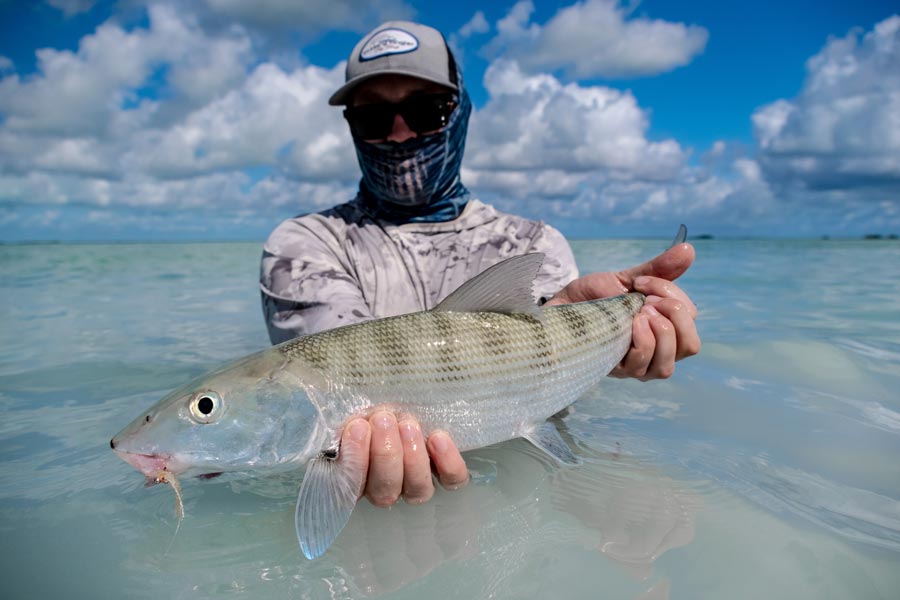
Photo: Dan Favato, MidCurrent Travel
Question: I’m about to spend a few weeks in South Florida, where I am hoping to fish for bonefish, redfish, and snook. If you were to get one rod for all three species, what would it be?
—Bill P., Manasquan, NJ (via the Ask MidCurrent form)
Answer: Each of these game fish presents unique challenges, yet it’s possible to target them all with a single rod—if you choose the right weight, length, and action. An 8-weight, 9-foot, fast-action rod is the ultimate all-purpose tool for these Florida flats species. Let’s break down why this specific rod specification shines, and how it meets the demands of the flats, mangroves, relentless winds, and the behavior of bonefish, snook, and redfish.
The 8-Weight Sweet Spot
If you’re only going to take one rod, it better be the right weight. Too light, and you’ll struggle to cast in wind or control a strong fish; too heavy, and you’ll lose finesse and tire yourself out casting all day. For Florida’s inshore trio, an 8-weight hits the sweet spot.
Handling Wind and Flies: A stiff breeze on the flats can quickly overwhelm a 6- or 7-weight rod, making it difficult to make long, accurate casts. An 8-weight line is heavier, which lets you punch casts through headwinds and turn over your leader with authority. Whether you’re tossing a tiny shrimp fly to a spooky bonefish or a bulkier baitfish pattern at a snook, the 8-weight has the muscle to propel these flies. At the same time, it’s not as unwieldy as a 9- or 10-weight, so you can still make quieter presentations when the wind calms down. In glassy conditions, an 8-weight allows you to adjust your casting stroke to lay the fly down gently, avoiding spooking fish.
Fish Fighting and Versatility: An 8-weight rod has enough backbone to fight Florida’s inshore species without feeling like overkill, whereas a lighter rod might lack the mid-section strength to control powerful runs. The 8-weight offers the strength to pressure a bonefish enough to turn it when needed, yet it’s still flexible enough to protect a 10-12 lb test leader from breaking during a blistering run. Redfish don’t sprint as fast as bonefish, but they pull hard, and an 8-weight gives you the lifting power to steer a redfish away from oyster beds or mangrove roots. Snook, on the other hand, are ambush predators often hooked near structure, and the fish might dive for cover as soon as it feels the hook. Here again, the 8-weight’s reserve power helps you muscle a snook away from dock pilings or mangrove tangles before it saws through your leader.
While a 9-weight rod offers even more power, it can start to feel heavy after hours of casting and the heavier line lands more heavily on the water, potentially startling bonefish in shallow flats. The 8-weight is light enough to cast comfortably all day and versatile enough to tackle anything from schoolie bonefish to slot-size snook.

Length: Why 9 Feet Rules
Walk into any saltwater fly shop and you’ll notice that almost every single-handed rod is 9 feet long. That’s the standard for a reason. A 9-foot fly rod provides an ideal balance of casting distance, accuracy, and line control – all critical factors when fishing Florida’s flats and backcountry. When you’re trying to reach a tailing redfish 60 feet away or need to keep a back-cast above the mangrove shrubs behind you, the extra length helps. A shorter rod (say 8 or 8½ feet) might be a bit easier to maneuver in very tight quarters, but you would sacrifice casting distance and the ability to manage your line on the water. A longer rod (over 9 feet) can cast far, but it becomes more cumbersome and physically tiring over a long day. A 9-footer is the sweet spot that lets you cover water effectively without wearing out your arm by lunchtime.
Whether you’re wading knee-deep on a flat or casting from a skiff, a 9-foot rod keeps your line higher off the water and helps keep your back-cast clear of the deck and your fishing partner. It’s the ideal length to cover both open flats and moderately tight mangrove alleys, especially when paired with some creative sidearm casting techniques.
Action: Fast and Responsive
A fast-action rod is one that is relatively stiff, flexing mostly in the upper third (tip section). For an all-purpose saltwater rod, fast action is the right choice because it generates high line speed, which you need to cast in strong winds or to make long accurate casts quickly. When you’re sight-fishing on a windy flat and a bonefish appears 40 feet to your left, you may only have a second or two to present the fly before the4 fish senses danger or swims out of range. A fast-action 8-weight allows you to load the rod quickly (often with just a couple of false casts or a single back-cast) and shoot the line to the target. The crisp recovery of a fast rod keeps your loops tight, helping the line cut through gusty conditions rather than getting blown off course. That means more casts land where you intend them, even when the weather isn’t cooperating.
Some anglers worry that a fast rod might be too stiff to make short casts or present a fly delicately. It’s true that an ultra-stiff “broomstick” can be challenging at close range. However, modern fast-action saltwater rods are designed with a bit of finesse in mind. They often have sensitive tips that can still load with a short line out, especially if you use a slightly overweight line or a line with a short, heavy head. This means when a redfish suddenly pops up 20 feet off your bow, you can still roll out a quick, accurate cast without the rod feeling like a pool cue. You get the best of both worlds: the guts to punch a fly into the wind at 60 feet, and the touch to drop a crab pattern softly 20 feet away.
Fast action also aids in accurate casting under mangroves. To catch snook, you often have to throw your fly way back under low branches or into a tight pocket between roots. A fast, responsive rod lets you form tight loops that stay low to the water and thread the needle into those hiding spots. With a quick, sidearm flick, a fast 8-weight can send your fly skittering into the snook’s strike zone. This kind of pinpoint accuracy is harder to achieve with a slower, whippier rod that throws wider, less predictable loops.
Rod action also influences how you fight fish. A fast-action rod typically has a stiff butt section, which helps turn big fish and pull them out of trouble. Hook a hefty snook that immediately dives for a submerged root system, and you’ll be thankful for the stout lower section of a fast-action rod. Meanwhile, the slightly softer tip on a good fast-action design will cushion sudden head shakes.
Many all-purpose saltwater rods are in the “fast” or “medium-fast” category for this reason – they marry power with a bit of forgiveness. In practice, that means you can execute a sharp strip-strike on a bonefish or redfish (driving the hook home quickly), without fear that the rod will bounce and throw slack, and you can maintain steady pressure during the fight, reducing the chance of the hook pulling out.
A Rod for All Reasons
A 9-foot, 8-weight, fast-action fly rod is more than just a compromise: It’s a confident choice that covers the wide spectrum of scenarios you’ll encounter in the Sunshine State’s inshore waters. From the crystal-clear flats of the Keys to the tannin-stained creeks of the Everglades, this rod has you covered. It casts far enough to reach bonefish pushing the edge of casting range, yet it’s light enough to dance a small shrimp fly onto the water without sending the fish fleeing. It has the backbone to subdue a slot-sized redfish or a feisty snook, yet enough flex to make the fight sporting and keep the 8-pound tippet intact. Perhaps most importantly, it’s a rod you can cast comfortably for hours, which means you’ll be ready when that window of opportunity opens – whether it’s a sudden tail appearing at 11 o’clock or the flash of a snook under a mangrove at sunset.
In a perfect world, you could carry a quiver of rods to fine-tune each situation: a lighter rod for calm bonefish flats, a heavier one for snook in tight cover or baby tarpon. But part of the beauty of saltwater fly fishing is adapting and making the most of what you have. The 9′ 8wt fast-action rod embodies that versatility.
Got a question for our experts? Click here!

Show Comments

Introducing Midcurrent Plus
Full Access to Premium Content
- Detailed Monthly Guides for Your Region
- Weekly Newsletters About Your Interests
- "Ask MidCurrent" Expert Answer Service
- Exclusive Articles and Field Reports
- Ad-Free Reading Experience
- 15-30% Members-Only Gear Discounts