
Ask MidCurrent: Is It Better to Use Attractor Nymphs or Exact Imitations for Winter Trout?

This winter brown fell for a flashy attractor pattern. Photo: Rick Mikesell
Question: When you are fishing nymphs on rivers for trout in winter, is it better to use shiny attractor patterns or more natural-looking, imitative nymphs?
—Tim, Missoula, MT
Answer: Like many questions about fly fishing, the answer to this one is not absolute. Both styles can be effective, and knowing when to use each is one of the most important winter skills an angler can develop.
As water temperatures drop into the low 40s and 30s, trout metabolism slows significantly. Fish conserve energy by holding in deeper, slower water and feeding less frequently. They are unlikely to move far to intercept food, which means successful winter fishing depends on precise drifts and getting flies directly into the trout’s feeding lane.
A trout’s winter diet is dominated by small, consistently available food sources such as midge larvae, midge pupae, small mayfly nymphs (especially Baetis), and occasionally stonefly nymphs or aquatic worms. Trout want meals that are easy to capture and require minimal effort.
These behavioral changes directly influence fly choice. Sometimes trout want something subtle and familiar; other times they respond better to something visible enough to grab their attention in cold, quiet water.
When Visibility Matters
Attractor nymphs are flies designed to get noticed rather than imitate a specific insect. They often include flashy materials, bright colors, beads, or hotspots. Popular examples include the Rainbow Warrior, Copper John, Lightning Bug, Disco Midge, and brightly colored worms or egg patterns.
In winter, attractor nymphs can be extremely effective for one key reason: they help inactive trout notice your fly. When fish are lethargic and holding tight to the bottom, a subtle natural fly may simply drift past unnoticed. A flash of color or a bit of sparkle can trigger curiosity or a reaction strike, even from trout that aren’t actively feeding.
Attractor patterns excel in several winter scenarios:
- Low visibility: Stained water, glare, or overcast conditions make it harder for trout to see small, drab flies.
- Inactive fish: When trout show no obvious feeding behavior, a flashy fly can wake them up.
- Early mornings: Coldest water temperatures often mean fish need extra motivation.
- As a searching pattern: When you’re unsure what trout are feeding on.
Many anglers use attractors as part of a two-fly rig. A common strategy is to fish a bright attractor as the lead fly with a smaller, more natural nymph trailing behind it. The attractor draws attention, while the trailing fly provides a realistic option once the trout moves in to inspect.
Keep in mind that flash alone won’t compensate for poor presentation, so you still need to achieve a natural drift at the proper depth. If trout bump or follow a flashy fly without committing, that’s often a sign to keep the attractor but switch to a more natural dropper.

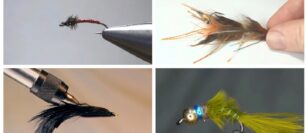
Useful attractor patterns include (clockwise from upper left): Rainbow Warrior, Copper John, Smitherman’s Twisted Worm, and Lightning Bug.
Fooling Selective Trout
Imitative nymphs are designed to closely resemble real aquatic insects in size, shape, and color. Classic patterns include the Pheasant Tail, Hare’s Ear, Zebra Midge, WD-40, scuds, and stonefly nymphs tied in muted tones.
When trout are selective or pressured, try more natural-looking patterns. In clear water, slow currents, or heavily fished rivers, trout have more time to inspect a fly. Bright colors or excessive flash can look unnatural and cause refusals.
Natural nymphs are especially effective:
- In clear water
- On sunny days
- During midge or Baetis activity
- In spring creeks and technical tailwaters
- When trout are visibly feeding
Smaller is usually better. Midges and slim mayfly nymphs dominate winter insect life, and fooling trout frequently requires nymphs in sizes 18-24. Reducing flash, simplifying patterns, and using sparse ties often increases success. To achieve that perfect dead drift, you may have to use a longer leader and lighter tippet.
Natural does not always mean small, however. Stonefly nymphs remain active year-round, and a well-presented stonefly pattern bouncing along the bottom can be an irresistible high-calorie meal.
How to Decide: Flashy or Natural?
Rather than choosing one approach exclusively, successful winter anglers learn to adapt. Consider the following factors when deciding which style to use:
Water clarity and light
- Murky or off-color water favors attractors.
- Clear water favors naturals.
- Bright sun may increase the effectiveness of subtle flash, while cloudy conditions often favor darker, more muted patterns.
Trout behavior
- Actively feeding trout usually prefer natural imitations.
- Inactive trout may respond better to attractors.
Fishing pressure
- Heavily pressured fish are often wary of flashy flies.
- Occasionally, pressured trout respond to something completely different simply because they haven’t seen it before.
River type
- Freestone rivers often reward attractor-and-natural combinations.
- Tailwaters and spring creeks usually demand smaller, more precise imitations.
- No rule is absolute—local conditions always matter.
Fishing one attractor and one natural nymph together is perhaps the most effective winter strategy. Pay attention to which fly gets eaten and adjust accordingly.

More imitative nymphs include (clockwise from upper left): Pheasant Tail Slim, Gold Bead Hare’s Ear, Pat’s Black and Tan Rubberleg, and BWO WD-40.
Presentation Always Wins
While fly choice matters, winter trout fishing is often decided by presentation rather than pattern. Depth, drift speed, and location are usually more important than whether your fly is flashy or subtle. You often have to hit the fish right on the nose to get it to eat.
If you’re not getting strikes, adjust the depth of your presentation first. Then consider changing fly size, profile, or color. Often, downsizing the same pattern is more effective than switching patterns entirely.
Winter fly fishing rewards patience, observation, and adaptability. Whether you’re drifting a tiny Zebra Midge through a tailwater run or bouncing a flashy nymph along a cold freestone river, confidence and thoughtful adjustments will put more trout in the net—even on the coldest days of the year.
Got a question for our experts? Click here!
Show Comments

Introducing Midcurrent Plus
Full Access to Premium Content
- Detailed Monthly Guides for Your Region
- Weekly Newsletters About Your Interests
- "Ask MidCurrent" Expert Answer Service
- Exclusive Articles and Field Reports
- Ad-Free Reading Experience
- 15-30% Members-Only Gear Discounts