
Ask MidCurrent: Should I Buy a Trout-Spey Rod?
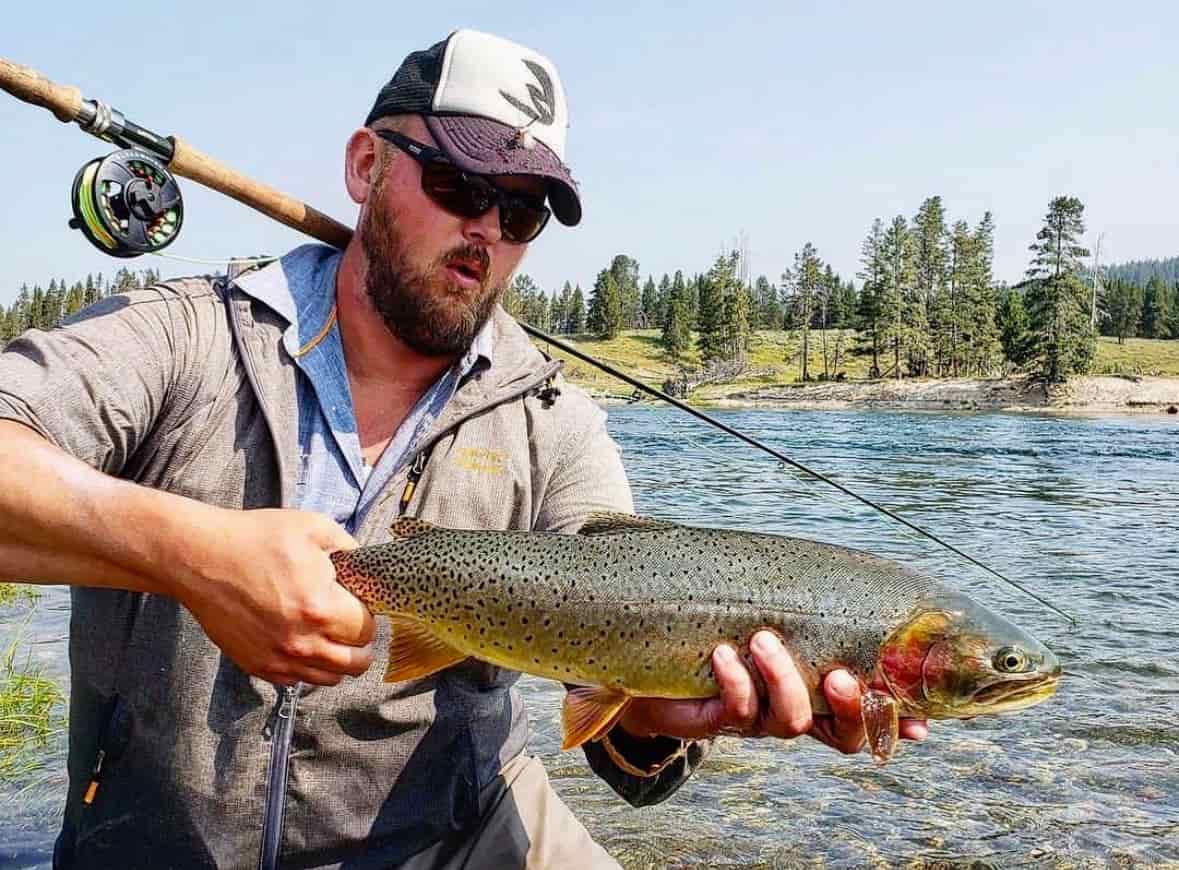
MidCurrent’s Kubie Brown is a big proponent of trout-Spey fishing, especially for big water. Photo: Kubie Brown
Question: When I said I was into swinging streamers for trout, the guy at my local fly shop tried hard to sell me a trout-Spey rod. Are there advantages to using a trout-Spey rather than my standard 7-weight? Do I really need another fly rod?
—Sarah G., Bozeman, MT
Answer: While some folks are always looking for an excuse to buy a new fly rod, others need to be convinced to part with their hard-earned cash. Trout-Spey rods are lightweight, longer, two-handed fly rods designed for trout fishing using Spey-casting techniques. A trout-Spey rod allows the angler to perform Spey casts—essentially a roll cast with a change in direction and an increase in energy—using water tension to load the rod. As a result, trout-Spey setups offer distinct advantages in casting mechanics, line control, fatigue reduction, and fly presentation.
Efficient Casting Mechanics
One of the advantages of Spey-casting with a two-handed rod is that it requires very little space behind the angler, making it possible to fish areas with high banks or dense vegetation that would block a traditional backcast. For example, on steep-banked rivers where wading out is limited, a Spey rod lets an angler reach water that overhead casts simply cannot cover. Spey casting also makes it easy to reposition a downstream-hanging line to cast across or upstream with minimal line stripping and no false casts. This efficiency allows you to cover water thoroughly, even in confined spaces where a you might struggle with a single-hand rod.
The longer rod and two-handed leverage allow you to generate high line speeds and achieve long casts with relatively little effort. In fact, a 4- or 5-weight 11- to 12-foot trout-Spey rod can launch heavy 300- to 400-grain shooting heads and sinking tips with ease. On a single-hand rod, casting heavy lines can be a chore. Even in windy conditions or when casting large streamers, the two-handed Spey-casting style lets you deliver the fly to distant targets without the repetitive false casting required by a one-handed rod.
Superior Line Control
Once the fly is on the water, a trout-Spey rod provides superior line control compared to a shorter single-hand rod. The extra length means you can lift and hold more line off the water, which makes mending much easier and reduces unwanted drag on the fly. This means you can achieve longer, swings or drag-free drifts, keeping your fly in the fish’s strike zone with better control. Longer two-hand rods also manage line more effectively in complex currents, allowing you to adjust the fly’s path or speed as needed. Enhanced line control means improved presentation.
Trout-Spey setups also allow you to cover water more efficiently. Because you can cast farther and keep more line out beyond the rod tip, there is less need to strip in line before each new cast. You can let the fly swing to the end of its drift, then use a Spey cast to reposition it for the next pass, without retrieving all your line. This not only saves time, but also means your fly spends more time in the water. By covering more water with each cast and maintaining control at longer distances, a two-handed approach can thoroughly work a run that would be difficult to fish effectively with a single-handed rod.
Reduced Fatigue and Casting Strain
Another key advantage of a Trout Spey rod is reduced casting fatigue, especially if you’re using heavy lines and big streamers. Spey casting relies more on timing and the rod’s flex than on brute force or lots of false casting. With a two-hander, your lower hand and body rotation help generate power, taking stress off your dominant casting arm and shoulder. As a result, you can continue casting for long periods with less risk of soreness or injury. Even when throwing heavy sink-tip lines or bushy flies, the effort required with a Spey rod is lower and more efficient compared to muscling those casts with a single-hand rod.
Improved Fly Presentation and Coverage
Using a two-handed rod also opens up different fly-presentation opportunities. Spey-casting and longer rods are ideally suited for swinging flies such as streamers and wet flies on a tight line across the current. The broadside, downstream presentation of a swung fly can entice aggressive strikes from trout, and the Spey rod’s length helps you control the speed and depth of that swing. Additionally, the ability to cast farther across a river means you can reach holding lies that might be inaccessible to a single-hander, putting your fly in front of fish that otherwise would be out of range.

A trout-Spey system allows you to cover lots of water, when you’re searching for fish willing to eat. Photo: Kristján Páll Rafnsson
The Downsides
While trout-Spey rods offer these major advantages, they also come with limitations that you should understand before committing to making the switch to a two-hander.
1. Reduced Versatility: When you’re fishing with a trout-Spey rod, it’s harder to change tactics on the fly—going from swinging to nymphing or casting dry flies. It’s a fairly specialized method.
2. Increased Complexity and Steeper Learning Curve: When you buy a trout-Spey rod, you’re committing to learning new ways to cast, which can take a bit of time. The basic single- and double-Spey casts will get you started, but there are several other specialty casts. Beginners often need more instruction or guided help to become proficient. Unlike single-hand overhead casting, you can’t “muscle through” a bad Spey cast.
3. Travel and Storage, Plus More to Manage: A trout-Spey setup typically includes a rod between 10.5 and 12 feet, a reel with a running line, shooting heads, and swappable sink tips or poly-leaders. The rod may not fit in your travel cases, and anglers who value simplicity might find all the new gear a little much.
4. Fishing in Tight Cover or Small Water: Even short trout-Spey rods require room for a D-loop, unless you switch to touch-and-go or modified water-anchor casts. (See #2 above.) The rod length becomes a problem anywhere there are overhanging trees, and you may find yourself overgunned if the fish are small.
5. More Difficult to Land Fish: When you’re fishing alone, landing a fish with a long rod requires a longer net, some contortions, and an extra awareness of the rod tip. It’s not difficult, but you need to learn this new skill.

Read our Gear Guru’s review of the Orvis Mission Trout Spey 11’4″ 3-Weight. Photo: Rick Mikesell
Final Thoughts
A trout-Spey rod offers several technical advantages over a traditional single-hand fly rod. By enabling efficient casts with minimal backcast, enhanced line control at range, less physical strain, and effective fly presentations, a two-handed trout rod allows you to cover more water with less effort. These benefits hold true across diverse waters and conditions, making Trout Spey a versatile addition to any angler’s toolkit. Whether you’re a newcomer looking for easier casting or an expert seeking to expand your tactics, the Trout Spey approach can improve your fly fishing efficiency and enjoyment.

Show Comments

Introducing Midcurrent Plus
Full Access to Premium Content
- Detailed Monthly Guides for Your Region
- Weekly Newsletters About Your Interests
- "Ask MidCurrent" Expert Answer Service
- Exclusive Articles and Field Reports
- Ad-Free Reading Experience
- 15-30% Members-Only Gear Discounts