
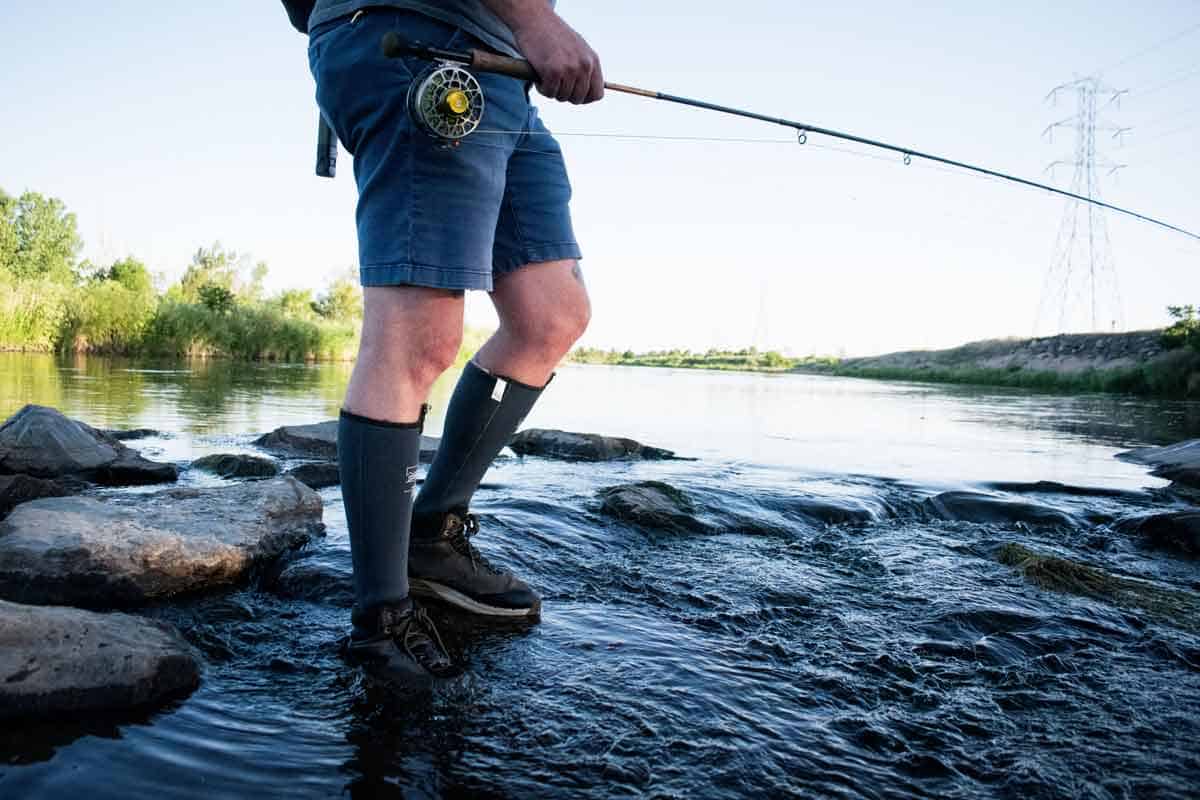
This is my second pair of Patagonia’s Yulex Wading Socks. I guide almost every weekend from March through October and fish on my own time; I wet wade through all of it. Five to seven miles a day on foot, river to truck and back, in sand, gravel, and whatever the bank throws at my ankles.
My first pair lasted years before it blew out from straight abrasion. Heavy use, nothing more. I’ve tried every major brand’s neoprene wading sock over the years and none held up the way this one did. When it finally gave out at the end of last season, I tried a less expensive competitor sock to start this year with. It bunched in the boot and ran shorter than the Patagonia pair. Sand and water worked over the top, the seams were poorly stitched, and after a few trips my ankles were rubbed raw and blistered. I threw it out and bought another pair of the Yulex socks.
The socks are built from 85 percent Yulex natural rubber and 15 percent synthetic rubber by polymer content. Yulex is a plant-based rubber drawn from the hevea tree, used across the wetsuit and wading world as a substitute for petroleum-based neoprene. Hevea trees can be tapped for rubber for decades without being cut down, and Patagonia draws its supply from FSC-certified plantations, a standard meant to keep the rubber off newly cleared rainforest land. Patagonia states that the switch from neoprene to Yulex cuts manufacturing emissions significantly. The socks are made in a Fair Trade Certified factory, which means the workers who built them were paid a premium for their labor.
The material is also what makes these comfortable in a way the cheaper sock never was. They fit snug without bunching, and the give in the rubber means they move with your foot instead of folding over on themselves inside the boot. The interior lining is soft against the skin, no chafing even on long days. The footbed is dense and built to resist compression from a full day of standing and walking. After hundreds of days in them over two pairs, I can say they hold up. The texture on the bottom keeps your foot anchored inside the boot, especially once everything is wet. A sock that slides inside a wet boot turns into blisters by midday. This one doesn’t move.
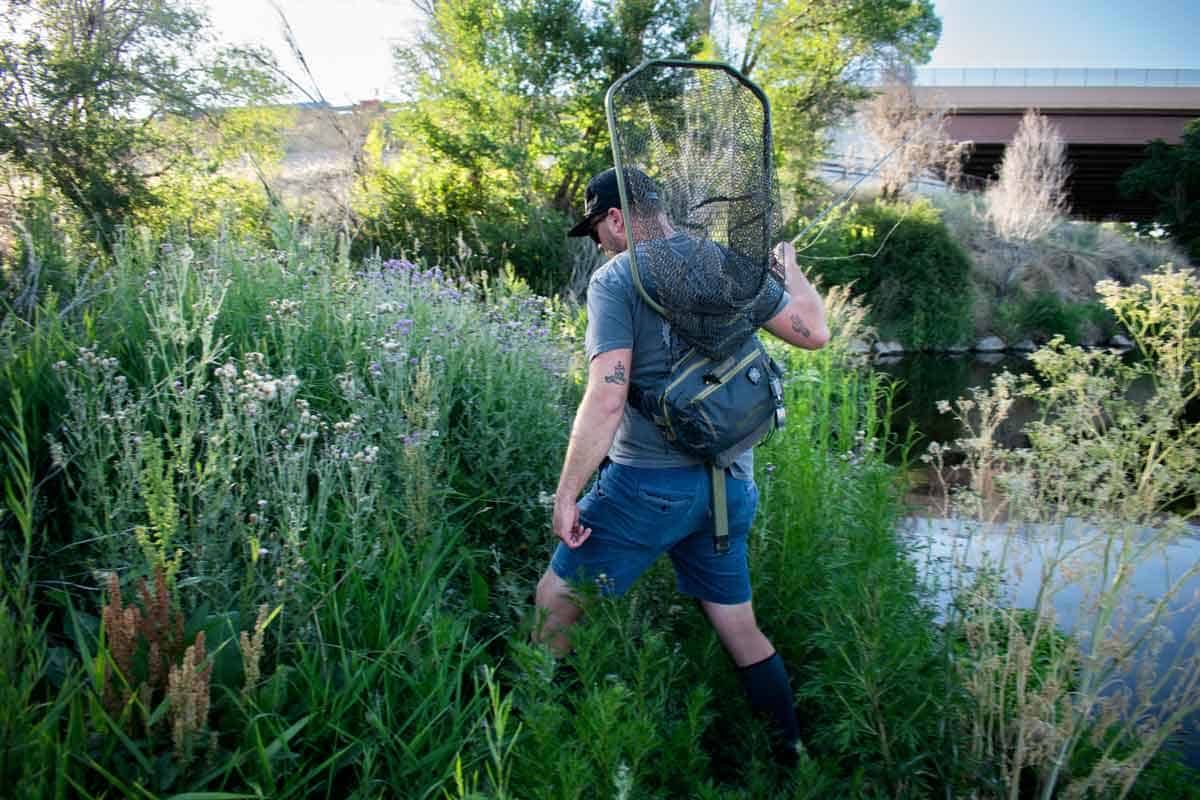
The gravel guard folds down and hooks to your boot laces, which is how Patagonia designed it to be worn. I don’t wear them that way. I run mine unfolded, full height, to just below the knee. Out here chasing carp and bass in shorts, that extra length works as a shin guard against thorns and sharp grass. It’s not how the sock was designed to be worn, but it’s how it works best for the way I fish. Stitching and seams have held through both pairs. The one that failed, failed from abrasion after years of guide-level use, not from a seam letting go or a stitch pulling loose. Patagonia lists the color as black. It’s closer to a slate gray.
Two things to know before you buy. First, the snug fit that keeps these from bunching also makes them tough to pull on, particularly the next morning when they’re still damp from the day before. They dry no faster or slower than other socks I’ve used. On back-to-back guide days, that means pulling on a sock that’s still damp, not fully dry. I hang mine in open air rather than balling them up, which keeps mildew from setting in. I wear a 12 in street shoes, wading boots, everything, and the large is a good fit, right where Patagonia’s sizing chart puts it. Second, price. At $59, these sit among the most expensive wading socks on the market.
For five to seven miles a day, season after season, with sand and rock and current working against every seam, these are the wading socks I’ve gone back to twice now.


