
The Partridge and Orange is the soft-hackle wet fly to tie and swing for fall trout, and it works because it stays simple: a thin orange silk body, an optional wire rib, and two turns of soft gray partridge. In size 14 to 16 it matches the blue-winged olives, small caddis, and drowned spinners trout eat all autumn. Scaled up to size 8 to 10, the same construction becomes an October caddis soft-hackle for the giant fall sedges. One pattern, sized two ways, covers most fall water.
Tying the Partridge and Orange: keep the hackle sparse
The whole pattern is a thin body of orange silk, an optional turn of fine gold wire for a rib, sometimes a pinch of hare’s-mask at the thorax, and a sparse collar of gray Hungarian partridge — no tail, no wing. Tie it on a wet-fly hook in size 14 to 16 for general fall work. Keep the hackle sparse: two turns of partridge, sometimes one, with the barbs reaching from about the hook eye to the point. Over-hackling is the common mistake, and it kills the pulsing action that makes a soft-hackle work.
Silk is the traditional body, and it darkens when wet, so judge the color on a wet fly rather than a dry one. Pearsall’s Gossamer, the classic thread, was discontinued around 2012–2013; the closest substitute is Morus Superfine, which follows Pearsall’s color recipes, with YLI and Semperfli silks as alternatives. Plain orange synthetic thread (UNI 8/0 or 70-denier) is cheaper and works fine. A gray Hungarian partridge skin is the workhorse hackle and lasts for years; starling gives a finer feather for the smallest flies.
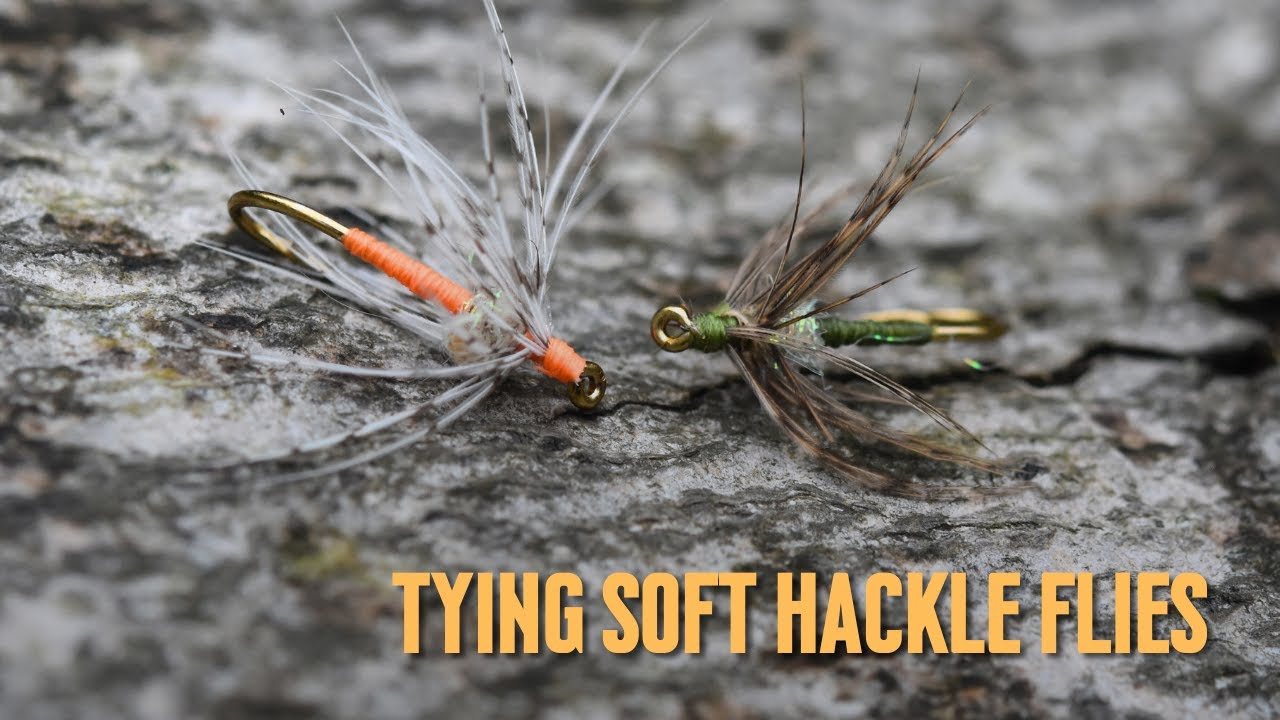
Sizing for the fall hatches: olives, or October caddis
The classic size 14 to 16 Partridge and Orange matches what most fall trout are actually eating: blue-winged olives (size 16 to 22, best on cool overcast afternoons), mahogany duns (size 12 to 18 on freestone water), small caddis, and spent spinners. For that work it is the right fly rather than a compromise.
The October caddis is a separate job. The giant fall sedges — Dicosmoecus in the West, Pycnopsyche in the East — run size 6 to 10, so scale the same construction up: a heavier rusty-orange body (gold-brown in the East), a rib, a hare’s-ear or brown thorax, and a brown partridge or brown hen collar. These big sedges are crawl-out emergers that migrate to the bank and hatch on rocks, so the swing matches the pupae moving shoreward and the egg-laying females returning to the water, not an open-water rise.
Fishing the wet-fly swing
For most fall water, fish these flies on a down-and-across swing: cast across the current, let the fly swing below you on a tight line, follow it with the rod, then step a pace or two downstream and repeat. The end of the swing, where the drift lifts toward the surface (the Leisenring Lift), draws a lot of takes. During an active hatch, an upstream dead-drift that matches current speed can do better, so let the water decide.
A two-fly rig covers more water: put a slightly heavier fly or a fuzzy-bodied flymph on the point to hold depth, and hang an unweighted soft-hackle off a dropper 16 to 24 inches above it, where it moves freely. Get depth from a sinking polyleader rather than a heavily weighted fly, which would deaden the hackle. One habit to break: don’t trout-set. On a tight-line swing the fish hooks itself against the tension, and a hard strike pulls the fly away, so lift steadily into the weight instead.
For most fall trout water, a few Partridge and Orange soft-hackles in size 14 to 16, a couple of scaled-up October caddis versions in size 8 to 10, and a simple two-fly swing rig will carry the season. Keep the hackle sparse, get the fly down with the leader, and let the swing do the searching.
FAQ
What size is a Partridge and Orange fly?
The classic Partridge and Orange is usually tied size 14 to 16, with the traditional range running 12 to 18. For the October caddis hatch, tyers scale the same pattern up to size 8 to 10, which is a modern adaptation rather than the traditional dressing.
What can I use instead of Pearsall’s Gossamer silk?
Morus Superfine is the closest substitute, since it uses Pearsall’s own color recipes; YLI and Semperfli silks also work well. Pearsall’s Gossamer was discontinued around 2012–2013 and now trades as dwindling old stock. Plain orange synthetic thread works too, though it loses the color shift that silk gets when wet.
How do you fish a soft-hackle for fall trout?
Fish it on a down-and-across swing for most fall situations: cast across, let it swing on a tight line, and step downstream to cover water. Lifting the fly toward the surface at the end of the swing draws takes. During a hatch, an upstream dead-drift that matches the current can be more effective.
What is the best fly for the October caddis hatch?
An upsized orange soft-hackle in size 8 to 10 is a reliable choice, tied with a rusty or pumpkin-orange body and a brown partridge or hen collar. Because the giant fall sedges crawl to the bank to hatch, swing the fly through the bottom third of the run and toward the shallows rather than fishing it as a surface emerger.
Do you set the hook on a swung wet fly?
No. On a tight-line swing the trout takes the fly moving downstream and hooks itself against the tension, so a hard trout-set usually pulls the fly out of its mouth. Lift steadily into the weight of the fish instead, keeping enough tension in the rod tip to feel the take.


