
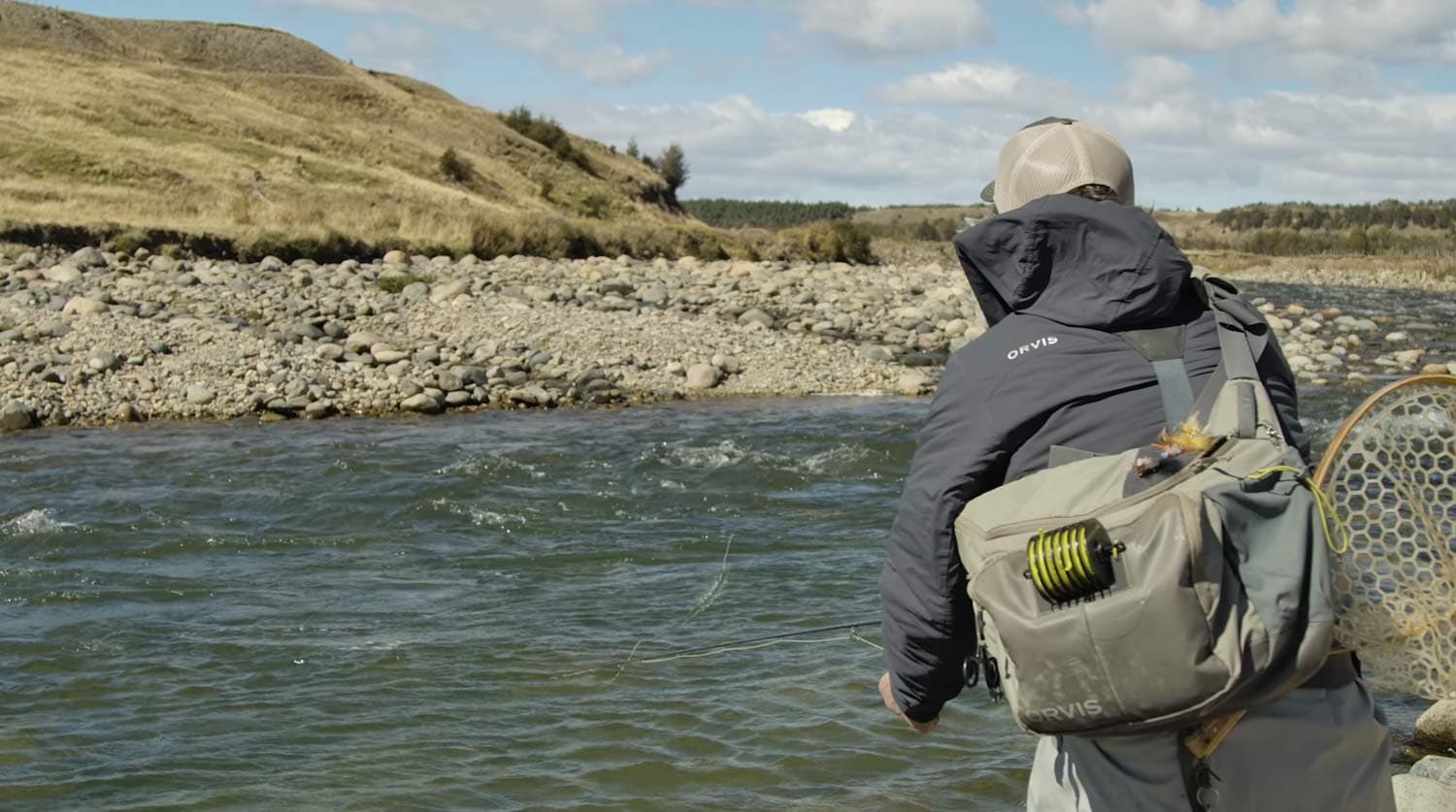
Most anglers fishing #16–#18 Sulphurs to selective June trout need roughly four to five feet of usable slack per drift, and the bulk of it should land with the cast rather than get mended in afterward. A reach mend produces about eighteen inches of slack; a George Harvey leader thrown with a checked cast delivers four to five feet of s-curves through the entire leader, enough to carry a 30-foot drift across moderate cross-current differentials without a single corrective mend. The math behind those numbers works the same way on almost every river that holds selective trout, which is why most modern dry-fly instruction emphasizes setting up slack in the air rather than mending after the cast lands.
Why Slack Matters More Than Mending
Drift duration, in seconds, equals usable slack (in feet) divided by the velocity differential (in feet per second) between the fastest seam your line crosses and the seam holding the fly. A #16 Sulphur in a 1 ft/s slot, with 18 inches of in-line slack and a leader crossing 2 ft/s water, drags in roughly 1.5 seconds. Double the slack and you roughly double the drift.
The problem with mending after the cast lands is reaction time. At a 2 ft/s differential, every half-second of delay costs about a foot of drift. Most anglers’ reaction time falls between half a second and a full second, which means a flat cast waiting for a corrective reach mend has already burned through the first second of usable drift before the rod tip moves. Domenick Swentosky has been writing about this at Troutbitten for over a decade — his preferred phrase is “set up the angles and curves of your line and leader in the air, rather than mending after the line touches.”
How Much Slack Different Casts Produce
Different casts produce different amounts of slack in different parts of the system. The reach cast adds about eighteen inches, biased upstream. A parachute or pile cast can produce three feet, most of it concentrated in the fly line. A stack or tower cast loads slack high in the leader and lets the tippet pile in front of the fish — usually the gentlest of the slack-line presentations, especially on flat tailwater glides where the trout sees the leader before the fly. Swentosky’s lagging curve — an underpowered curve cast, the opposite of the power curve — concentrates slack in the tippet and tends to outperform a reach when the presentation is cross-current.
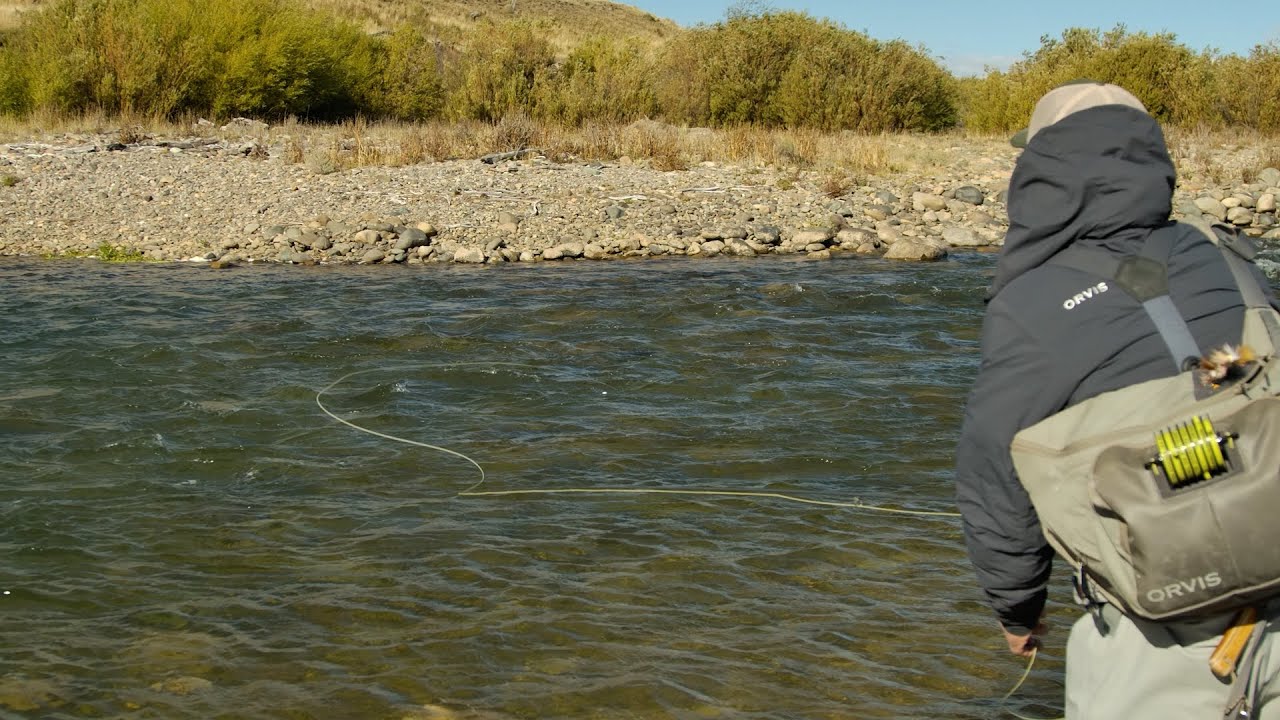
The most slack you can build into a cast tends to come from the George Harvey leader paired with a checked cast. Harvey’s original eleven-foot recipe tapers from .015″ Maxima Chameleon through Ultragreen to a 4X–6X tippet. Stop the rod hard at eye level, drop the tip parallel to the water, and the s-curves run the whole length of the leader — four to five feet of usable slack, enough for a 30-foot drift on most water.
Leader Choice Changes the Math
Longer leaders trade away mendability. The rod tip can only move the parts of the system the cast’s energy still reaches, and once a leader gets thin and long, the rod can no longer push energy through it. For dry-fly leaders past roughly fifteen feet — the Henry’s Fork Ranch range, or Devin Olsen’s 19.5-foot finesse setup tapered to 7X — the slack has to come from the cast or it doesn’t come at all. That’s the whole point of Olsen’s “J-hook on the water,” which lands the tippet downstream of the fly so the trout sees the fly first.
For most freestone fishing with #14–#16 Sulphurs, a 9- to 12-foot leader still gives you both options: cast-built slack on good drifts, and rod-tip mendability when conditions force a correction. For slick tailwater glides and Henry’s Fork-class water, 15-foot-plus leaders shift the equation toward the cast.
Calibrating Slack to the Water You’re Fishing
The differential between the seam your line crosses and the seam holding the fish is the single number that determines how much slack you need. On the South Holston in June, with daily TVA pulses and a stable 45–55°F release, that differential tends to run between 0.2 and 0.5 ft/s — microdrag from a sinking tippet usually beats visible line drag, and switching from fluorocarbon to soft nylon (TroutHunter, Stroft, Rio Suppleflex) is often worth more than another foot of mended slack. On Penns Creek pocketwater, where surface velocities frequently exceed 2 ft/s, differentials are large, seams are short, and the drift is over before a big mend can settle — plan on burning slack quickly and picking up at ten feet of usable drift instead of trying to extend a thirty-footer with corrections.
The Practical Takeaway
Plan the cast for the slack first, mend only what the cast couldn’t deliver, and pick up at the end of the drift you actually got rather than the one you were hoping for. For most June Sulphur fishing, that means a 12-foot Harvey-style leader, a checked or lagging-curve cast, and a working budget of four to five feet of slack deployed mostly in the leader and tippet — not the fly line.
FAQ
How much slack do I need for a dry-fly drift to a selective trout?
Most selective trout sipping #16–#18 mayflies in moderate cross-currents need roughly four to five feet of usable slack per 30-foot drift. The exact number depends on the velocity differential between the seam your line crosses and the seam holding the fly — drift duration equals slack divided by differential. Fast cross-currents and longer drifts both demand more slack.
Is it better to mend in the air or after the cast lands?
For selective trout, aerial mending and slack built into the cast almost always outperform corrective mends thrown after the line touches. The reason is reaction time: at a 2 ft/s differential, every half-second of delay between cast and rod-tip motion costs about a foot of usable drift. A cast that lands with slack already in place buys drift time that no after-the-fact mend can recover.
What is a George Harvey leader and how much slack does it produce?
A George Harvey leader is a hand-tied knotted leader with a softer-than-standard butt section, designed to land in s-curves rather than turn over straight. The original recipe runs roughly eleven feet, tapering from .015″ Maxima Chameleon through .009″ Ultragreen to a 4X–6X tippet. Paired with a checked cast — stop the rod hard at eye level, drop the tip parallel to the water — it delivers roughly four to five feet of usable slack through the entire leader.
What’s the best leader length for selective dry-fly fishing in June?
For most June Sulphur fishing on tailwaters and limestone water, a 12-foot Harvey-style or commercial leader tapered to 5X or 6X covers the working range. Slick water that demands long leader-to-fly separation — Henry’s Fork glides, West Branch Delaware tail-outs — runs to 15 feet and beyond, but past that point the rod tip can no longer mend the leader, so all of the slack has to come from the cast.
Does tippet material affect drag on a dry fly?
Yes. Fluorocarbon sinks and tends to be stiffer than soft nylon, which produces sub-surface microdrag on a dry fly even when the line above looks straight. For most dry-fly work to selective trout, soft nylon (TroutHunter, Stroft, Rio Suppleflex) in 5X to 7X reduces microdrag and improves turnover at smaller fly sizes. Fluorocarbon is the better choice for nymphs and emergers.


