
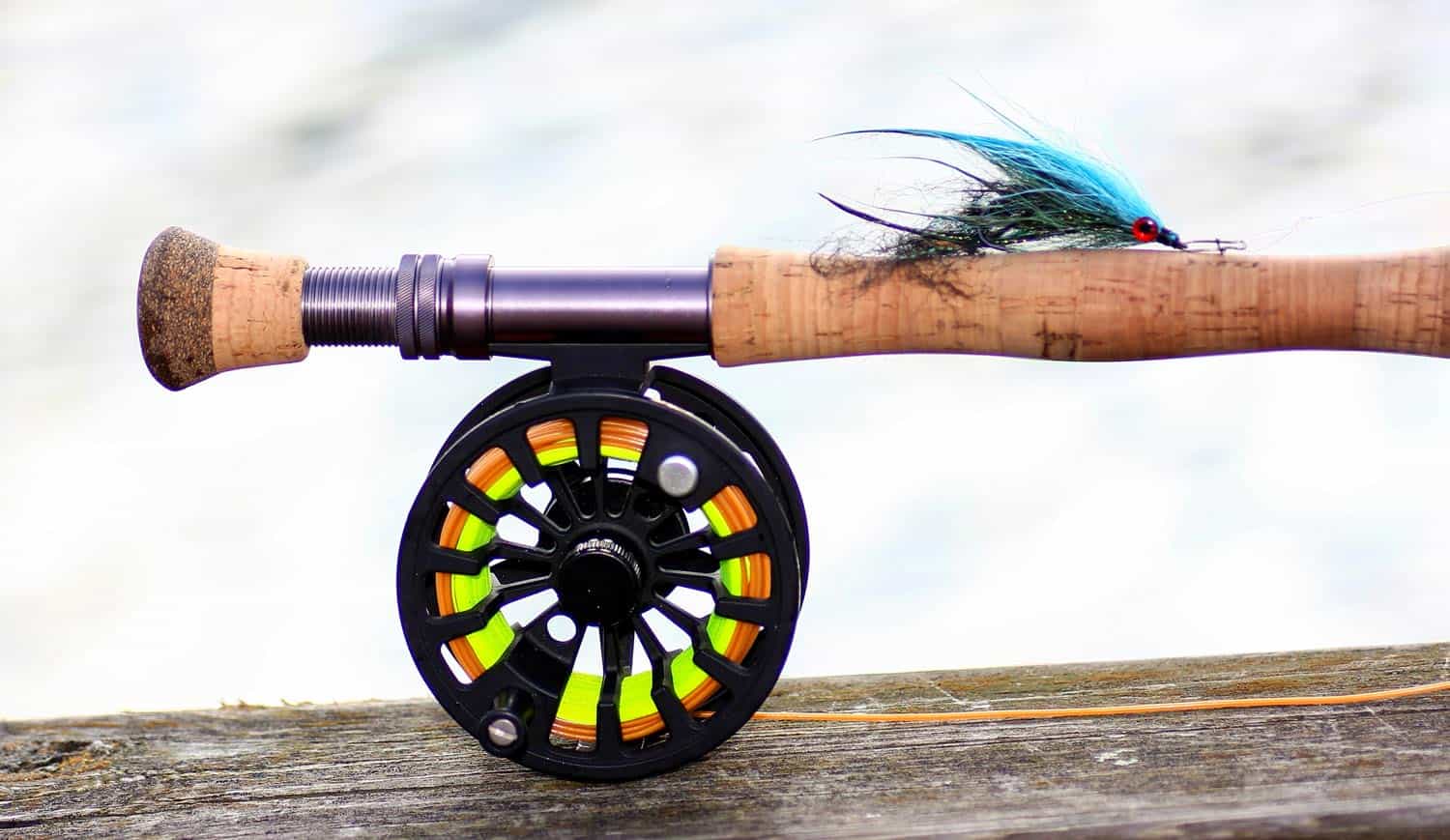
For most anglers chasing bass on the fly, no single 7-weight does both jobs equally. Moderate-fast rods like the Winston Saltwater Air and the 8’5″ Orvis Helios D throw foam poppers more naturally, while faster saltwater 7s like the Sage Salt R8 and Scott Sector handle weighted streamers and articulated patterns better. Line choice matters as much as rod choice — a bass-specific taper like the Rio Smallmouth Bass or SA Bass Bug can turn a streamer-leaning rod into a workable popper rod overnight.
Best Moderate-Fast 7-Weights for Bass Poppers
Poppers are wind-resistant. A #2 Boogle Bug or a Pat Cohen deer-hair frog has more frontal area than weight, and the rod has to flex deeply enough to keep the loop alive as the fly slows between strokes. Moderate-fast rods do this well because the bend runs deeper into the blank at popper distances (25–40 feet).
- Winston Saltwater Air 9′ 7wt (discontinued — legacy stock only): Trident called the legacy rod “snappy, stiff mid-section” with a softer tip. Pair with SA Bass Bug Taper or Rio Outbound Short Float. Winston’s current saltwater 7 is the Winston Air 2 Max 9′ 7wt at $1,295, which leans faster and stiffer than the original Saltwater Air.
- Orvis Helios D 8’5″ 7wt ($1,198): Justin Pickett at Gink and Gasoline reports it has “more flex in the tip than any of Orvis’s nine-foot rods.” Shorter length helps in tight cover.
- Echo Bad Ass Glass Quickshot 8′ 7wt ($399.99): A genuine S-glass blank built by Tim Rajeff. Mike Schultz’s shop in Michigan retails it as a bass rod. Slower cadence, less arm fatigue when chugging poppers all day.
Best Fast-Action 7-Weights for Bass Streamers
Weighted streamers — Clousers, Sex Dungeons, Drunk and Disorderlys, and smaller Game Changers — carry their own mass. They reward stiffer tips, faster line speed, and the wind-cutting power of a fast-action saltwater blank.
- Sage Salt R8 790 ($1,150): Telluride Angler calls it stable enough to handle the full range of specialty streamer lines and recommends it for “trout, bass, and other alternative applications.”
- Scott Sector 907/4 ($1,095): Yellow Dog Flyfishing calls it “the ultimate choice for throwing large flies to big trout, topwater smallmouth and largemouth bass.”
- Orvis Helios D 9′ 7wt ($1,198): The longer, stiffer Helios is the better choice for streamer distance and wind; the 8’5″ is the better choice for everything else.
Best Value 7-Weight for Bass
The Echo Boost Blue Salt 790S ($399.99) is the smartest budget pick in the category. It loads at shorter distances than premium fast-action 7s, which makes it workable on poppers without giving up much on weighted streamers. Lifetime warranty with a $35 repair fee. The Echo Bad Ass Glass Quickshot at $399.99 is the contrarian value pick for popper-heavy anglers — heavier than graphite (about 4.8 oz) but deeper-flexing.
Why Your Line Matters More Than Your Rod
Most modern “bass” fly lines run one to two AFFTA line sizes heavy. A Rio Smallmouth Bass labeled WF-7-F has roughly an 8-weight grain head; an SA Sonar Titan 7-weight runs heavier still. These lines are intentionally over-weighted so they’ll load stiff modern rods at the short distances bass anglers actually fish. The same Sage Salt R8 that throws poppers poorly with a bonefish line will throw them well with a Rio Smallmouth Bass or SA Bass Bug Taper. Buy the line first, then pick the rod that matches your fishing.
The Honest Recommendation
If you only fish bass occasionally and already own a 5- or 6-weight for trout, buy a versatile 7-weight in the moderate-fast category and pair it with a bass-specific line. If you fish bass seriously and throw articulated streamers or 4-inch Game Changers, buy an 8-weight instead — Bob Clouser, Blane Chocklett, and Lefty Kreh all settled there for a reason. The 7-weight is the compromise; the question is which side of the compromise you want to live on.
FAQ
What’s the best 7-weight fly rod for bass poppers?
The legacy Winston Saltwater Air 7-weight (now discontinued — clearance stock only) and the Orvis Helios D 8’5″ 7-weight ($1,198) are the strongest premium picks for popper-heavy bass anglers, because their moderate-fast actions load deeply at short distances. At lower price points, the Echo Bad Ass Glass Quickshot ($399.99) is the genuine contrarian answer — its S-glass blank flexes more deeply than any graphite rod in the category.
Can I use a saltwater 7-weight for bass?
Yes — most fast-action saltwater 7-weights (Sage Salt R8, Scott Sector, Orvis Helios D 9′) are excellent bass streamer rods. The catch is that they load slowly on foam poppers at typical bass distances unless paired with an over-weighted bass-specific line like the Rio Smallmouth Bass or SA Bass Bug Taper.
Should I overline my bass 7-weight?
Most experienced bass anglers effectively do, because most “7-weight” bass lines (Rio Smallmouth Bass, SA Sonar Titan, Airflo Bass and Carp) are already 1–2 line sizes heavy by AFFTA grain. Going up an additional line size — putting an 8-weight Rio Outbound Short on a fast-action 7 — is a common guide workaround when fishing big poppers or deer-hair frogs.
Do I need a different rod for poppers and streamers?
Not necessarily. The same 7-weight will throw both adequately if you swap lines: a floating bass-bug taper for poppers, an intermediate or sink-tip predator line for streamers. Many bass anglers carry one rod with two spools or two reels. A two-rod setup is the upgrade — not the requirement.
Is a 7-weight or 8-weight better for bass?
For most serious bass anglers throwing the full range of flies from #2 poppers to 4-inch articulated streamers, an 8-weight is the better single-rod answer. The 7-weight makes more sense if you already own a 5- or 6-weight for trout and want one rod that splits the difference between trout streamers and bass.


