

To set the hook on a topwater largemouth bass, pause for about half a second after the visible take, then sweep the rod low and sideways while continuing to strip — a “strip-sweep” set, not a vertical rod lift. The trout-style lift you trained for years pulls the fly out of an open mouth before the bass has closed on it. The pause-and-sweep gets the fly into the corner of the jaw where the hook can engage.
Why the Trout Set Fails on Largemouth Bass
The topwater bass hook set is the moment where most fly anglers from a trout background lose fish they should be landing. The reason is biomechanical, not mechanical. A largemouth’s strike cycle — mouth opening, gape peak, capture, closure — unfolds in roughly 100 milliseconds, according to high-speed X-ray imaging research at Brown University. The final inhalation event happens in 30 to 40. By the time you’ve registered the splash and started lifting the rod, the bass has finished what it intended to do.
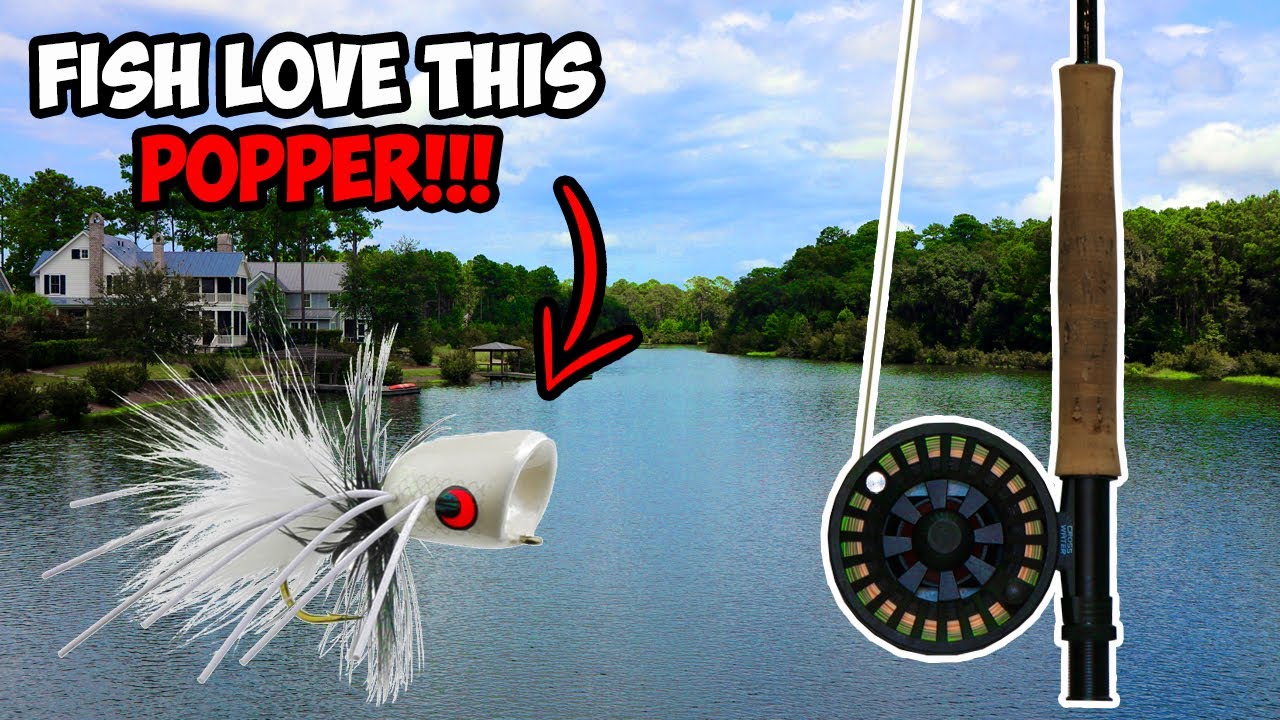
A trout-style rod lift makes the problem worse two ways. First, a fly rod at any angle above horizontal absorbs much of a hook-set’s energy into its own flex. What reaches the hook is a short upward arc — enough for a thin-wire dry hook, not enough to bury a 1/0 Gamakatsu B10S in the bony corner of a bass jaw. Second, a vertical lift pulls the fly up and away from a mouth that’s still opening upward and outward. The fly leaves the gape before the jaws close.
The fix is a low sideways sweep that pulls line directly through the rod’s stiffer butt section rather than its softer tip. As Capt. Gregg Arnold puts it in an Orvis video tutorial: “The bane of saltwater guides around the world is the dread ‘trout set.’ In most cases, a trout set equals a lost fish.” The same logic holds for hard-mouthed freshwater fish like largemouth, pike, and musky.
The Half-Second Pause and the Strip-Sweep
The “wait, then sweep” protocol breaks down into two moves. The pause comes first. Half a second is the practical training target — roughly five times the duration of a complete bass strike cycle, long enough to confirm the bass has closed on the fly, short enough that the fly hasn’t moved out of the strike zone. Experienced anglers eventually replace the count with feel, setting the hook the moment they sense weight on the line. Karl’s Bait & Tackle summarizes the conventional-tackle version: “I wait until I feel the weight of the fish on my line before setting the hook. My rod is usually pointed towards the water when working a topwater so I set the hook by steadily sweeping my rod backwards.”
The sweep itself is the strip set’s larger cousin. The line hand strips hard while the rod butt rotates an arc to one side, and the rod tip stays inches off the water. The motion drives the hook through the rod’s stiffer butt section, where there’s no soft flex to absorb the force.
The Setup That Makes It Work
A strip-sweep is only possible if four habits are already in place when the take happens:
- Rod tip on or in the water, pointed at the fly. Not at 30 degrees, not at 45.
- Line under the rod-hand index finger, anchoring it so the strip hand pulls against a fixed pivot.
- Stripped line laid neatly, in a stripping basket or on the deck — never piled.
- Pop with the line hand, not by twitching the rod tip. Rod twitches lift the tip and put you back in the wrong position for the set.
Joe Cermele put the whole rig in one sentence in Field & Stream: “Work your flies with the rod low. I like the tip an inch or so off the surface. When [the fish] makes a move, just keep stripping with that low rod angle until it comes tight. Then you can raise the rod.” For largemouth, that instruction holds across the board.
Putting It All Together
The next time you see a slosh on your popper, resist the rod-lift. Count “half a Mississippi,” strip hard and sideways, and let the rod butt drive the hook. After a week or two of conscious practice, the protocol becomes muscle memory — and your topwater hookup percentage usually starts looking less like 30 percent and more like 70.
Frequently Asked Questions
How long should I wait before setting the hook on a topwater bass?
Wait about half a second after the visible take — long enough for the bass to close its mouth and start moving away with the fly. A largemouth’s complete strike cycle runs about 100 milliseconds, so a half-second pause confirms the fish has fully committed before you set. Experienced anglers eventually replace the count with feel, setting the hook when they sense weight on the line.
What is a strip set for largemouth bass?
A strip set is a hook-set technique where the line hand pulls hard on the line while the rod stays low and pointed at the fly, instead of lifting the rod tip. For largemouth, a “strip-sweep” works even better — the line hand strips while the rod butt rotates sideways, pulling line through the rod’s stiffer butt section. This drives the hook into the bony corner of the jaw without the energy loss of a vertical rod lift.
Why do I keep missing topwater bass strikes on a fly?
Most missed topwater bass strikes are timing problems caused by setting the hook too early with a trout-style rod lift. The rod-lift pulls the fly out of the bass’s mouth before the fish has fully closed on it. The fix is a deliberate half-second pause after the visible take, followed by a low sideways sweep set rather than a vertical lift.
What rod weight is best for topwater largemouth bass?
A 7- or 8-weight 9-foot rod is the consensus choice for topwater largemouth, with a 9-weight reserved for big deer-hair bugs, weed-guarded frogs, or windy conditions. Pair it with a weight-forward floating bass-bug taper line — examples include Scientific Anglers Mastery Bass Bug Taper, RIO Bass Bug, and SA Redfish, which has the short heavy front taper that turns over wind-resistant flies.
Should I use a weed guard on a bass popper?
Use a weed guard in slop, lily pads, or heavy cover, but consider snipping it off for open-water fishing along shoreline grass or stick-ups. Weed guards measurably reduce hookup percentage because the guard has to compress against the hook before the point engages. As Dark Skies Fly Fishing puts it: “Sometimes I snip off the weed guard because it can cause misses and lost fish.”

