
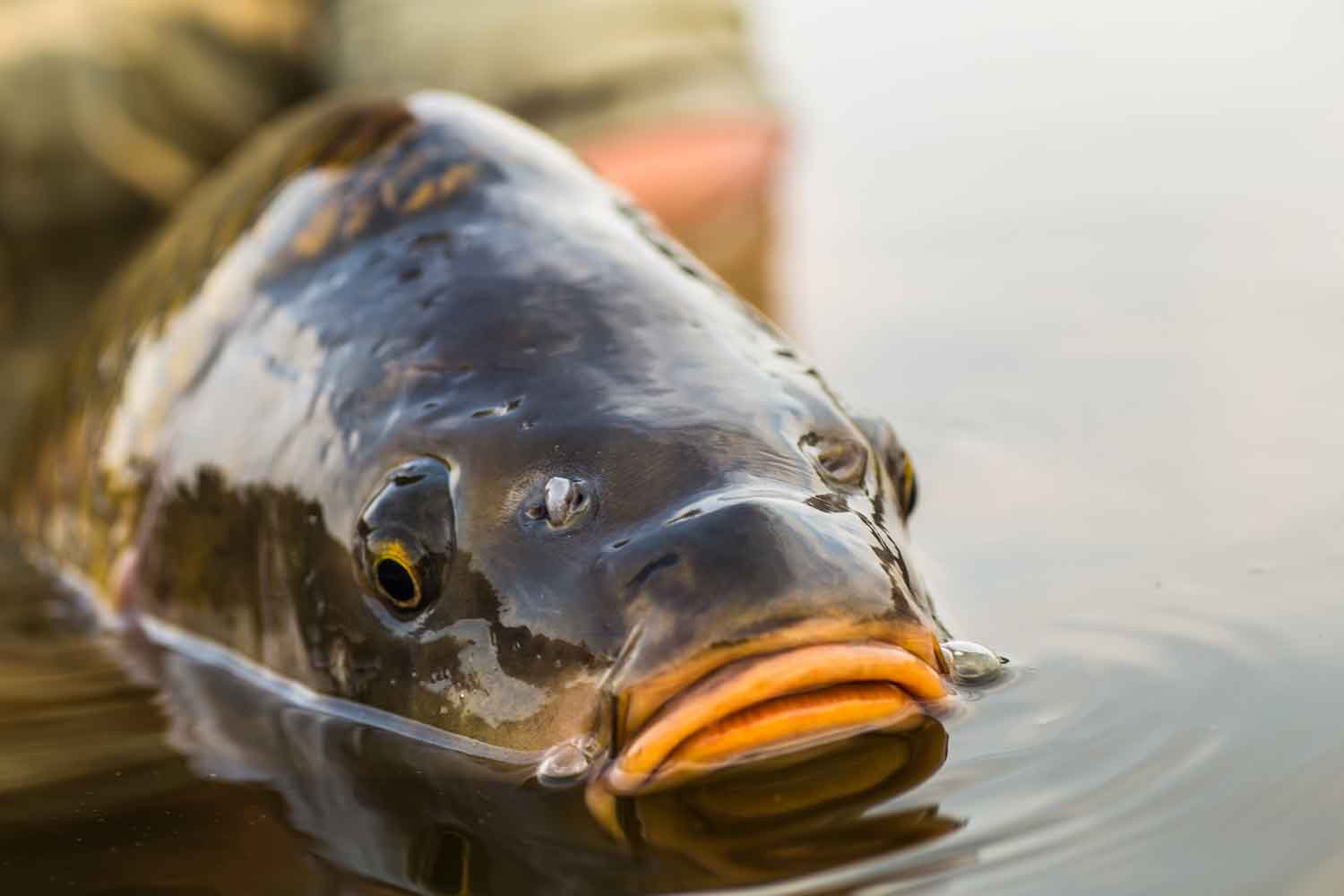
Chicago’s urban lagoons, Cook County forest preserve lakes, the Fox Chain O’Lakes, and Mississippi River backwaters near Grafton, Illinois, produce the Midwest’s earliest sight-fishing opportunities for carp on the fly — often weeks before Great Lakes flats become viable. The key is targeting small, dark-bottomed, sheltered water where temperatures climb past 54°F ahead of surrounding rivers and lakes. With the right thermal strategy, April anglers can find tailing carp on wadeable flats from metro Chicago south to the St. Louis corridor.
Where April Carp Flats Actually Warm First
Lake Michigan’s surface temperatures remain in the low single digits Celsius through most of April according to NOAA climatology, making open-lake flats a mid-May-and-later proposition. April’s fishable water lives in thermal anomalies: urban park lagoons with dark bottoms and pavement radiating heat, shallow forest preserve ponds, and protected river backwaters.
Chicago’s park district lagoons — including Humboldt Park, Washington Park, and others — carry carp as early as March and April according to the Chicago Park District’s own seasonal species guidance. These shallow, wind-protected basins can reach the mid-50s°F on sunny afternoons while nearby harbors sit ten degrees colder.
Ponds and reservoirs warm slower than the tiny lagoons but faster than Lake Michigan, creating a natural progression through April.
The Cook County Forest Preserves add hundreds of acres of fishable water under controlled regulations (two lines, two hooks per line, no bowfishing). These ponds and reservoirs warm slower than the tiny lagoons but faster than Lake Michigan, creating a natural progression through April. Move northwest to the Fox Chain O’Lakes — a sprawling complex of interconnected shallow lakes about ninety minutes from Chicago where protected bays warm by mid-April — and you’ve extended the route with classic flat-water geometry. Channel Lake, in particular, carries a reputation for carp density.
The southern anchor is the Mississippi River State Fish and Wildlife Area near Grafton, Illinois, where backwater bays accessible from boat ramps at Royal Landing and Calhoun Point offer the flattest, most wadeable habitat on the route. Average April highs near the St. Louis corridor reach 68°F, putting those backwaters a full phenological stage ahead of Chicago’s thermal curve. The trade-off is volatility: flow spikes and sustained wind can destroy backwater visibility overnight, making USACE river gauge data essential for go/no-go decisions.
Flies, Tippet, and Presentation for Early-Season Carp
April carp are slower and more tentative than their summer counterparts, which changes fly selection. The Headstand (Lance Egan) is purpose-built for tailing and stationary fish — bead-chain eyes produce a soft landing and the fly sits hook-point-up on the bottom. The Backstabber (Jay Zimmerman) works better for cruising fish. The Hybrid (John Bartlett) bridges both situations with adjustable sink rate via eye weight. Carry NearNuff Crayfish (Dave Whitlock) in brown, olive, and orange for bottom-oriented feeders.
Rig a 7- or 8-weight rod with 0X to 2X fluorocarbon tippet — 12-pound test is the working baseline from established Great Lakes carp guides. Backing matters: a trout reel with a hundred feet of backing is inadequate for fish that routinely run into double digits. Look for a reel that holds at least 150 feet of backing behind the fly line.
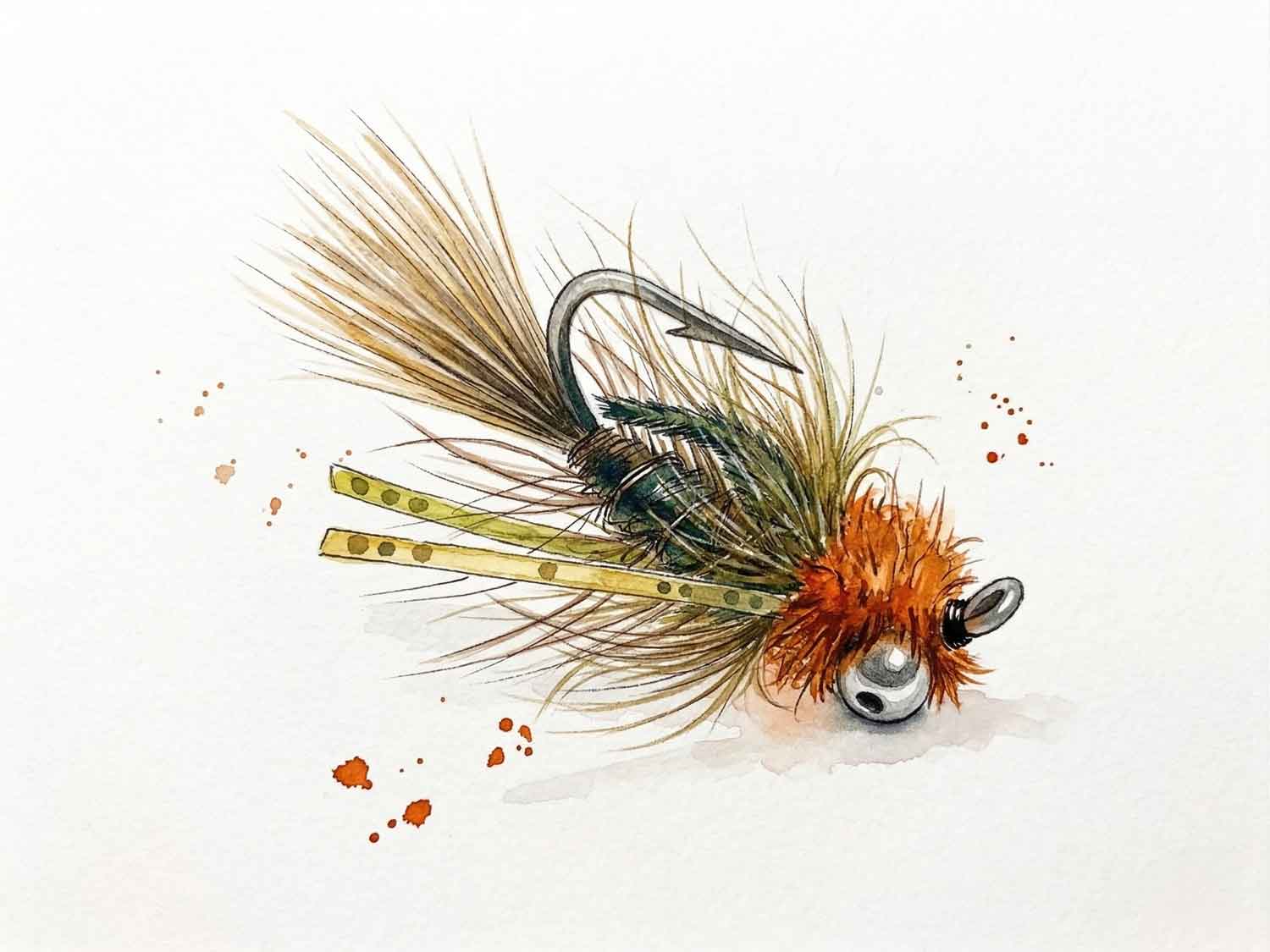
Presentation matters more in April than any other month. These aren’t the aggressive summer feeders that chase down a stripped fly. Lead a tailing fish by about eighteen inches, let the fly settle, and wait. A Headstand sitting motionless on the bottom in a tailing fish’s feeding lane is the single most productive setup for early-season Midwest carp. For cruisers, place a Backstabber well ahead of the fish’s travel line and give one short strip as it enters range.
Timing Windows and Temperature Triggers
Carp don’t switch on at a fixed temperature. Research on adult carp physiology shows feeding activity beginning around 54°F, but in April, that activity compresses into the warmest two to four hours of the day and resets with each cold front. Spawning staging begins as water approaches 61–64°F — the window when pre-spawn fish are moving shallow but haven’t committed to spawning behavior.
Fish afternoon warming windows on the shallowest, darkest-bottomed water available. Check USACE river gauge stations for temperature and stage before driving to backwater destinations — flow spikes and wind can erase visibility overnight. Non-resident Illinois fishing licenses start at $15.50 for three days; Wisconsin, Indiana, and Michigan each offer short-term options from $10 to $35.
What flies work best for carp in April?
The Headstand in size 8 is the top choice for tailing carp holding in place on shallow flats — its soft-landing bead-chain eyes and hook-up orientation are designed for that scenario. Carry Backstabbers for cruising fish, Hybrids for variable conditions, and NearNuff Crayfish in size 4–6 for bottom feeders. Natural colors with minimal flash outperform bright patterns in clear, shallow water.
What water temperature do carp need to be on the flats?
Carp begin feeding activity around 54°F and push onto shallow flats during the pre-spawn staging period as water approaches 61–64°F. In April, temperatures in the low-to-mid 50s are enough to produce fish on dark-bottomed, sheltered shallows — but expect narrow daily windows rather than all-day activity.
Can you sight-fish carp on Lake Michigan in April?
Open-lake Michigan flats are generally too cold for carp in April — NOAA data shows surface temperatures in the low single-digit Celsius range through the month. Guided carp flats seasons on the lake typically begin mid-May. In April, focus on the protected harbors, marinas, and urban lagoons along Chicago’s lakefront instead.
What rod and tippet should I use for Midwest carp?
A 7- or 8-weight fly rod paired with 0X to 2X fluorocarbon tippet (10–15 lb) handles most Midwest carp situations. Use a reel with at least 150 feet of backing — these fish make long, powerful runs. For backwater fishing where pike or pickerel are present, consider a short wire bite guard.
Do I need a fishing license for each state on a Midwest road trip?
Yes — each state requires its own license. Illinois offers a three-day non-resident at $15.50 or full non-resident at $31.50. Wisconsin’s one-day non-resident is $15; Indiana offers a seven-day at $35; Michigan’s daily non-resident is $10. Purchase before arrival to avoid delays at the water.

