The Tarpon Toad fly is a neutrally buoyant pattern designed to hover and swim level in front of laid-up tarpon—making it the top choice for early-season fish in Florida’s Everglades backcountry. Created by Georgia angler Gary Merriman in 1993, the Toad solved a problem that frustrated tarpon anglers for decades: traditional flies sank too fast or bounced unnaturally, spooking finicky fish in shallow, tannic water. The Toad’s flat synthetic head and sparse marabou collar let it suspend enticingly, triggering strikes from tarpon that refuse everything else.
Tournament angler Andy Mill won five Gold Cup Tarpon Tournaments using this pattern. Today, it remains essential for February and March tarpon when cooler water temperatures make fish reluctant to chase fast-moving flies.
Why the Tarpon Toad Outperforms Traditional Patterns
The Tarpon Toad’s effectiveness comes from its unique design. Unlike Cockroaches or bunny flies that jig up and down with each strip, the Toad planes horizontally through the water column. Its buoyant EP fiber head resists sinking on the pause, keeping the fly in the strike zone longer. The posted rabbit-strip or marabou tail prevents fouling while providing constant motion even at rest.
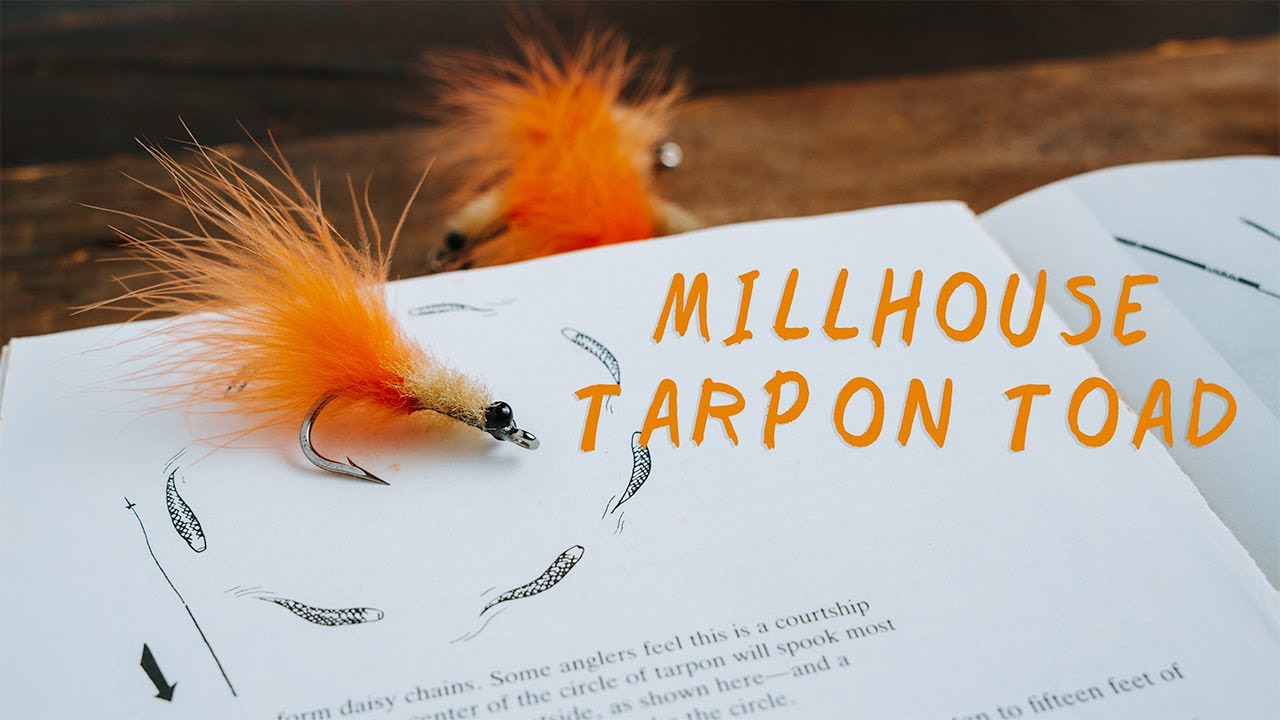
This neutral buoyancy matters most when targeting laid-up tarpon—fish suspended near the surface that won’t chase aggressive presentations. Strip-strip-pause a Toad in front of these fish, and it hovers at eye level instead of dropping away. Guides report this suspending action regularly converts follows into eats from fish that ignored other patterns. Traditional tarpon flies sink out of view on the pause or need constant stripping to stay up, potentially rushing past a reluctant fish before it commits.
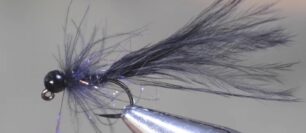
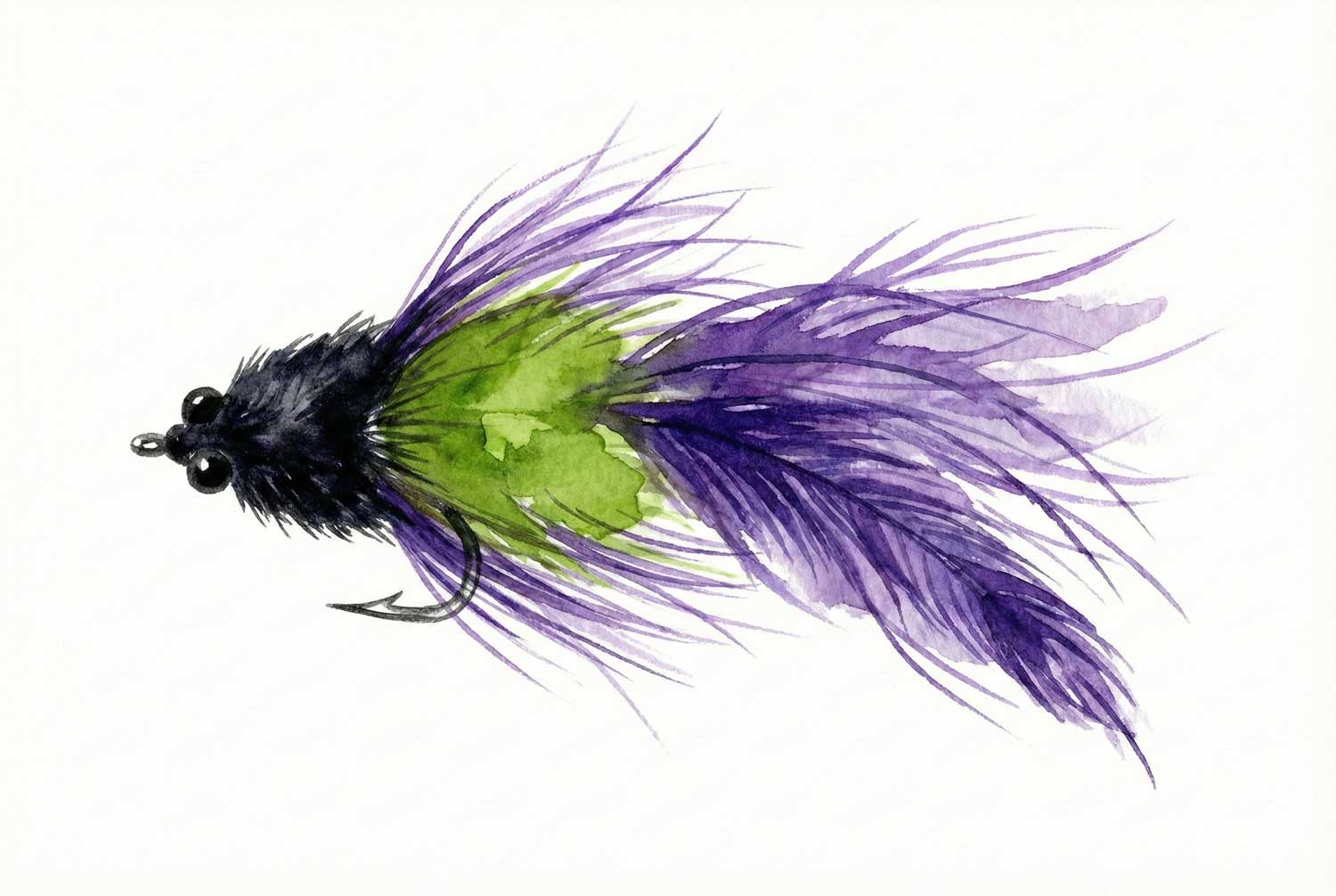
For Everglades backcountry water, tie Toads in dark colors: black and purple, brown and orange, or solid black with a red collar. These silhouettes show up in tannic, tea-colored water where visibility drops to a few feet. For clearer Keys conditions, switch to chartreuse and yellow, tan and white, or olive and white to imitate the pilchards and glass minnows tarpon feed on along the oceanside flats.
How to Tie the Tarpon Toad
Tie on a strong 2/0 saltwater hook (Owner SSW or Gamakatsu SL12S). Start thread at mid-shank and stop at the hook point—leaving the rear half bare gives you room to attach the tail without bulk. Secure a three-inch rabbit strip on top with the fur facing down, then post it upward by wrapping thread around the base eight to ten times. This critical step prevents fouling and creates the signature flutter that makes the Toad irresistible.
The Toad excels on warming February and March afternoons when backcountry tarpon begin rolling in tannic ponds and creek mouths. Fish it on a floating line in water under four feet; switch to an intermediate line for deeper channels.
Add a sparse marabou collar around the tail base, distributing fibers evenly around the shank so tips reach about halfway down the tail. Build the head from four small clumps of EP fibers (each about half a pencil’s diameter), tied with figure-eight wraps, then trim to a flattened teardrop shape—wide at the front, tapering toward the tail. Use lightweight mono or bead-chain eyes positioned just behind the hook eye to maintain neutral buoyancy without adding unnecessary weight.
The finished fly should measure 2.25 to 2.5 inches with the head occupying roughly one-third of the total length. Keep materials sparse throughout; overdressing kills the action that makes the Toad effective. A drop of super glue at the tail tie-in point adds durability for tarpon’s abrasive mouths.
Fishing the Toad for Early-Season Tarpon
Present the Tarpon Toad with a soft landing several feet past your target, then strip slowly to bring it into the fish’s view. Use a steady hand-over-hand retrieve with medium strips. When a tarpon follows, slow your strip slightly rather than speeding up—this triggers the predatory response.
The Toad excels on warming February and March afternoons when backcountry tarpon begin rolling in tannic ponds and creek mouths. Fish it on a floating line in water under four feet; switch to an intermediate line for deeper channels. Always strip-set when a fish eats—never trout-set with these bony-mouthed fish.
Stock your box with six to eight Toads in mixed colors and tail styles (rabbit and marabou) for a typical Everglades trip. The pattern that once dominated tarpon tournaments remains the fly to reach for when laid-up fish refuse everything else.
Frequently Asked Questions
What hook size should I use for a Tarpon Toad?
Use a 2/0 hook for most Everglades tarpon fishing—it handles fish from 20 to 100 pounds. Step down to 1/0 for juveniles under 20 pounds, or up to 3/0 for targeting fish over 100 pounds in deeper water.
What’s the difference between rabbit-strip and marabou-tail Toads?
Rabbit-strip Toads offer more bulk and a stronger wiggle, making them slightly better in deeper or faster water. Marabou-tail versions are lighter, foul-proof, and sink slower—ideal for very shallow laid-up fish. Many anglers carry both and let the fish decide.
When is the best time to fish the Tarpon Toad in the Everglades?
February through April offers prime Toad fishing, particularly on warming afternoons after cool nights push tarpon into backcountry ponds and creek mouths. The pattern works year-round but excels when fish are laid up and reluctant to chase.
Can I use the Tarpon Toad in clear Keys water?
Yes, but switch to lighter colors—chartreuse and yellow, tan and white, or all-white patterns that imitate baitfish. The Toad’s suspending action works in any water clarity; only the color selection changes.
Do I need a weed guard on a Tarpon Toad?
No. A properly tied Toad with a posted tail rarely fouls, and weed guards can interfere with hook penetration in tarpon’s bony mouths. Skip the guard unless you’re fishing heavy mangrove structure where snags are constant.