

Trailing hooks, articulated shanks, and anti-fouling mono loops solve the three biggest problems with steelhead bunny leeches—short strikes, tail fouling, and helicopter spin. These modifications transform rabbit strip flies from frustrating to reliable, putting the hook where steelhead actually bite while keeping the fly swimming true through the swing. Whether you fish Pacific Northwest tributaries or Great Lakes streams, these tying techniques work.
Bunny leeches catch winter steelhead because wet rabbit fur pulses with lifelike movement in cold water. But traditional designs—a rabbit strip tied to a long-shank hook—fail in predictable ways. The soft tail wraps around the hook bend mid-swing. The fly spins instead of swimming. Fish grab the fur but miss the steel. The fixes aren’t complicated, but they require building the problem-solving features into the fly from the start.
Why Trailing Hooks Change Everything
A stinger hook positioned near the tail end of your bunny leech catches the short strikes that traditional patterns miss. Steelhead often nip the back of leech flies without committing—if your hook sits forward on a long shank, you’ll feel bumps all day without hookups.
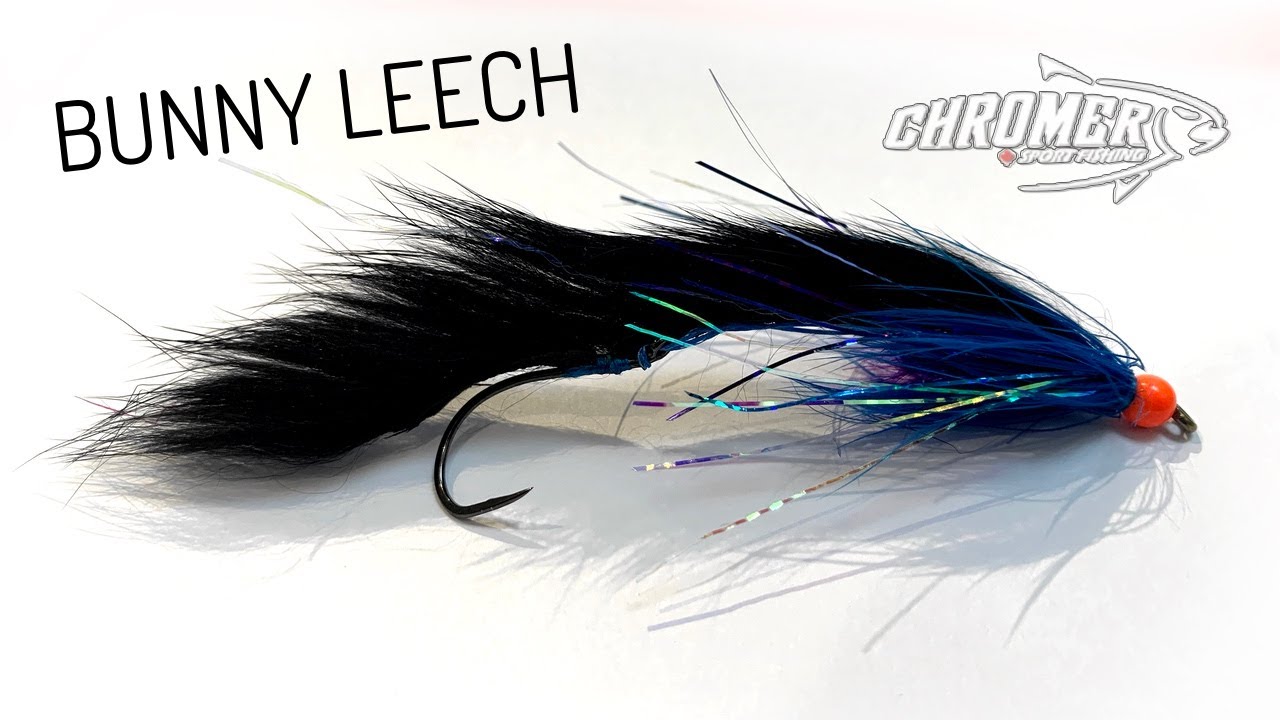
The standard setup uses 20–30 lb braided Dacron or coated intruder wire to connect a trailing hook (Gamakatsu Octopus size 2–4 or Owner SSW size 1–2) to the front shank. Double the braid through the hook eye, secure it along the shank with thread and superglue, and position the hook so it rides just shy of the tail’s end. The rabbit hide should end near the hook bend—any “dead zone” beyond the hook point invites short strikes.
Running your loop through an up-eye hook from below makes the point ride up in the current, reducing snags when swinging near bottom structure. The articulation also adds lifelike movement while reducing leverage during fights.
Preventing Tail Fouling and Helicopter Spin
Rabbit strip tails foul when they wrap around the hook bend during casting or swinging. Cold water compounds the problem by stretching the hide, making tails progressively longer throughout the day.
The simplest fix is a mono anti-fouling loop: tie a piece of 20–30 lb stiff monofilament from near the hook bend, extending just shy of the tail’s end in a U-shape. This loop herds the rabbit strip and prevents it from wrapping under the hook without restricting movement.
Helicopter spin usually indicates an off-center rabbit strip or unbalanced weight distribution. Secure your strip along the shank’s centerline, and if using heavy cones or beads, ensure they don’t cause the fly to tumble. Lighter brass eyes work better than tungsten for softer flows where you don’t need aggressive sink rates.
For flies that cast easier, use narrower strips (standard 1/8-inch rather than magnum 1/4-inch cuts), or substitute pine squirrel strips that shed water faster than rabbit. Combining a rabbit tail with a marabou collar maintains profile while dramatically reducing waterlogged casting weight.
Three Proven Steelhead Bunny Leech Patterns
The MOAL Leech wraps rabbit strip around flexible Dacron connecting to a trailing Octopus hook—no rigid shank means maximum undulation. Black and purple versions excel in high, colored water on rivers like the Sauk, Skagit, and Hoh.
The Dolly Llama uses an articulated shank, trailing B10S stinger hook, and heavy brass cone for fast sink. The classic black body with white belly strip creates a two-tone profile that triggers aggressive strikes in deep runs and around structure.

The Egg-Sucking Tube Leech combines traditional ESL appeal (hot orange cone head) with modern tube construction. Tie rabbit strip on a 1.5–2 inch plastic tube, rig with a loop-hitched stinger hook, and you get a modular fly where hooks can be swapped instantly and tubes can be stacked for bigger profiles.
These patterns address short strikes through trailing hooks, prevent fouling through thoughtful design, and maintain the seductive rabbit-fur pulse that makes bunny leeches effective for winter steelhead in the first place. Build these features into your flies at the vise, and you’ll spend more time fighting fish than retying fouled patterns.
FAQ
What size hook should I use for steelhead bunny leeches?
Use size 2–4 Gamakatsu Octopus or size 1–2 Owner SSW Cutting Point hooks as trailing stingers. These provide the strength and penetration steelhead demand while fitting properly at the tail of most bunny leech patterns. Larger hooks (1/0) work for oversized flies targeting big fish in heavy water.
How do I stop my bunny leech tail from fouling?
Add a mono anti-fouling loop using 20–30 lb stiff monofilament tied in a U-shape from the hook bend to just short of the tail’s end. This guides the rabbit strip straight without restricting movement. Also keep tail length reasonable—the rabbit hide should end near the hook bend, not extend well past it.
What colors work best for winter steelhead bunny leeches?
Black, purple, and combinations of both (“Black & Blue”) are top producers in winter conditions across most steelhead rivers. Add a hot orange or pink cone head for egg-sucking versions, which can trigger strikes when plain dark leeches get ignored. White bellies on two-tone patterns like the Dolly Llama add visibility in murky water.
Can I tie bunny leeches on tubes instead of hooks?
Yes—tube construction offers significant advantages for steelhead bunny leeches. The hook rides on a loop behind the tube, positioning it perfectly at the tail while allowing instant replacement if it dulls. The fly slides up the leader when a fish is hooked, reducing leverage. You can also stack multiple tubes for larger profiles without tying entirely new flies.
Why do steelhead short-strike my bunny leeches?
Short strikes happen when the hook sits too far forward on a long shank while the rabbit strip extends well past it. Steelhead often grab the tail of leech patterns first. The solution is trailing hooks—a stinger positioned near the tail’s end catches fish that would otherwise nip fur and escape. Ensure your rabbit hide ends at or near the hook bend with no significant “dead zone” beyond the point.


