
In September, the striper fall run is a New England event, not a coast-wide one. The best beach fly fishing runs from Maine through southern New England — Long Island’s peak comes in mid-to-late October, and New Jersey’s in November. For a first September trip, start in a protected back bay or inlet with a 9-foot 9-weight, one intermediate line, and a handful of Clouser Minnows, and time your dates to the water temperature rather than the calendar.
The fall run is the southbound migration of striped bass following baitfish out of cooling estuaries and down the coast. It’s the most reachable big saltwater event on the East Coast because the fish push in tight to the beach — often in daylight, often within casting range of a wading angler. The catch for a first-timer is that “the fall run” isn’t happening everywhere at once.
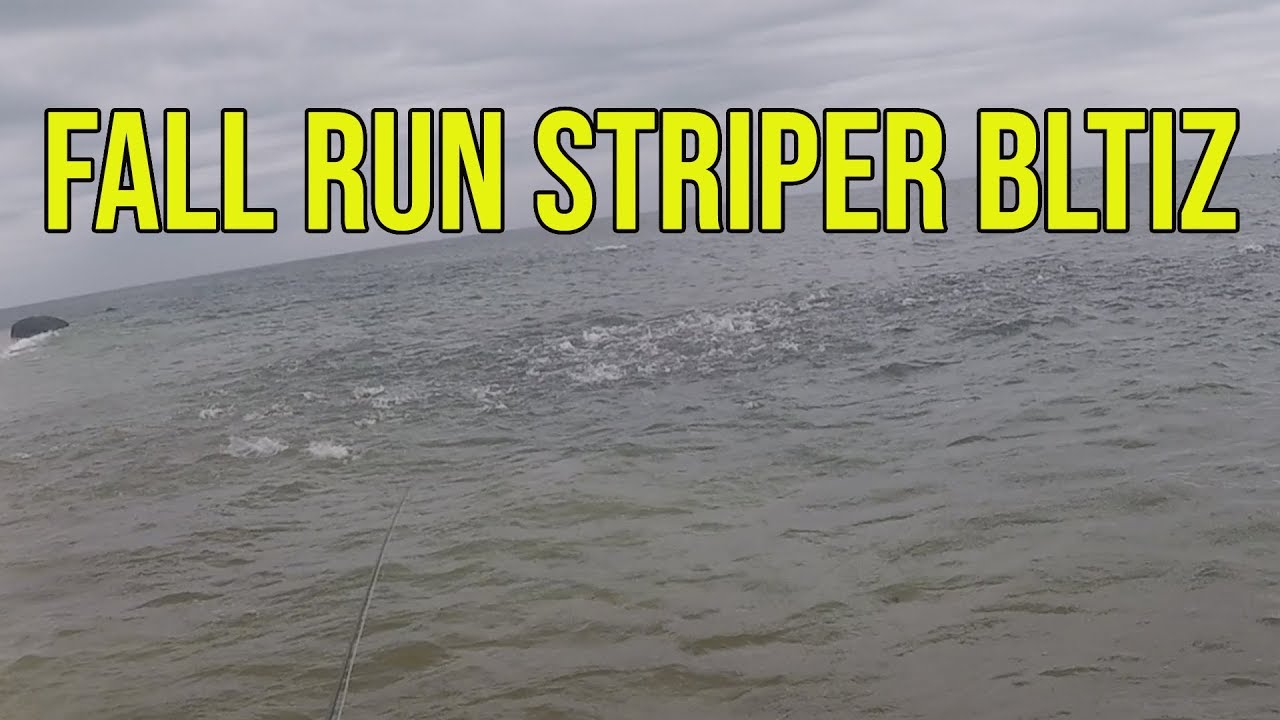
Where to Fish the Fall Run in September
For a September trip, go to northern and southern New England. Stripers feed hardest in water from roughly 55–65°F, and that band cools over the northern coast weeks before it reaches the mid-Atlantic. Maine and Cape Ann fire up first, followed by Cape Cod, Buzzards Bay, and Rhode Island.
Some of the best September structure is walk- or bike-on: the Cape Cod Canal, where migrating bass funnel through; the Rhode Island south-shore breachways — Charlestown, Weekapaug, Matunuck — where you can move jetty to jetty; and the open Cape beaches at first light. Long Island’s Montauk turns on around October, and New Jersey inlets like Manasquan and Barnegat peak in November, so save those for later in the fall.
Match the Bait, Not the Calendar
The fall run is driven by a sequence of baitfish leaving the estuaries. In September you’re mostly matching small bait: the mullet run starts around mid-September, peanut bunker (2–4-inch young menhaden) pour out of the rivers from late August into October, and silversides and bay anchovies fill in through the fall. Anchovy blitzes look spectacular but produce some of the pickiest fish of the year — downsize and fish subsurface when acres of breaking fish won’t eat.
For most beginners, the smart first water isn’t the open surf at all. Open-ocean fly casting in fall wind and waves is one of the harder entry points in the sport. Back bays, estuaries, and inlets fish closer, calmer, and more like a river, and they’re the better place to catch your first striper before you graduate to the beach.
Presented by MidCurrent Plus
This article can’t see your water. Our editors can.
M+ members ask MidCurrent’s editors about their own rivers — hatches, flies, timing — and get real, specific answers back.
Become a M+ Member →The Simple Setup That Works
One outfit covers the whole run: a 9-foot 9-weight (step to a 10-weight for open-surf wind), a sealed-drag reel, and one intermediate fly line for most beaches — add a floating line if you’ll fish topwater or shallow flats. Use a 7–9-foot leader of 20-pound fluorocarbon, and carry a stripping basket, which is a safety item as much as a functional one in the surf.
Keep the fly box small and match size to the bait present. A Clouser Minnow in chartreuse-over-white and olive-over-white (roughly 1.5″, 3″, and 5″) is the workhorse. Add a Lefty’s Deceiver, a small epoxy Surf Candy for picky anchovy blitzes, a Bob’s Banger popper for surface feeds, and a slim sand-eel pattern if you’ll fish into November.
2026 Regulations and Handling
For 2026, the coastal ocean recreational striped bass fishery remains a 28–31-inch slot, one fish per day, open year-round — the ASMFC’s Addendum III (approved October 2025) did not adopt the proposed harvest cuts or closures. You’ll need a state saltwater registration or the federal one (a state permit, such as the $10 Massachusetts recreational saltwater permit, satisfies the federal requirement). Because the stock is still rebuilding, handle released fish carefully: crimp your barbs, keep fish in the water, and keep the fight short, especially in warm early-September water.
Get the region right, watch the water temperature, match the bait, and start somewhere protected. That’s the whole first-trip formula for the fall run.
Frequently Asked Questions
When does the striped bass fall run start in the Northeast?
In September, starting in southern Maine and moving through New England. The run is triggered by cooling water — bass feed hardest between about 55–65°F — so the northern coast fires first. Long Island peaks around mid-to-late October and New Jersey in November, following the same wave of fish south.
Where can I fly fish the fall run from shore in September?
Northern and southern New England beaches, canals, and breachways. Strong walk- or bike-on options include the Cape Cod Canal, the Rhode Island south-shore breachways (Charlestown, Weekapaug, Matunuck), and the open Cape Cod beaches. You don’t need a four-wheel-drive beach permit for a good first trip.
What fly rod and line do I need for surf striped bass?
A 9-foot 9-weight with one intermediate fly line handles most fall-run beach fishing. Step up to a 10-weight for open-ocean wind and larger flies, and add a floating line only if you plan to fish topwater or shallow back bays. Pair it with a 7–9-foot, 20-pound fluorocarbon leader and a stripping basket.
What flies work best for the fall run?
Clouser Minnows in chartreuse-over-white and olive-over-white, in sizes from about 1.5 to 5 inches, cover most fall bait. Add a Lefty’s Deceiver, an epoxy Surf Candy for picky bay-anchovy blitzes, a Bob’s Banger popper for surface feeds, and a slim sand-eel pattern for late-fall fishing.
What are the 2026 striped bass regulations?
For the coastal ocean recreational fishery, a 28–31-inch slot limit, one fish per day, open year-round. ASMFC’s Addendum III (October 2025) did not adopt the proposed harvest reductions or seasonal closures, so the rules are unchanged for 2026. Confirm current regulations with your state agency and carry the required saltwater registration before you fish.
Is the fall run good for beginners?
Yes, if you start in the right water. The event is very accessible, but open-surf fly casting in fall wind is difficult — beginners do best starting in protected back bays and inlets where fish are close and casts are short, then moving to the open beach as their skills improve.


