
The easiest panfish popper to tie is a glue-and-go foam bug: you seat a pre-formed foam body onto a kinked-shank hook with a drop of super glue, add rubber legs, and color it with a marker — no thread wrapping, dubbing, or hackle required. That makes it the best first fly for a kid or beginner, because it skips every hard tying skill while still catching aggressive, surface-feeding bluegill. A size 8–10 body in yellow or chartreuse covers most panfish.
Why a Foam Popper Is the Best First Fly
A glue-and-go popper removes the skills that frustrate beginners. The standard first fly, the Woolly Bugger, teaches thread tension, dubbing, and hackle — useful for an adult learning the craft, but a wall for a young child. A foam popper replaces all of that with three simple moves: glue the body on, add legs, and dot the eyes with a marker.
It also delivers what a subsurface fly can’t: a visible, explosive topwater strike. For a first-timer, seeing the eat happen is what makes the sport stick. Bluegill (Lepomis macrochirus) are ideal for this — aggressive, schooling, and surface-oriented, they attack a small popping bug readily once water warms into the mid-60s°F.
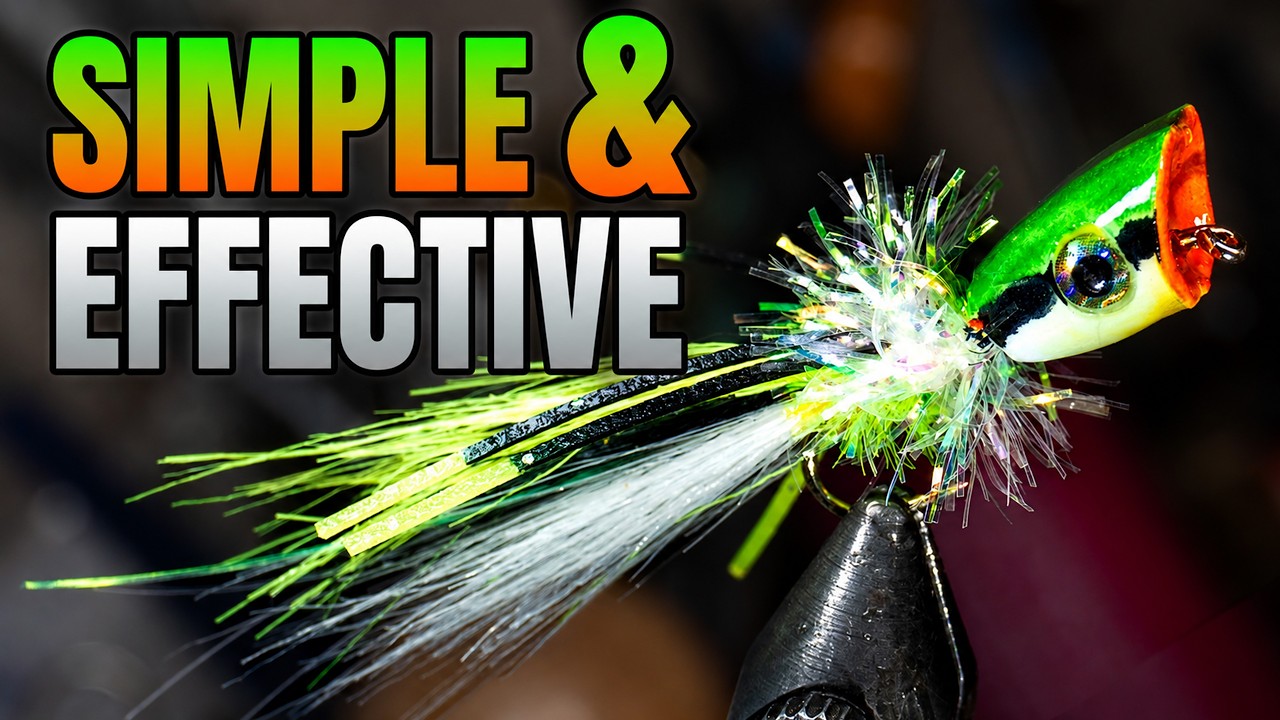
How to Tie a Glue-and-Go Panfish Popper
Hook: Use a kinked or humped-shank popper hook so the body can’t spin — a Mustad 33903 in size 8–10 is standard for bluegill. Keep everything in the 8–12 range to match a bluegill’s small mouth; size 6 crosses over to small bass.
Body: Seat a pre-formed soft-foam body such as a Flymen Surface Seducer Double Barrel (Extra-Small for a #8, Small for a #6). Yellow and chartreuse are the top panfish colors.
Assembly: Lay down a thin flat-thread base so the foam grips and doesn’t get cut, poke a hole with a bodkin, run gel super glue (Zap-A-Gap) along the shank, and seat the body cup-forward. Add small round rubber or Sili-Legs — sparse on size 10–12 so they don’t sink the bug — and an optional short marabou tail.
Presented by MidCurrent Plus
This article can’t see your water. Our editors can.
M+ members ask MidCurrent’s editors about their own rivers — hatches, flies, timing — and get real, specific answers back.
Become a M+ Member →Finish: Color and add eyes with a permanent marker. For durability, seal with Loon Soft Head and a thin coat of flexible UV resin (Solarez Flex). Marker-only is fishable if you’re in a hurry.
One caution on the “two-minute” label: the assembly is quick, but super glue inside foam can take one to two hours to fully cure. Build the flies the night before you fish so they hold together on the water.
How to Fish It for Bluegill
Pair the popper with a 7½-foot 3-weight rod and a 7½-foot leader tapered to 3X or 4X. Fish shallow cover — brushy banks, docks, fallen timber — and work the bug slowly: cast, let the rings clear, twitch, and pause. Most strikes come on the pause. When the surface bite slows, hang a small dropper like a Bully’s Bluegill Spider a foot below the popper.
Early fall is prime, since bluegill move shallow to feed up before winter and often produce the year’s biggest fish. Just note that the topwater bite depends on warm water: in the northern tier, by late September the bite can shift subsurface.
FAQ
What is the easiest fly for a beginner or kid to tie?
A glue-and-go foam panfish popper is the easiest fly for a beginner or child. It uses a pre-formed body glued to the hook instead of wrapped materials, so it skips the thread control, dubbing, and hackle that make flies like the Woolly Bugger difficult. A kid can build one in a single sitting.
What size popper is best for bluegill?
Size 8–10 is the sweet spot for bluegill, because their mouths are small. Stay in the 8–12 range for panfish; a size 6 still catches big bluegill but opens the door to bass. Match the hook to the foam body — an extra-small body takes a #8, a small body a #6.
What hook do you use for a foam popper?
Use a kinked or humped-shank popper hook so the foam body can’t rotate on the shank. The Mustad 33903 in size 8–10 is the standard choice for bluegill poppers. A straight-shank bass-bug hook like the Gamakatsu B10S works too, but needs a thread base and glue to keep the body from spinning.
Are foam poppers more durable than cork?
Not automatically — durability depends more on the finish and size than on the material. Hard foam is the most durable at tiny panfish sizes, while well-sealed cork with a polymer finish also lasts a full season. Soft foam resists crushing but tears on the teeth of bass or pickerel. A marker-plus-resin finish adds the most durability.
When is the best time to fish a popper for bluegill?
Early fall and warm summer months are prime, with the surface bite strongest once water reaches the mid-60s°F, usually mid-day to afternoon on sunny days. Bluegill move shallow in fall to feed before winter, often producing the biggest fish of the year. In cooler northern waters, the topwater bite may fade by late September.


