
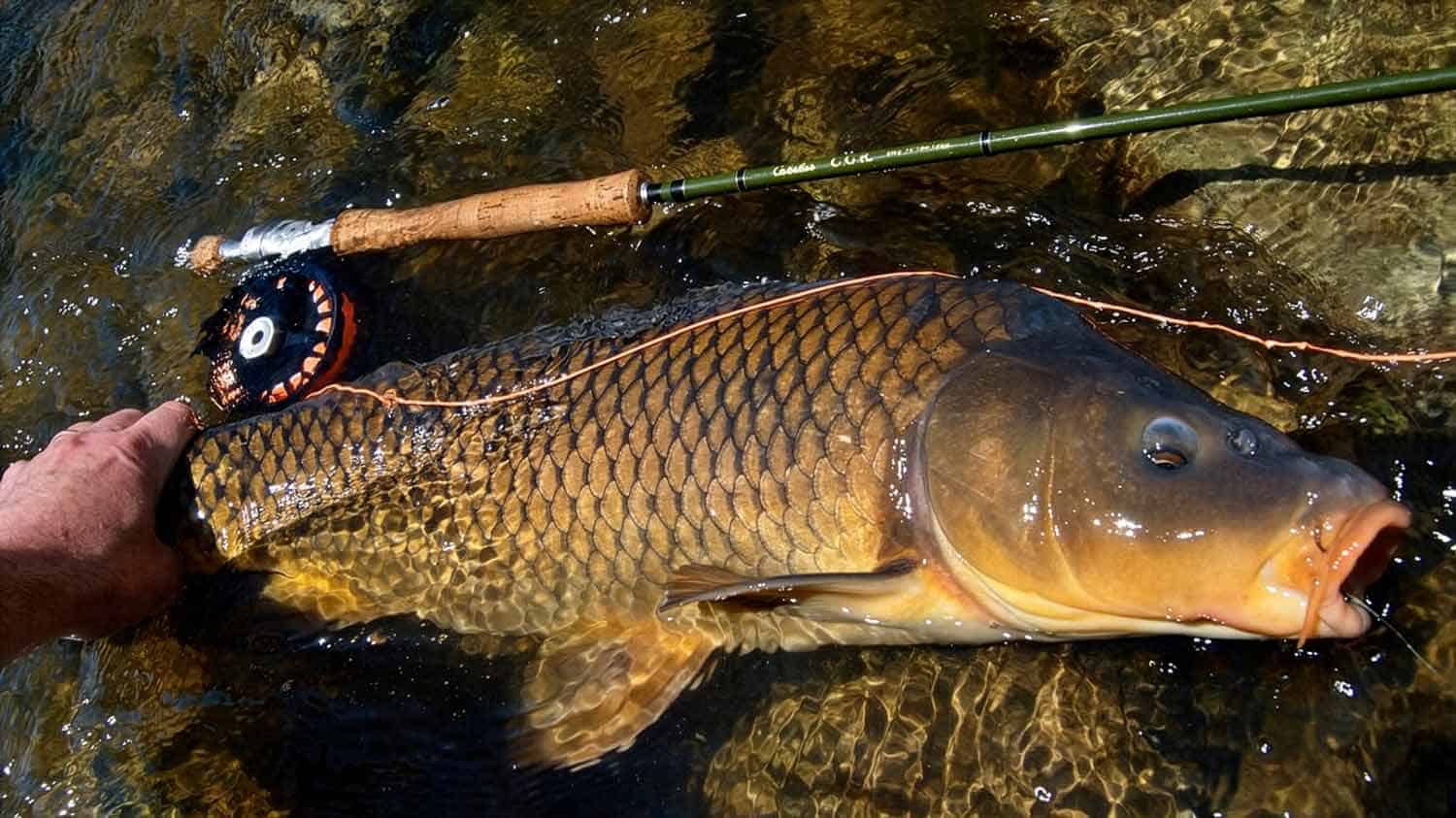
To catch carp on a fly, stalk feeding fish in skinny summer water: move in low and quiet, pick a head-down tailer rather than a cruiser, and drop a weighted fly into a plate-sized zone right at its head using a drag-and-drop, then set with a soft trout-style lift. Summer is the best season for it, because warm shallows pull carp onto sun-heated flats where you can see them. The whole game is reading which fish is feeding and getting the fly in front of it without a splash.
Read the Carp Before You Cast
The feeding posture tells you your odds before you ever cast. A tailing or rooting fish — head down, tail up, bulldozing the bottom and leaving mud puffs — is the highest-percentage target. It’s so locked on that you can usually approach within about twenty-five feet, sometimes close enough to dap a fly off the rod tip. A clooper feeds at the surface on cottonwood seed, mulberries, or terrestrials and can be taken on a dry. Cruisers, gliding along and evaluating where to feed, are roughly a coin flip on a good presentation.
Leave the wrong fish alone. Fast, straight-line swimmers are spooked or moving through. Motionless, sunbathing fish are long odds. Spawning carp, thrashing in the shallows in late spring and early summer, generally won’t eat — work the active feeders around the edges instead. Carp also have unusually sharp hearing and pressure sense, so wade slowly and flat-footed, keep your profile low with the sun at your back, and wear polarized glasses. If you’re in a boat, pole or paddle the last stretch rather than running a motor onto the flat.
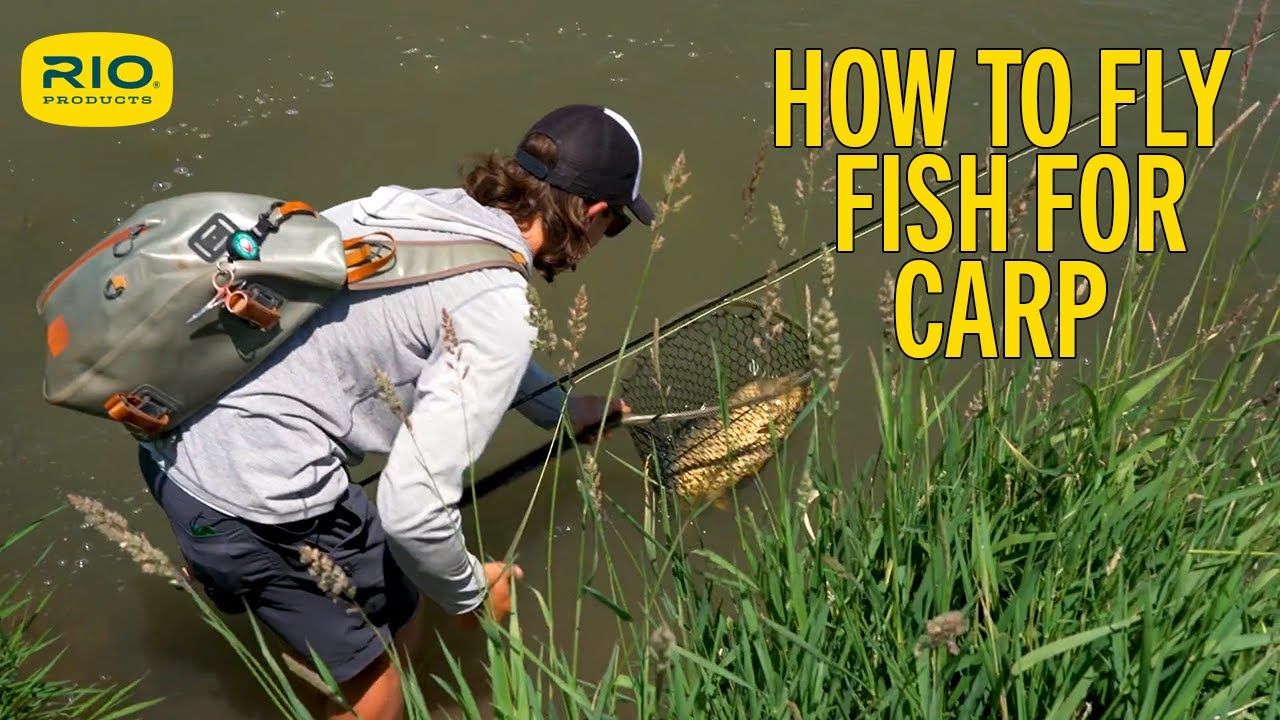
The Drag-and-Drop Presentation
The drag-and-drop is the most reliable carp presentation. Cast a weighted fly up to about six feet past the fish, stop the rod high so only the fly touches the water and the line stays off the surface, then drag the fly across the film until it’s above the fish’s head. Drop the rod tip and let the fly fall straight down into a plate-sized zone — ten to twelve inches — right in the feeding lane.
Never cast directly over a carp; it spooks the fish almost every time. Lead a cruising or feeding fish by two to three feet and let the fly sink in line with its eyes. For a tailer locked on the bottom, put the fly in that plate-sized spot at its head. And don’t strip the fly toward the fish — carp don’t chase fleeing prey, so a fly moving at them usually spooks them. Get it in the lane and let the carp come to it. If a fish refuses a couple of good presentations, change flies or move; it has almost certainly seen the pattern and rejected it.
Gear and Flies for Carp
Most carp anglers fish a 9-foot, 6–8 weight rod, with a 7-weight the do-everything choice and an 8-weight for big fish and wind. Use a reel with a smooth drag and 100–200 yards of backing — carp routinely run into the backing, so treat it like a bonefish reel. Run a weight-forward floating line, a 9-foot tapered leader plus about three feet of tippet, starting around 3X (roughly 10 lb) and dropping to 4X when clear-water or pressured fish refuse.
For flies, the rule that matters most is hook orientation: fish weighted patterns that ride hook-up (dumbbell or bead-chain eyes) so they sit point-up off the bottom and snag less. Keep sizes around 8–12 in olive, brown, rust, black, and orange, which stand out against a mud bottom, and skip the heavy flash. Productive standbys include John Montana’s Hybrid and crayfish, worm, and leech imitations; MidCurrent’s top summertime carp flies is a solid starting box. Still, the best answer to fly choice is usually knowing your forage — match what the carp are eating on your water.
Carp are accessible almost anywhere, and summer is when they feed shallow while trout fishing slows. Find a tailing fish, get close and quiet, make one good drag-and-drop, and watch for the eat.
Frequently Asked Questions
What Is the Best Way to Present a Fly to Carp?
The drag-and-drop is the most reliable presentation. Cast a weighted fly past the fish with the rod held high so the line stays off the water, drag the fly to a point above the carp’s head, then drop the rod tip to let it fall into a plate-sized zone right at the head. Don’t strip the fly toward the fish — carp don’t chase.
What Size and Color Flies Work Best for Carp?
Sizes 8–12 in olive, brown, rust, black, and orange work for most carp fishing, because dark colors stand out against a mud bottom. Just as important, the fly should be weighted to ride hook-up so it sits point-up off the bottom and snags less. Match the size and profile to the forage on your water.
What Weight Fly Rod Should I Use for Carp?
A 9-foot, 7-weight is the do-everything choice for carp, with an 8-weight better for big fish and wind and a 6-weight fine where carp run small. Pair it with a reel that has a smooth drag and 100–200 yards of backing, since carp regularly run into the backing.
When Is the Best Time to Fly Fish for Carp?
Summer is generally the best season, because warm, shallow water pulls carp onto flats where they’re visible and feeding while trout fishing slows in the heat. Early morning and the last hours of light are best each day; in midday heat, target shaded edges, wind-churned margins, and cooler inflows.
How Close Can You Get to a Carp?
You can usually approach a feeding tailer within about twenty-five feet, and sometimes close enough to dap a fly off the rod tip, because a head-down fish is absorbed in feeding. Cruising and resting fish are far warier. Move slowly, keep low with the sun at your back, and avoid any vibration — carp have very sharp hearing.


