
To skate a dry fly for steelhead, swing a buoyant waking fly down and across on a floating line so it throws an even V-wake at about walking pace, and hold off on the hook-set until the fish has turned and come tight to the reel. Summer and early-fall steelhead in water between roughly 48 and 58°F respond to the wake itself, not the fly — which is why they’ll rise to a skated fly in clear water and full daylight. For most anglers, the wake’s speed, the knot you use, and your discipline on the take matter more than the pattern.
A quick terminology note, because the old texts are precise about it: skating technically means a stiff-hackled fly riding on top of the film, while waking means a fly riding in the film and pushing a wake. Almost everything sold as a “skater” today — Bombers, Grease Liners, Muddlers, foam wakers — is really a waking fly. Anglers search “skate,” so that’s the word here, but on the water you’re waking.
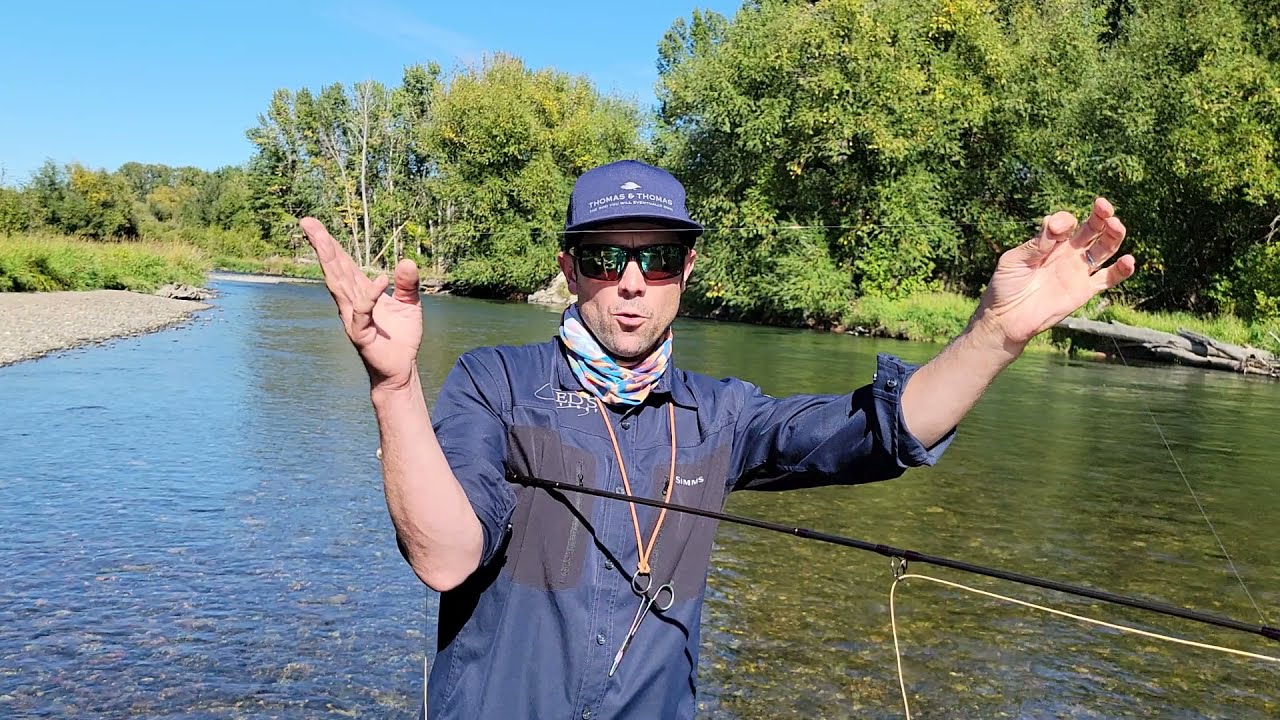
How to Control the Wake Speed
The single biggest adjustment in skating a dry fly is the speed and evenness of the wake, and you control it without ever changing flies. A fly that speeds away loses fish; a dead, too-slow wake brings up lookers, not takers. Aim for a continuous “V” at roughly walking pace.
You manage it with four things, none of them the fly. Cast angle sets the baseline — square to the current is faster, down-and-across is slower. An upstream mend slows the swing and a downstream mend speeds it up, and mending early after the cast does the most. Rod-tip position trims the line belly (trail it to slow down, lead it to speed up), and wading farther out or closer to the bank re-times the whole swing. Cover the run with the same step-down rhythm you’d use subsurface — cast, swing, step down two to four feet, repeat — and expect most grabs in the last third of the swing, as the fly slows and hangs toward your bank.
The Riffle Hitch and Whether to Use One
The riffle hitch — two half-hitches tied behind the fly’s head — pulls the leader off to one side so the fly planes and wakes instead of plowing under. It throws a strong wake, but it wears the fly, spins the leader, and cants the hook in a way that costs takes. That’s why some anglers skip it entirely and fish patterns that wake on their own, and why the reverse-turle (Garoutte) hitch on a down-eye hook is worth knowing: it gives the same downward leader angle with less fly damage. Which side you tie the hitch on matters less than most people think — the fish rarely seem to care.
A short box covers most situations: a Grease Liner in sizes 4–10, a size 6 Steelhead Caddis, a Thompson River Caddis, and a foam-lipped waker like a Ska-Opper for heavy chop. Fish them on a true floating line with barbless, down-eye hooks where regulations require, and a Maxima leader tapered to about 8-pound tippet.
Why You Can’t Set the Hook
The hardest part of skating a dry fly is not striking. On a tight-line surface swing the fish takes going away from you, so lifting the rod on the boil pulls the fly out of its mouth. Instead, feed a roughly two-foot loop of slack on the take, let the fish turn and come tight to the reel, then set low and toward your near bank. It takes most anglers a lost fish or two to retrain the trout-set reflex.
Skating a dry fly asks more patience for fewer grabs than almost any other method — but a steelhead rising through clear water to crush a waking fly is the take of the season. Slow the swing to a walk, fish the cold morning water, and when the river boils, wait.
Frequently Asked Questions
What water temperature is best for skating a dry fly for steelhead?
Roughly 48–58°F is the prime window for surface fishing, with about 48°F the most reliable point at which steelhead will come up. Fish can be moved in colder water as an exception, but above about 70°F a hooked steelhead can die even after release, so fish the cold morning hours in midsummer or don’t fish at all.
Do I need to use a riffle hitch to skate a fly?
No. The riffle hitch helps a fly wake, but it wears the fly and can cause missed takes, so many experienced anglers fish self-waking patterns with no hitch or use a reverse-turle (Garoutte) hitch on a down-eye hook instead. Which side you tie a hitch on matters less than anglers tend to assume.
What rod and line do I need to skate dry flies for steelhead?
A true floating line is the essential tool — not a sink-tip or versitip. Rods range from a 9-foot 4- to 6-weight on small water to a 13- or 14-foot two-hander on big rivers; longer rods give you the mending reach that helps control wake speed. Most western steelhead rivers suit a 7- to 9-weight.
When and where can I skate dry flies in July?
July is peak time on Oregon’s North Umpqua, where summer fish are in the fly water and the cold, clear, spring-fed flows let fish rise in daylight. The lower Deschutes also begins fishing in July, though its season opener is set in-season off Columbia River dam counts — confirm current dates and any temperature closures with ODFW before you go.
Why do steelhead take a waking fly but I keep missing them?
Most missed fish come from striking too early. Steelhead take a skated fly moving away from you, so a quick trout-set pulls the fly out; let the fish eat, turn, and come tight to the reel before setting low toward the bank. Missing the first few fish while


