
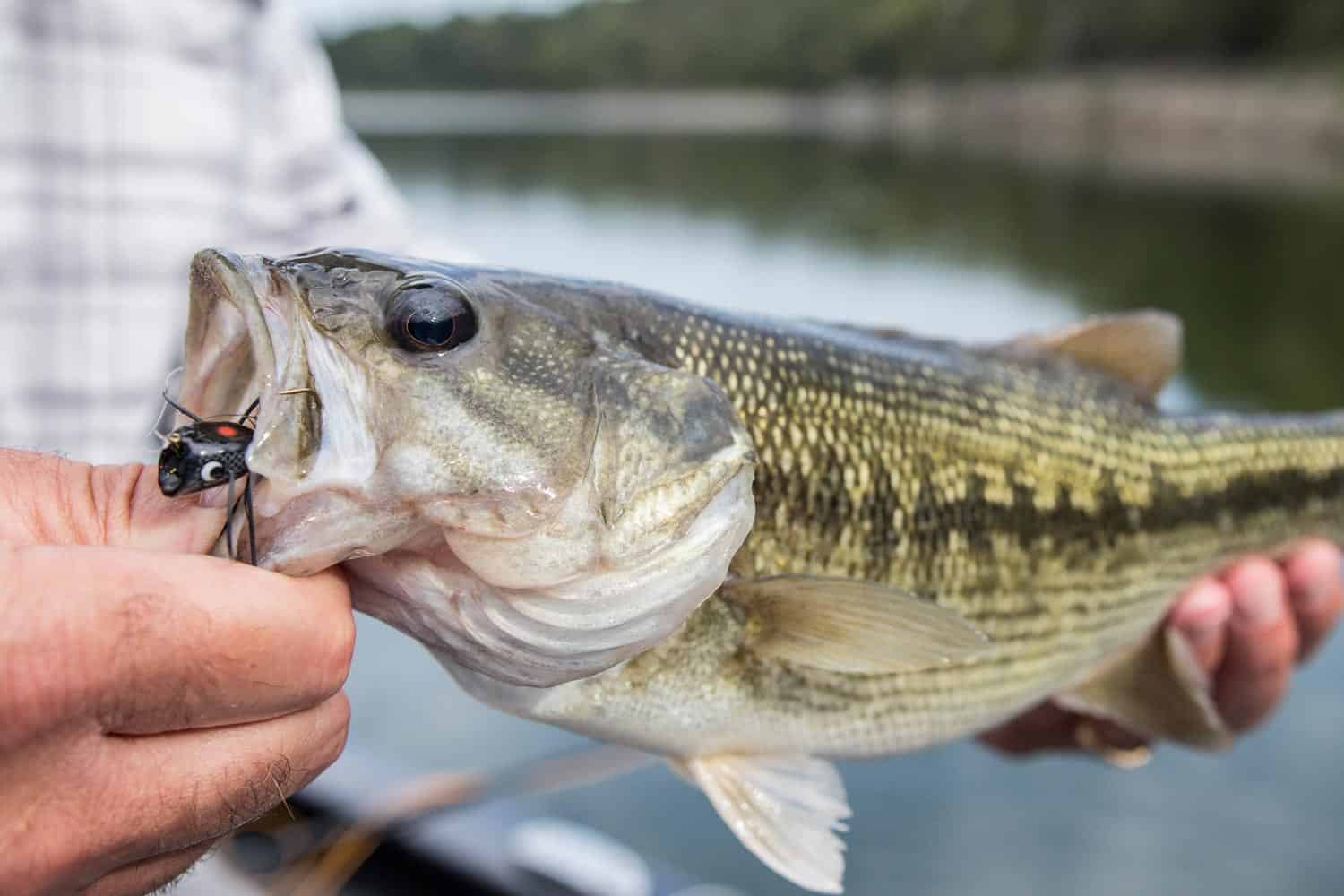
The best fly line for bass poppers and big deer-hair bugs is a dedicated bass taper — a short, front-loaded head that runs about one to two line sizes heavy, paired with a heat-stable summer coating. A trout line built to set a size 18 dry down softly can’t finish the turnover of a light, wind-resistant popper, so it piles. Match a front-loaded line like the Scientific Anglers Amplitude Bass Bug ($129.95) to a short, stiff leader and most pile-ups disappear.
The reason is physics, not just casting skill. A fly cast carries a fixed amount of energy, and once the rod tip stops, air drag drains it until the line and leader run out of push. A popper has huge frontal area and almost no weight, so it burns through that energy fast and stalls before the leader straightens. A front-loaded taper delivers a big slug of energy to the fly right at turnover; a long, fine trout taper does the gentle opposite.
Why a Bass Fly Line Turns Over Poppers and a Trout Line Doesn’t
A bass fly line does two jobs. First, the taper front-loads mass into a short, heavy head. Fly lines are rated by the grain weight of the first 30 feet, and bass lines run heavy on purpose — the SA Bass Bug carries an 8-weight’s 210 grains in a labeled 6. Second, the coating stays stiff and slick in summer heat, where a temperate trout line softens and casts worse.
You may not need to buy a dedicated line at all. A fast-action 8-weight overlined by a size or two mimics much of a bass taper’s front-loaded feel, and in genuinely cool water a coldwater trout line can out-cast a warm bass taper. The case for a bass line is strongest in summer, throwing big air-resistant bugs.
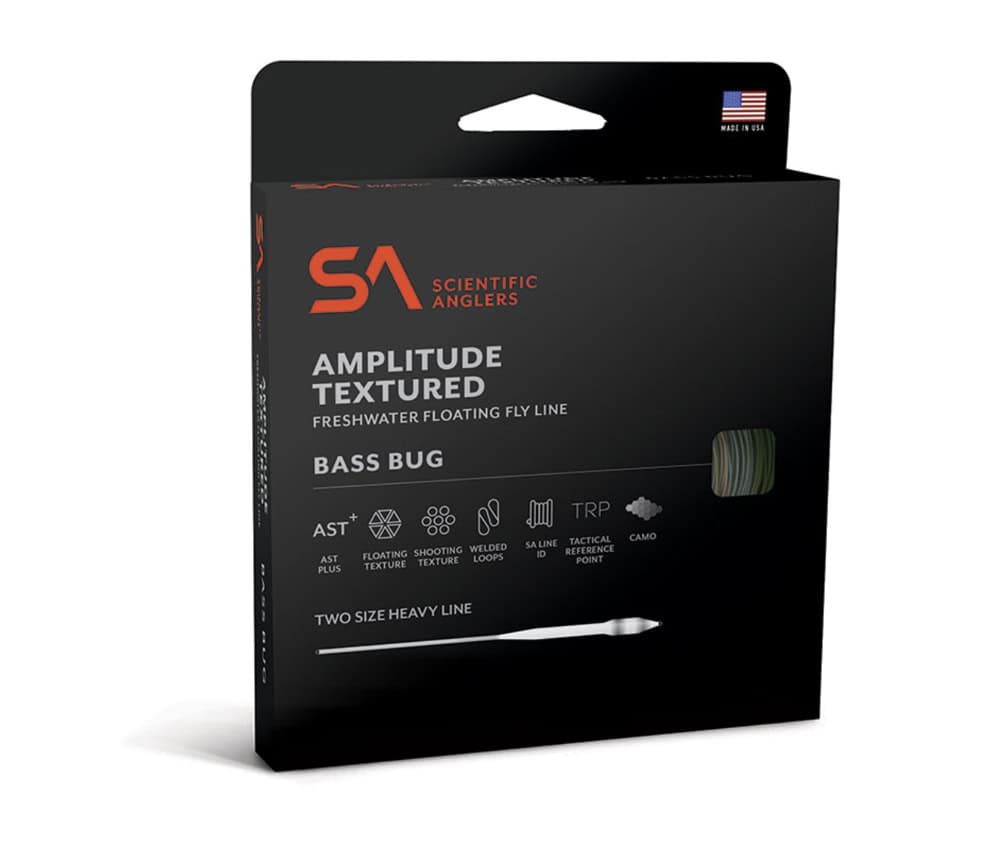
Current floating bass lines, with June 2026 pricing:
| Line | Notes | Price |
|---|---|---|
| SA Amplitude Bass Bug | Most aggressive taper (~2 sizes heavy) | $129.95 |
| SA Mastery Bass Bug | Same taper, smooth finish | $79.95 |
| RIO Elite Smallmouth Bass | Spring-to-fall coating, low-stretch core | ~$129.99 |
| Orvis Hydros Warmwater | Compact head, covers bluegill to carp | ~$98 |
| Cortland Specialty Series Bass | Budget workhorse, ~1 size heavy | ~$89.95 |
| RIO Mainstream Bass | Cheapest way to test a heavier front end | ~$40 |
For contrast, a premium trout line like RIO Gold (~$99.99) uses a 47-foot head with a long, fine front taper built to lay tiny flies down softly — the design that can’t finish a popper.
The Bass Bug Leader: Short and Stiff Beats Long and Fine
The leader fixes more pile-ups than a new line, and it costs a few dollars. Swap the 9-foot, fine-butted trout leader for something short and stiff: roughly 6 to 7.5 feet, a 25- to 40-pound butt down to a 10- to 20-pound tip. Two things matter — butt stiffness and a butt diameter that matches your fly-line tip so the energy crosses the connection instead of hinging.
Proven builds: a simple 7.5 feet of straight 0X or level 12–15 lb mono; Bob Clouser’s 40 lb-to-12 lb taper for 6–8 weights; or Peter Jordan’s 25/15/10 lb everyday bass leader. Buy them ready-made — the Cortland bass leader ($4–$7) is widely recommended — or tie your own from stiff material like Maxima Chameleon or Mason Hard Mono. Use nylon mono for topwater so it floats and won’t pull the popper under; save fluorocarbon for subsurface flies.
Quick Takeaways for July Topwater
Build a 7- or 8-weight, fast-action rod around a warm-coated, front-loaded floating line and a short, stiff leader. Try overlining the line you already own before spending $130. And clean up a long, lazy casting stroke first — gear can’t rescue a collapsing loop, but once your loop is tight and the bug still piles, the line and leader are what’s left to fix.
Frequently Asked Questions
What is the best fly line for bass poppers and bugs?
A dedicated bass taper with a short, front-loaded head is best for turning over poppers and deer-hair bugs. The Scientific Anglers Amplitude Bass Bug ($129.95) is the most aggressive; the Mastery Bass Bug ($79.95) offers the same taper for less, and the RIO Mainstream Bass (~$40) is a cheap way to test the concept. All run heavier up front than a trout line, which is what finishes the turnover.
Can I use my trout fly line for bass poppers?
You can, but it usually piles big, wind-resistant bugs because its long, fine front taper bleeds casting energy out gradually instead of delivering it at turnover. Overlining a fast-action rod by one or two sizes helps a lot, and moderate poppers cast fine on a standard all-water line. For big bugs in July heat, a dedicated bass taper makes the most difference.
What leader should I use for bass bugs and poppers?
Use a short, stiff leader — about 6 to 7.5 feet with a 25- to 40-pound butt tapering to a 10- to 20-pound tip. The butt should be stiff and close to your fly-line tip in diameter so the energy crosses into the leader instead of hinging. Use nylon monofilament for topwater because it floats; switch to fluorocarbon for subsurface flies in clear water.
Why won’t my bass popper turn over when I cast?
Most often it’s one of two things: a too-long casting stroke with no crisp stop, or a delivery system that can’t finish a high-drag fly — a fine trout line and a long, soft leader. They produce the same pile. Tighten the stroke first; if the popper still lands in a heap, switch to a front-loaded bass line and a short, stiff leader.
Do I need a bass-specific leader, or will a trout leader work?
A trout leader’s fine butt and long, soft taper are built to dissipate energy for a delicate landing, which works against popper turnover. A short, stiff bass leader is the single cheapest fix for pile-ups. Pre-made bass leaders run $4–$7, or you can tie one from


