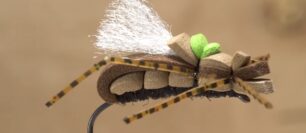

Eight fly patterns — Clouser Minnow, Lefty’s Deceiver, EP baitfish, EP Spawning Shrimp, Gotcha, Gurgler, Merkin crab, and Crystal Minnow — cover roughly 90 percent of March saltwater situations across beginner-accessible fisheries from the Florida Keys to the Texas coast to the Bahamas. These patterns work because they span the three prey categories inshore fish eat in March — baitfish, shrimp, and crabs — while solving the practical problems that actually cost beginners fish: wind resistance, depth control, and soft landings on spooky flats.
Which Saltwater Flies to Buy for a March Trip
March water temperatures range from 75–77°F in the Florida Keys and Bahamas down to 67–69°F along the Texas coast, and that spread determines which patterns you’ll reach for most. Warmer water means more active fish and viable surface options; cooler water demands flies that get down and stay down.
The Clouser Minnow (sizes 1/0–6, chartreuse/white, ~$3.99) is the foundation — a depth-control tool that handles wind and covers fish holding near the bottom in cooler March water. Pair it with a Lefty’s Deceiver (size 2/0, white, ~$3.99) for a bigger baitfish profile when fish are feeding higher in the column. An EP-style baitfish (size 2, tan or light olive, ~$8.95 per 2-pack) fills the small-baitfish slot that March guides in Texas report fish keying on — glass minnows and micro-bait that larger Deceivers can’t imitate.
Sponsored content

Win a St. Croix Evos S Fly Rod.
Sign up for a quarterly or yearly MidCurrent Plus membership by March 31, and be automatically entered in our drawing!
For crustacean imitations, an EP Spawning Shrimp (size 4, tan, ~$9.95) earns its premium price. Fly designer Enrico Puglisi names it as his favorite permit fly over his own crab patterns because shrimp are supposed to move — matching the retrieve most anglers naturally give under pressure. The Gotcha (sizes 4–8, pink, ~$4.99) handles bonefish-specific shrimp imitation with a built-in depth system: plastic bead eyes for shallow tailing fish, bead chain for medium depth, dumbbell eyes for deep. A Merkin crab (sizes 2–4, tan, ~$3.99) completes the crustacean coverage, with lighter versions (~1.2 grams) for calm-day permit and heavier ties for wind.
The Gurgler (size 1/0, chartreuse, ~$4.99) is your surface option — Jack Gartside’s foam-lipped design creates the topwater commotion that triggers redfish and snook during March’s warming windows. A Crystal Minnow/Schminnow (size 2, pearl, ~$2.99) rounds out the box as a shrimp-minnow hybrid designed for beach snook that begin moving shoreline to shoreline as early as March.

How Wind and Water Temperature Affect March Fly Choice
Key West averages 11.5 mph winds in March, and most Gulf and Atlantic flats fisheries run similar or higher. This makes aerodynamic, weighted patterns — Clousers, Gotchas with dumbbell eyes, compact EP flies — the workhorses over bulkier, wind-resistant designs. Save the Gurgler and unweighted patterns for the calmer windows that punctuate windy stretches.
Temperature shapes retrieve speed as much as pattern choice. In the 75–77°F water of the Keys and Bahamas, fish are active and will chase — moderate strips work. Drop to the upper 60s along the Texas coast, and fish may still feed aggressively but key on smaller prey. A March guide report from Rockport documented redfish gorging on grass shrimp and glass minnows while refusing larger offerings, even in otherwise ideal conditions.
Water temperature also dictates fly line choice. Tropical-core fly lines perform best above roughly 75°F. Much of the Texas and Louisiana coast in March falls below that threshold, where a standard warm-water core avoids the memory coils and limpness that tropical cores develop in cooler conditions. This matters most when throwing EP baitfish and Deceivers that demand longer carries and tighter loops.

Building a Complete March Saltwater Fly Box on a Budget
A full eight-pattern box with one of each runs approximately $45–55 at retail. The practical reality is that weight variants — light eyes versus heavy eyes on the same pattern — matter more than adding extra patterns, so budget for doubles of the Clouser, Gotcha, and Merkin in different weights. A working March box with key weight variants costs $80–120 total, or significantly less if you tie your own.
For leaders, a 10-foot tapered leader in 12–16 lb covers general flats work with most of these patterns. Step up to 15–20 lb for redfish, and use fluorocarbon tippet in 12–15 lb for permit — heavier tippet turns over crab and shrimp patterns more cleanly in wind.

Fly Fishing's Easy Button
SIGN UP FOR MIDCURRENT PLUS TODAY! MidCurrent Plus gives you guides, expert answers, even-more-detailed articles, and gear tips — matched your waters and your fish. Plus great gear discounts. All for less than $5 a month.
How many saltwater flies do I need for a week-long March trip?
Carry three to four of each pattern in your primary weights, plus extras of the Clouser and Gotcha — the two flies you’ll lose most often to coral and mangroves. A box of 30–40 flies total covers a full week without requiring mid-trip resupply for most March destinations.
What color saltwater flies work best in March?
Chartreuse/white and all-white dominate March baitfish patterns across nearly every fishery. For shrimp and crab imitations, tan is the universal standard. Pink works well for Gotchas on bright sand flats where it mimics spawning-phase shrimp. Avoid overly dark patterns unless fishing stained or deep water.
Can I use the same saltwater flies in the Florida Keys and Texas?
Yes — the same eight patterns work in both locations, but weight and size emphasis shifts. Florida Keys fishing in March favors lighter flies (bead chain eyes, size 4–8) for spooky fish on bright flats, while Texas coastal fishing often demands heavier, more compact patterns (dumbbell eyes, size 1/0–4) to handle wind and reach fish in deeper, off-colored water.
Do I need a crab fly for bonefish in March?
Not typically. Bonefish in March respond well to shrimp imitations like the Gotcha and EP Spawning Shrimp. Crab patterns earn their place primarily for permit. If your March trip targets both species, the Merkin covers permit while the Gotcha and EP shrimp handle bonefish — no dedicated bonefish crab pattern required.
What weight fly rod pairs best with these March saltwater flies?
An 8-weight handles most of these patterns comfortably and covers redfish, bonefish, and smaller tarpon. Step up to a 9- or 10-weight for dedicated permit fishing with heavier crab patterns, or if sustained winds above 15 mph are the norm. A 10-foot leader with 12–16 lb tippet turns over these flies effectively on either rod weight.