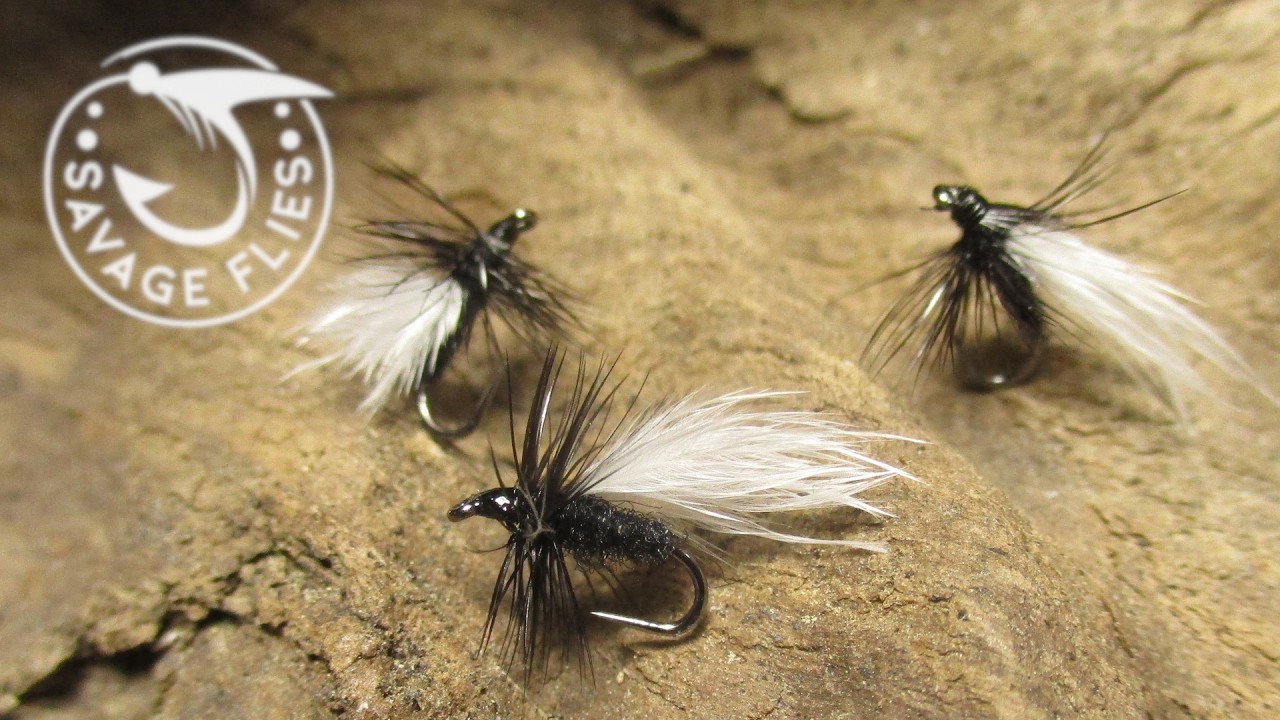
The Chicken Fluff Midge was born out of necessity. On a January afternoon, with a trip to the Savage River a few hours away and a midge box running thin after a hard December, there wasn’t time to wait. The usual plan for a pattern like this—dark body, dark hackle, and something white for a wing—was solid enough, but the typical wing materials weren’t at hand. What was on hand was a white chicken feather, the kind most tyers toss without a second thought. The soft, fluffy fibers at the base of the feather—the stuff that normally ends up in the trash—turned out to be exactly the right material. One feather, it turned out, yields enough of that fluff to wing half a dozen flies.
This fly is about as straightforward as a dry fly gets. Thread goes on mid-shank and is taken back to the start of the bend—there’s no tail. A small amount of black synthetic dubbing builds a slim body that runs a little more than halfway up the hook. A small tuft of the fluffy base fibers from the hen feather is then tied in just past the bend of the hook to form the wing—long enough to suggest the silhouette of an emerging midge, but nothing more. The hackle, black or grizzly dry fly, is wrapped three to four turns and tied off, then finished with head cement. On 18s and 20s, the whole fly comes together in a matter of minutes.
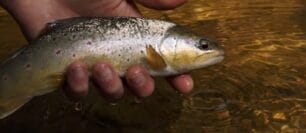
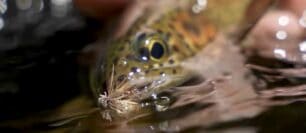
The Chicken Fluff Midge sits low in the film—not high-riding—but it floats well and holds up through multiple fish. Midges hatch through the cold months when other insects go quiet, and a simple, impressionistic pattern like this one covers that window reliably. On its first outing on the Savage River, it produced three fish, including a 15-inch wild brown taken just before sunset. Later on the Rapidan River, during a stretch in the middle of the day when caddis dry flies slowed down, the fly picked up four or five fish in about an hour and a half. Tied on 18s and 20s, it’s a low-investment pattern that’s quick to replace and consistently effective.
Tying Materials
Hook: #18–20 standard dry fly hook
Thread: Black, 12/0
Body: Black dry fly dubbing (synthetic)
Wing: Fluffy base fibers from a white hen/chicken feather
Hackle: Black or grizzly dry fly hackle (smallest available)