

A two-year FWRI study of about 700 snook in Charlotte Harbor found their average prey measured 14% of their own body length — a 24-inch fish keyed to a 3.4-inch baitfish, a 20-inch fish to one closer to 2.8. From that one number you can work out the modern mangrove-pocket snook fly: a sparse, translucent pattern in the #2 to #6 hook range with bead-chain or burnt-mono eyes, tied in the size class of juvenile pinfish, bay anchovy, and glass minnows. Florida tiers including Norm Zeigler, Chico Fernandez, Tim Borski, and Drew Chicone have converged on this setup over the past two decades.
The three rules: smaller, translucent, quieter
Smaller. Hook sizes for clear-water mangrove pockets run #2 to #6. Mike Conner, the Salt Water Sportsman snook columnist, recommends “a No. 2, 4, and even 6 if the prevalent prey is particularly small.” Norm Zeigler’s original Schminnow is a #2. Drew Chicone’s Snook Flies 2 lineup runs #2 to 1/0. Chico Fernandez’s clear-water rig fishes flies 2½ to 4 inches finished length, on hooks in the #2 range. The exception is the fall mullet run, when 4- to 6-inch patterns — Conner’s Midnight Mullet, the EP Mullet, a Lefty’s Deceiver in 1/0 — fish better.
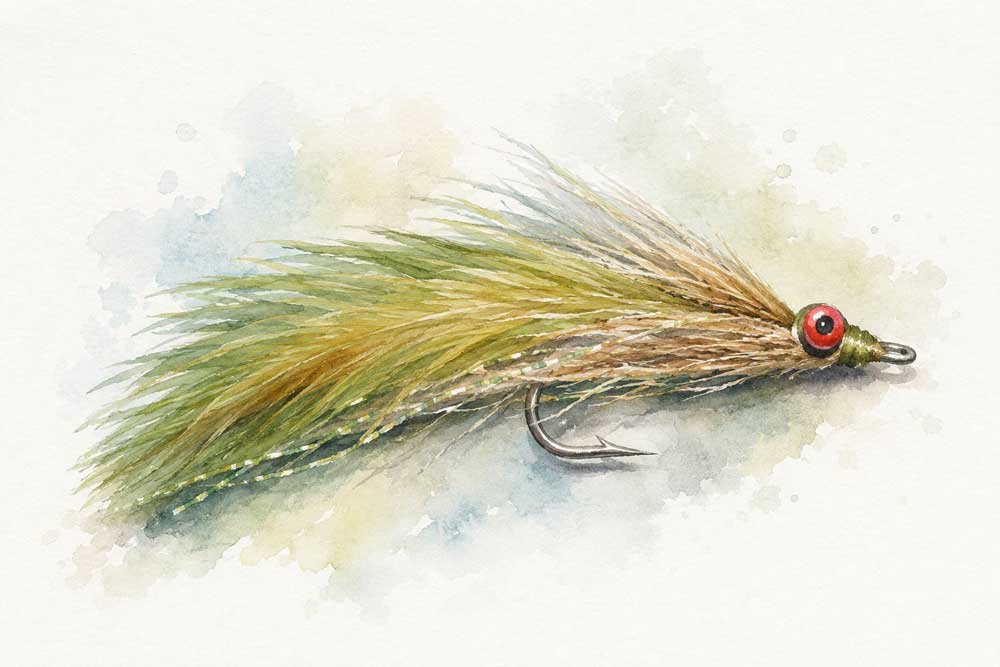
Translucent. EP Fibers, polar fiber, and slinky fiber transmit light through the bundle the way a real bay anchovy does; bucktail reads as an opaque silhouette in clear water. Fernandez’s stated clear-water rig is a small Puglisi baitfish in white with a green or tan back on a 12-foot leader and a 6-weight clear floating line. Chicone modified his Crystal D from a gold attractor to a white/translucent version specifically for clear back-bay water. Most modern Florida tiers settle on sparse trim: four to eight strands of pearl Flashabou Accent or Krystal Flash total, not a flash-saturated wing.
Quieter. Eye weight is what you hear hit the water on a glass-flat pocket. A small bead-chain eye weighs about 0.012 ounces; a small lead barbell weighs roughly twice that; a standard 1/30-ounce barbell roughly three times. Burnt-mono eyes (the original Schminnow spec) add effectively zero mass. Snook have a well-developed lateral line that detects vibration, so a lighter eye lands quieter and is harder for the fish to detect on impact. For most pockets: unweighted first, small bead chain when you need a little sink, lead eyes saved for the deeper-trough exception.
Three patterns to tie
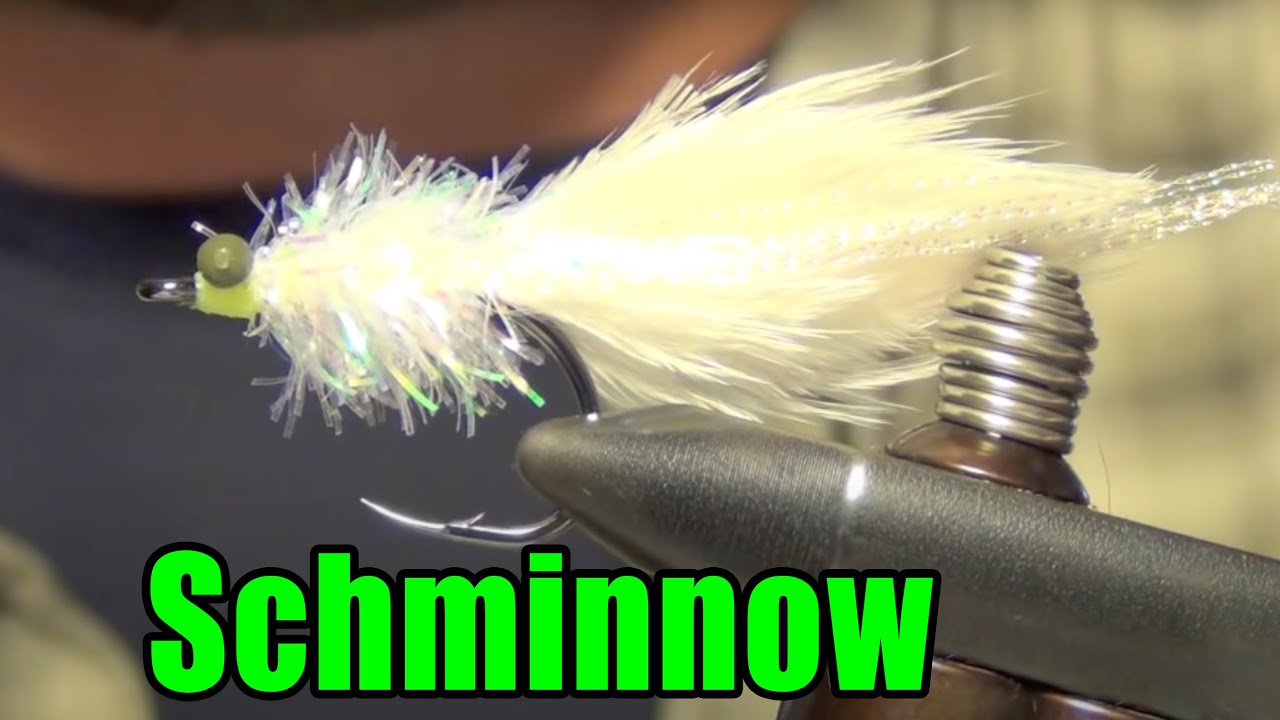
Norm Zeigler’s Schminnow: Mustad 34007 #2, two full white marabou plumes two shank-lengths long, 4–8 strands of pearl Flashabou Accent per side, burnt-mono eyes (or small bead chain), sparse white chenille body. Color variants in pearl/white (original), pink/tan (shrimp mimic), and all chartreuse for stained pockets. The minimal benchmark; Zeigler invented it in 1995 for clear-water Sanibel beach snook and it has caught more than 70 other species since.
Small EP Bay Anchovy / Puglisi-style baitfish: Gamakatsu SC15 #2 to #6, sparse EP Fibers (Mirror Image or Slinky Fiber acceptable substitutes) in white with green or tan back, plastic 3D eyes set in UV resin, 2½- to 4-inch finished length. Pearl Wing-N-Flash trim. This is Fernandez’s clear-water rig.
Tim Borski’s Mangrove Critter: TMC 811S, tan craft fur tail topped with orange Krystal Flash, 60-pound Mason Hard Nylon burnt mock eyes, pearlescent crystal chenille butt, palmered olive grizzly hackle legs, spun-and-clipped tan wool head tinted dark olive with a Pantone marker. Slow-sink shadow-pocket pattern; Borski fishes it in no-motor-zone Florida Bay backcountry.
Rig and line
An 8-weight floating line with a short head — bass-bug or bonefish taper — is the working default. A 7-weight makes sense in dead-calm clear conditions; a 9-weight for wind or root-heavy water where lifting fish out of structure matters more than landing softly. Leaders run 9 to 12 feet (Fernandez extends to 12 in the spookiest water), with a 25- to 40-pound fluorocarbon bite tippet for the snook’s gill plates and prop-root abrasion. Cast side-arm or oval rather than overhead so the fly lands first and the leader unfolds at lower velocity.
2026 conditions
Both Atlantic and most Gulf snook fisheries are in closed-harvest windows through most of the summer (Atlantic: June 1–August 31; most Gulf regions: May 1–August 31, Charlotte Harbor and Southwest closed through September 30). Catch-and-release is permitted and is what most fly anglers practice anyway. Post-Hurricane Helene (September 2024) and post-Hurricane Milton (October 2024) mangrove conditions are still settling in Charlotte Harbor, Pine Island Sound, Sanibel/Captiva, and the Big Bend — verify with local guides before a specific trip. The February 2025 freeze produced localized snook kills, but FWRI’s Alexis Trotter described the impact as “small kills, but nothing like what we expected.”
For most fly anglers fishing clear-water pockets through the summer C&R window: smaller hooks, translucent synthetic wings, lighter eyes, and a leader long enough to disappear.
FAQ
What size hook should I use for snook flies in mangrove pockets?
Use a #2 to #4 saltwater hook (Gamakatsu SC15, Mustad 34007, or TMC 811S) for most clear-water mangrove pockets, and go down to a #6 when fish are keyed on small bay anchovy or glass minnows. FWRI stomach-content research shows snook size-select prey at about 14% of body length, which for a 20- to 24-inch pocket fish points to a baitfish in the 2.8- to 3.4-inch range. Larger 1/0 to 2/0 patterns fish better during the fall mullet run.
Do I need weighted eyes on a mangrove snook fly?
Unweighted is the default for shallow (12- to 18-inch) clear-water pockets; small bead-chain eyes are the move when you need a little sink; lead barbells are usually overkill. Norm Zeigler’s original Schminnow uses burnt mono eyes. Chico Fernandez fishes unweighted Seaducers in mangrove edges. Heavier eyes drag a fly into the root tangle before a laid-up snook can react.
What’s the best snook fly for clear-water mangroves?
Three documented patterns cover most mangrove-pocket situations: Norm Zeigler’s Schminnow (#2, sparse white marabou, burnt-mono eyes), a small EP Bay Anchovy or Puglisi-style baitfish (2½ to 4 inches, white with green or tan back), and Tim Borski’s Mangrove Critter (craft fur, mono eyes, wool head). All three share the same logic: small hook, translucent wing, light eye.
Can I fish for snook during the closed season?
Yes — the Florida snook season closures (Atlantic June 1–August 31; most Gulf regions May 1–August 31, Charlotte Harbor and Southwest May 1–September 30) prohibit harvest but allow catch-and-release. FWC’s commonly cited figure is that only about 2% of released snook die from C&R when handled correctly: keep the fish horizontal, minimize air exposure, and use a 25- to 40-pound fluorocarbon bite tippet to land the fish quickly.
What leader and line should I use for mangrove snook?
An 8-weight floating line with a short head (bass-bug or bonefish taper) and a 9- to 12-foot leader is the working default for most pocket fishing. Step down to a 7-weight in dead-calm clear water (Fernandez’s clear-water rig fishes a 6-weight with a 12-foot leader); step up to a 9-weight when wind or heavy structure makes lifting fish out of roots the priority. Tippet should end in 25- to 40-pound fluorocarbon for snook’s raspy gill plates.


