
To land a hopper, beetle, or ant tight to a far bank without instant drag, use a reach cast: after the rod stops and while the line is still in the air, swing the rod upstream so the line lands positioned above the fly. That upstream placement forces the faster current between you and the fish to straighten the line before it can pull the fly, buying you a drag-free drift right where August trout hold. Add a controlled plop to get the fish’s attention, but only where the water is broad or off-color enough to forgive it.
What a Reach Cast Does for Bank Fishing
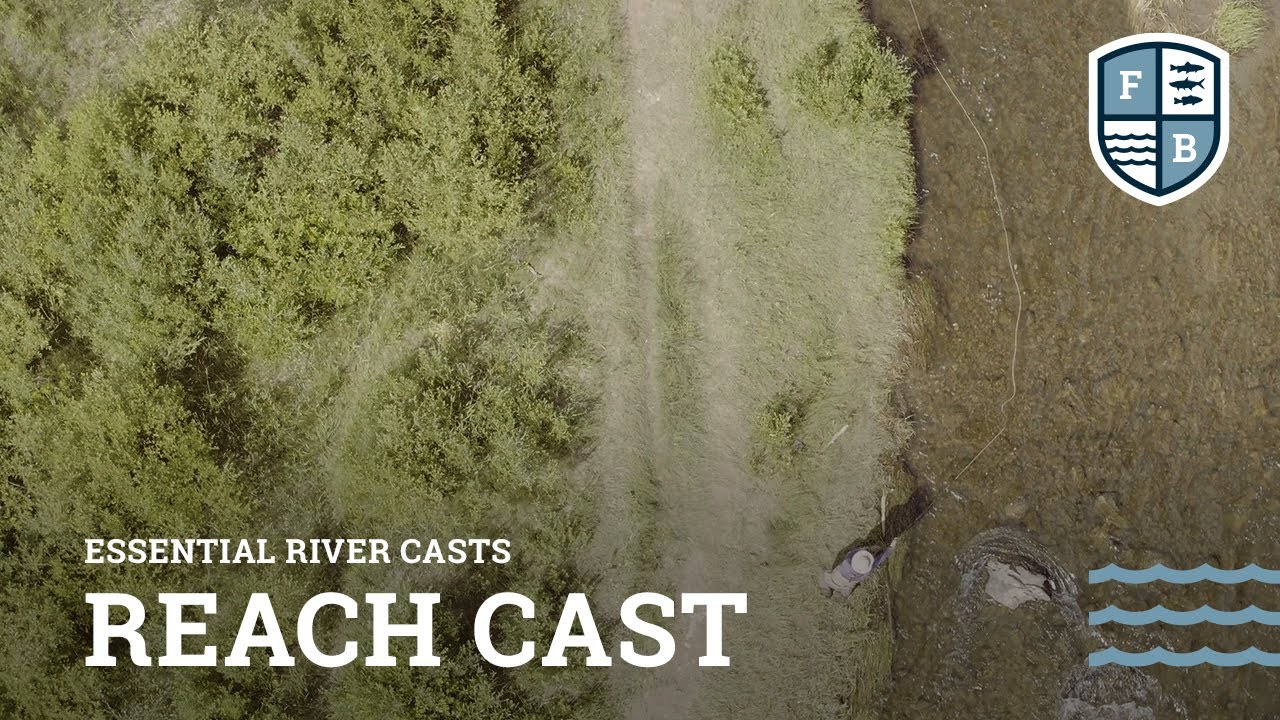
A reach cast is an aerial mend, meaning you reposition the line after the rod stops but before the fly lands. The classic problem it solves is a trout feeding in slow water tight to the far bank, with a band of faster current between you and it. A straight cast lets that fast water grab the belly of your line and drag the fly within a second or two. Swinging the rod upstream after the stop places the line above the fly, so the current has to straighten all that upstream line before drag reaches the fly.
The one mechanic that separates a good reach from a wasted one: feed line up through the guides equal to the size of the reach. Move the rod three feet upstream without feeding line and you pull the fly three feet back toward you. Wait until the forward cast fully unrolls before you swing, then let the slack in your line hand run up through the guides. Point the rod higher for open banks, lower and more sidearm to fit under overhanging brush.
When the Plop Helps, and When It Spooks
A deliberate plop works as a feeding cue because trout sense the disturbance through the lateral line before they see the fly. On broad, faster, or off-color water, that plop can pull a trout across a pool. On low, clear, or heavily pressured water, the same landing empties the bank in front of you.
The plop should come from the fly, not from the line and leader slapping down. On big water, land it with a little authority by pointing the wrist slightly below horizontal at the end of the cast. On small, clear water, use a smaller pattern, land softer, and place the fly off to the side or behind the fish rather than on its head. For the best of both, follow the plop with a dead drift using a tuck or crash cast, which lands the fly with a foot of slack so it drifts naturally after the sound.


Less than $5 a month, with the yearly plan
Full M+ membership — ask the experts, member gear discounts, and new free guides every month. Cancel anytime.
Flies and Rigging for Tight-to-the-Bank Terrestrials
Carry more than hoppers. Studies of trout diets put beetles and ants at about a quarter each, with grasshoppers only five to ten percent, so a Quick Sight Beetle or a parachute ant often outfishes a refused hopper. For hoppers, a low-riding Dave’s Hopper (sizes 6–14) suits softer landings, while a high-floating Chubby Chernobyl or Fat Albert carries a dropper and handles freestone water and boats.
Rig to the water. To turn over bulky foam and put a fly tight to cover, use a shorter, stouter leader around 7.5 feet to 2X or 3X. A rough guide is hook size divided by three for tippet X. On low, clear spring creeks, reverse it: a 10–15 foot leader and 5X–7X tippet. A 9-foot 5- to 7-weight with a weight-forward floating line handles the job; RIO’s Bank Robber line (about $100) is built specifically for presenting terrestrials near bankside cover.
Sometimes the better move is not a bigger reach but a better angle. If the current between you and the fish can’t be solved by any single cast, back out, wade upstream, and present down-and-across so the fish sees the fly before the leader.
Bottom Line
For most bank terrestrial situations, a reach cast plus a controlled, fly-made plop gives you a drag-free drift where the biggest August trout feed. Match the landing to the water, bold on broad or stained flows and soft on low, clear ones, and be ready to reposition when a cast alone won’t do it.
FAQ
What is a reach cast used for in fly fishing?
A reach cast is used to get a drag-free drift when there’s faster current between you and a fish holding in slower water, most often tight to a bank. You swing the rod upstream after the stop and before the fly lands, so the line comes down positioned above the fly and the current takes longer to drag it. It’s the go-to cast for presenting hoppers and other terrestrials to bank-hugging trout.
Does the plop of a hopper attract trout or scare them?
Both, depending on the water. On broad, faster, or slightly off-color water, a distinct plop acts as a feeding cue and can draw a trout across a pool. On low, clear, quiet, or heavily pressured water, that same plop usually spooks fish, so use a smaller fly and a softer landing.
What leader should I use for casting hoppers tight to the bank?
Use a shorter, stouter leader, around 7.5 feet tapered to 2X or 3X, to turn over bulky foam and deer-hair hoppers and place them tight to cover. A rough starting point is hook size divided by three for tippet X, so a size 12 wants about 4X. On low, clear spring creeks, switch to a 10–15 foot leader and 5X–7X tippet.
What rod and line are best for terrestrial fishing?
A 9-foot 5- to 7-weight with a weight-forward floating line is the terrestrial standard, giving you control for the reach and backbone to pull fish out of cover. RIO’s Bank Robber (about $100) is a purpose-built terrestrial line with a fine front taper for accuracy and a head that carries big foam flies.
When is the best time to fish terrestrials?
Late summer through early fall, with August the peak for grasshoppers. Hot, dry, windy days are best because wind blows insects onto the water and concentrates fish on the windward bank. Cooler, wetter days favor ants, beetles, and inchworms, so carry those too.


