
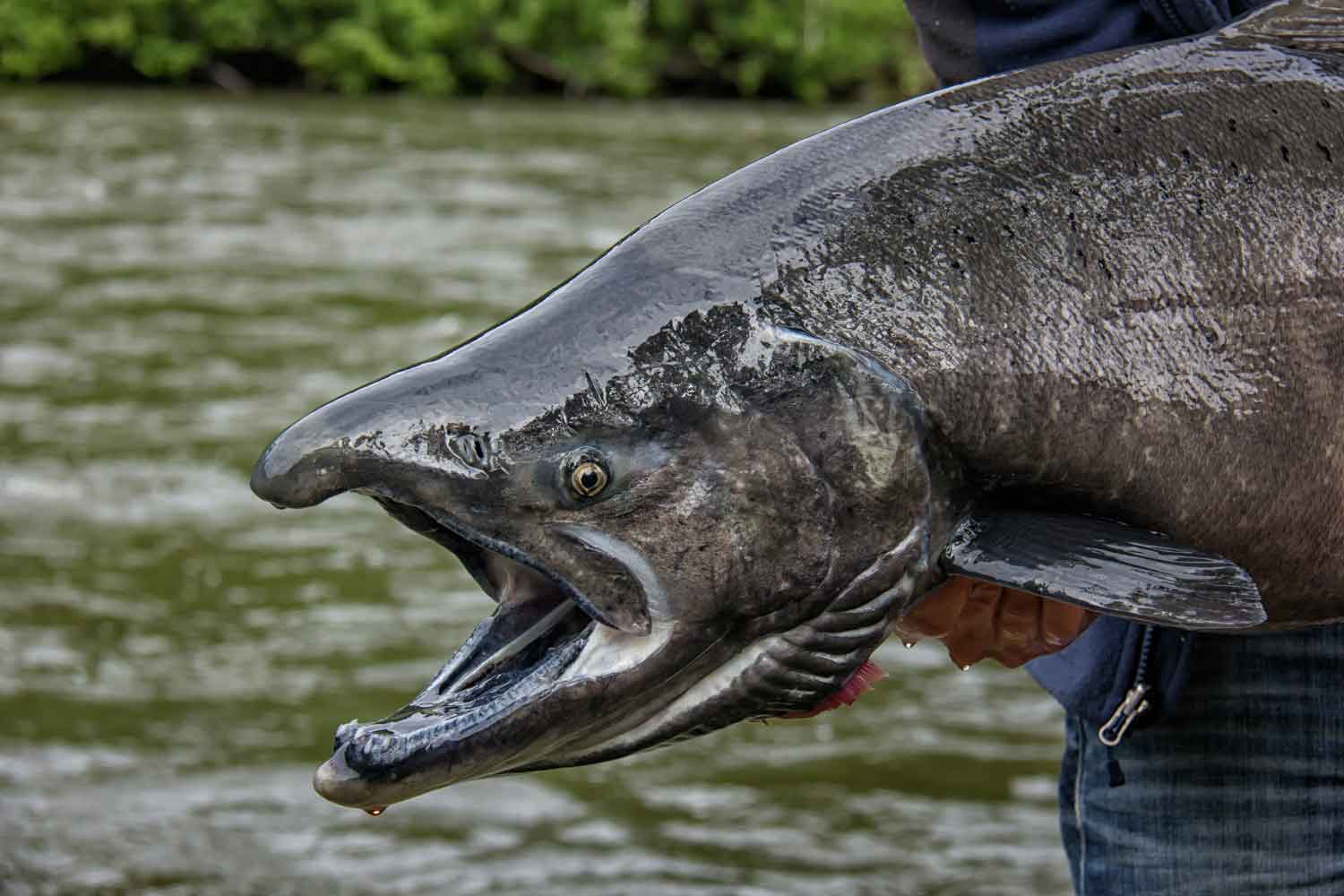
July Alaska lodge trips for king and sockeye salmon should be booked by early spring — multiple Bristol Bay operators already show sold-out weeks for early July 2026, and lodges holding only 12–16 guests per rotation fill quickly when repeat-guest rates exceed 80 percent. The 2026 Bristol Bay sockeye forecast projects 45.32 million fish, making this a strong year to commit, but the window for securing your preferred week is measured in weeks, not months. Here’s what you need to know about timing, pricing, and species strategy to lock down a July seat.
When Do Kings and Sockeye Peak in July?
King salmon in Bristol Bay peak between late June and mid-July. On the Naknek River, ADFG data places the prime king window at June 22 through July 14, with the run’s highest concentration typically around the end of the first week of July. Nushagak River escapement records confirm this pattern — recent 50-percent Chinook escapement dates cluster between June 24 and 29. The sport fishery closes July 31 across Bristol Bay drainages, which means late-July king trips are structurally constrained. If kings are your priority, target the first two weeks of July and accept that you’re competing for the same weeks most king-focused anglers want.
Sockeye offer a wider and more flexible window. The 2026 Bristol Bay sockeye forecast projects 45.32 million fish with an 80-percent prediction interval of 34.29 to 56.34 million — a strong year by any measure, though ADFG notes the forecast will be revised in May and June. On the Kanektok River, sockeye arrive at the end of June and run through the end of July. Late July brings multi-species overlap — kings, sockeye, chum, and pinks may all be in the river — but fresh king numbers taper significantly. Early July gives you the best shot at both species in meaningful numbers on the same trip.

What Does a July Alaska Lodge Trip Cost?
Pricing spans three distinct tiers. Guided day-trip operations on rivers like the Nushagak run $4,000–$5,000 for multi-day king packages. Mid-tier remote camps like Alaska West Lodge on the Kanektok list at approximately $7,750 per week plus roughly $1,100 in charter flights. Full-service fly-out lodges like Crystal Creek Lodge near King Salmon charge $17,800 for a Sunday-to-Sunday week including guided fishing, meals, and daily floatplane access.
On top of lodge fees, budget for a nonresident fishing license ($45 for seven days), the king salmon stamp ($45), Anchorage-to-bush-hub airfare ($600–$1,200), and at least one Anchorage hotel night. Total trip cost ranges from roughly $5,000 for a guided package to $20,000-plus for a premium fly-out lodge week.
Gear and Booking Steps to Take Now
For kings, rig a 9- to 10-weight two-handed rod in the 12.5- to 15-foot range with Skagit heads and 7–15 feet of T-14 sink tips. Leaders should be 15–20 pounds of Maxima Ultragreen straight off the tip — heavy enough for turnover with large marabou tube flies. Hook selection matters at this level: guides favor the AquaTalon size 1, Firehole 714 in size 1–2, and Tiemco 600SP size 1 for durability under jaw pressure. For sockeye, pack a 7- to 8-weight rod with floating line and 10–15-pound mono for fresh fish taking the Mini Krystal Shrimp. Also prepare a weighted system with 6–8 feet of T-17 or T-20 tips and 2–3 feet of 15-pound leader for fish in holding water. Felt soles are illegal in Alaska, and studs are generally unnecessary on Bristol Bay gravel — pack rubber-sole wading boots.

Contact operators directly for current 2026 availability rather than relying on third-party brokers. Most require a 50-percent deposit at booking with the balance due 90 days before arrival — which for July trips means mid-April deadlines are imminent. Check ADFG Emergency Orders before departure, as in-season regulation changes are standard practice in Bristol Bay king fisheries and can supersede printed regulations. Anchorage is your last reliable supply stop, so finalize your tackle list and confirm your Anchorage-to-bush-hub flights as soon as lodge dates are locked.
FAQ
How far in advance should I book an Alaska July salmon trip?
At least 9–12 months in advance for peak July weeks. Lodges with capacities of 12–16 guests and repeat rates above 80 percent sell out early-July weeks first. By late March 2026, multiple operators already show sold-out dates for the first half of July.
Can you catch sockeye salmon on a fly rod in Alaska?
Yes — fresh sockeye will take a fly, particularly early in the run. The Mini Krystal Shrimp on a floating line is the standard approach for willing fish. For stacked sockeye in holding water, a weighted swing system using 6–8 feet of T-17 or T-20 with a 2–3 foot leader of 15-pound mono reaches fish a floating line cannot.
What is the difference between a King Salmon–based lodge and a remote bush camp?
King Salmon–based lodges require a single commercial flight from Anchorage and a short vehicle transfer — relatively simple logistics. Remote bush camps like Alaska West on the Kanektok involve a multi-leg chain: Anchorage to Bethel by turboprop, Bethel to a village airstrip by small plane, then a boat ride to camp. Bush camps offer lower fishing pressure but demand more schedule flexibility for weather delays.
Do I need a king salmon stamp for Alaska?
Yes. Nonresident anglers targeting king salmon must purchase both a sport fishing license ($45 for seven days, $75 for 14 days, or $145 annually) and a separate nonresident king salmon stamp ($45 annually). Both are required before fishing for kings in any Alaska water.
What is the best week in July for king salmon in Bristol Bay?
The first week of July typically coincides with peak king numbers on major Bristol Bay rivers like the Naknek and Nushagak. ADFG data places the Naknek king peak around June 22–July 14, with the strongest concentration near the end of the first week of July. The sport fishery closes July 31, so later July weeks have diminishing king returns.


