
To get a bass fly down without switching to a sinking line, add weight at the fly or the leader: a denser or larger bead, dumbbell eyes, or split shot and tungsten putty pinched about a foot above the fly. Sink rate depends far more on a bead’s diameter and density than its raw weight, so a same-size tungsten bead can nearly triple the sink of a brass one on the identical pattern. That’s how you re-weight a box instead of re-tying it — especially in fall, when cooling water pulls bass off the shallows onto mid-depth flats and a summer fly ends up riding several feet too high.
Why Sink Rate Beats Raw Weight
Two things govern how fast a bead falls, and neither is the number on a scale. The first is diameter: in still water, doubling a bead’s diameter roughly quadruples its sink rate, so adding size usually beats adding weight. The second is density. Measured in grams per cubic centimeter, tungsten is about 19.3, lead 11.34, brass about 8.7. Tungsten is roughly 70 percent denser than lead, which is why a smaller tungsten bead gets down faster than a bigger brass one with less bulk in the way. In bead tests by Kiyoshi Nakagawa, tungsten sank about three times as fast as equivalent brass.
The practical takeaway: the biggest depth gain that doesn’t change your pattern is tying (or buying) your next batch with a same-diameter tungsten bead instead of brass — a vise choice, not a streamside swap. One caveat for moving water — in current, turbulence shrinks the diameter advantage to about 1.4× per doubling, so river smallmouth anglers often need more weight than still-water math suggests.

Three Places to Add Weight
You can add depth at the fly, at the leader, or in the line. For getting flies down to fall bass, the first two usually do the job:
- At the fly (beads, cones, dumbbell eyes). A self-contained weighted fly casts predictably and recasts fast, which matters from a boat. A Clouser on lead dumbbell eyes runs about 1 foot per second; tungsten eyes sink faster for the same profile; bead-chain about half. The trade-off: too much head weight can flatten a fly’s swimming action, and it’s fixed once tied.
- Split shot on the leader. Pinch it about 12 inches above the fly and it preserves the pattern’s built-in action while adding a jig-and-dip on the fall. Slide it toward the fly for a faster drop, away for a slower one. Add shot until the fly just ticks bottom, then remove one size.
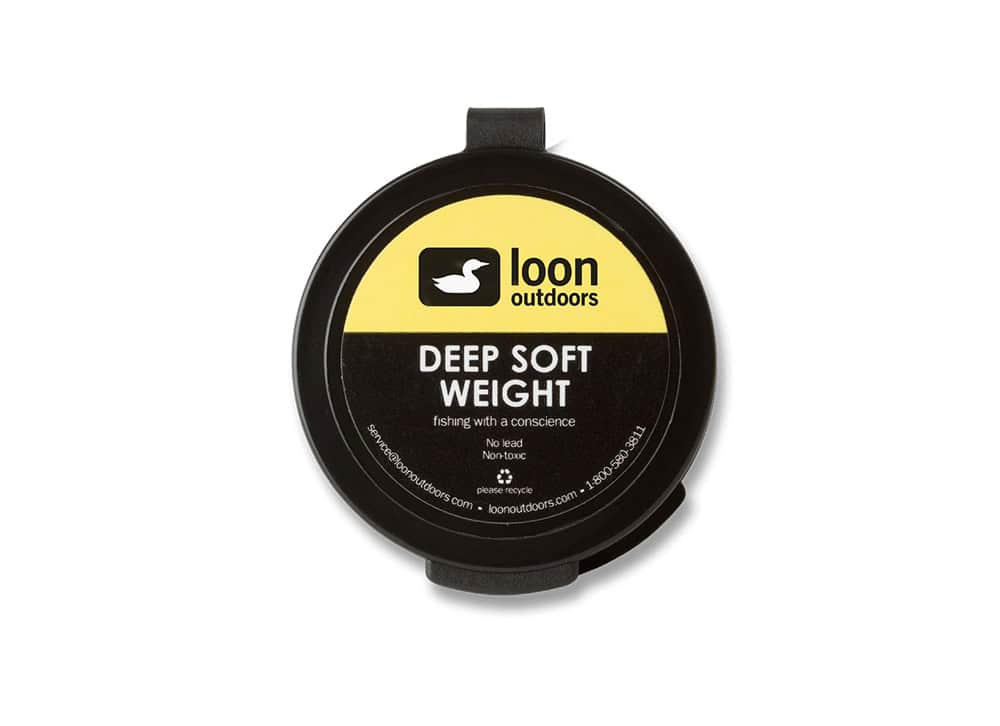
- Tungsten sink putty. Molds to the leader at the same station, casts a touch smoother than hard shot, and hangs up less. Loon Deep Soft Weight (reusable, non-toxic) runs about $15. Ball a little at the hook eye and it turns a bead-less fly into an improvised beadhead.
A sink-tip line is the better tool for sustained deep presentations, but for run-to-run depth changes and quick recasts, weighting the fly and leader is faster and more adjustable.
Lead-Free Options That Still Get Deep
There is no federal ban on lead fishing sinkers — the EPA denied the petition that sought one. Restrictions are state and refuge level: New York, Massachusetts, New Hampshire, Maine, Vermont, and Washington limit some small lead tackle (New York, for example, restricts sale of lead sinkers a half-ounce and under), and some National Wildlife Refuges add their own rules. Check your water before relying on lead.


Less than $5 a month, with the yearly plan
Full M+ membership — ask the experts, member gear discounts, and new free guides every month. Cancel anytime.
When you switch, know that “non-toxic” varies. Only tungsten beats lead for density. Bismuth is about 14 percent less dense than lead — closer to brass — and tin is lighter still, so a same-size lead-free swap can quietly lose sink rate. A small lead dumbbell weighs about 680 mg; the same-size non-toxic barbell about 455 mg, roughly a third less. Step up to tungsten, or up-size the bismuth or tin to make up the difference. Note too that cheap tungsten beads are alloyed with more steel and can sink closer to brass than their label suggests.
To finish, keep weighted flies dry in storage: a waterproof box traps humidity and rusts hooks, so tape a silica-gel packet inside with breathable athletic tape and swap it periodically.
Bottom Line
If your bass flies won’t reach fall fish, add sink rate at the fly or the leader before you buy a new line. Favor diameter and density over raw weight, start split shot about a foot above the fly and add until it ticks bottom, and step up to tungsten where you need lead-free depth. Run a quick countdown-to-depth test first to confirm the problem is depth, not presentation.
FAQ
How do I make my bass flies sink faster without buying a sinking line?
Add weight at the fly or leader. Swap to a denser or larger bead (tungsten sinks about three times faster than brass at the same size), tie in dumbbell eyes, or pinch split shot or tungsten putty about 12 inches above the fly. Add weight until the fly just ticks bottom, then back off one size.
Are tungsten or brass beads better for bass flies?
Tungsten sinks faster because it’s about 70 percent denser than lead and more than twice as dense as brass, so a smaller tungsten bead gets down quicker with less bulk. Brass is cheaper and fine when you want a slower fall or a bigger profile. For deep fall bass on mid-depth flats, tungsten is usually the better choice.
How much split shot should I put on a bass streamer, and where?
Start with one small shot about 12 inches above the fly and add in small increments until the fly ticks bottom on the retrieve, then remove one size. Slide the shot closer to the fly for a quicker, more abrupt drop; slide it farther away for a slower, more level fall.
Is there a federal ban on lead fishing weights?
No. The EPA denied the petition seeking a national ban, so there is no federal ban on lead fishing sinkers. Some states — including New York, Massachusetts, New Hampshire, Maine, Vermont, and Washington — restrict small lead tackle, and some National Wildlife Refuges have their own rules, so check local regulations.
Why do my weighted flies rust in the box?
Waterproof fly boxes seal moisture in as well as out, so a wet fly stored in one rusts hooks and dulls beads. Tape a silica-gel desiccant packet inside the box with breathable athletic tape and re-dry or replace it periodically to keep the interior dry.


