

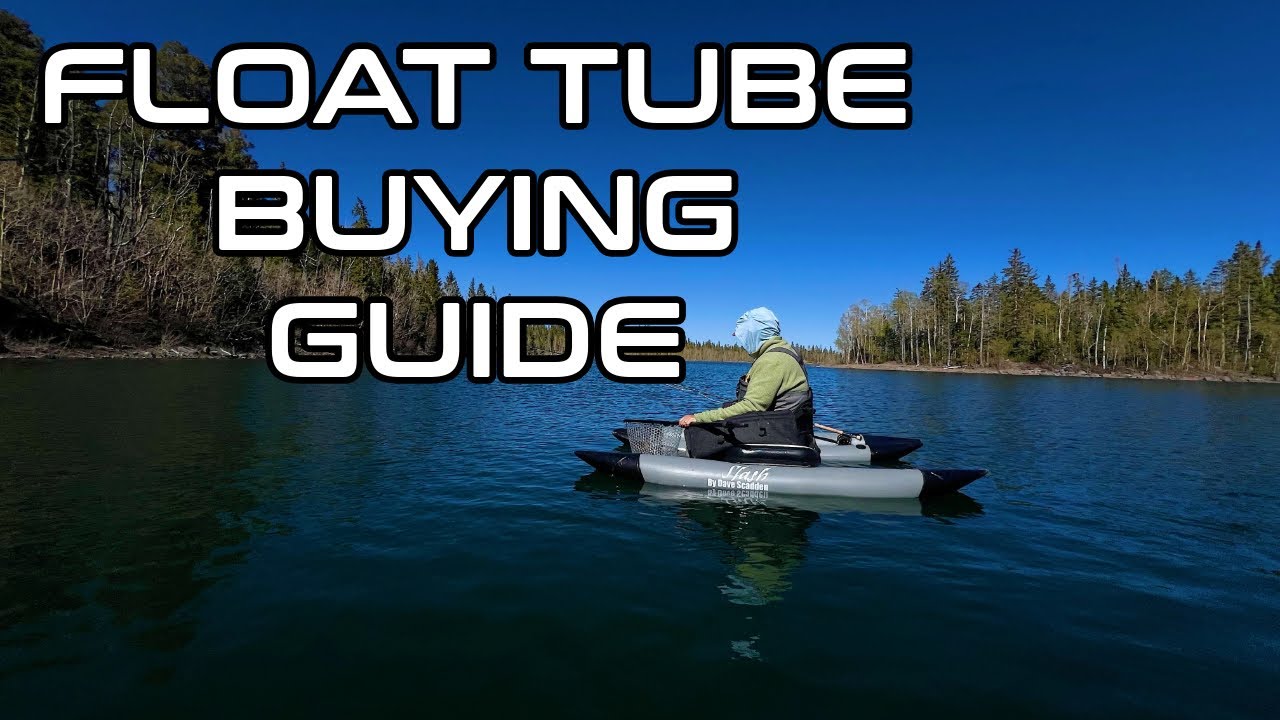
Float tubes give pond fly anglers access to staging fish, offshore structure, and presentation angles that are impossible to reach from shore — and April’s pre-spawn conditions make that positional advantage more valuable than at any other time of year. Water temperatures between 45°F and 60°F push crappie onto transition structure, bass into warming shallows, and panfish toward the earliest weed edges, often over subtle depth breaks and mid-lake humps that only a float tube can reach. Entry-level tubes like the Caddis Nevada (about $120) or Classic Accessories Teton (about $125) weigh under ten pounds and fit in a hatchback, while the Outcast Fish Cat 4 LCS (about $315) adds durability, dual air chambers, and a 250-pound load capacity for anglers who want a more serious platform.
What Rod, Line, and Flies to Use From a Float Tube
An 8-weight rod handles most pond bass flies — hair bugs, bulky streamers, and articulated baitfish patterns demand the backbone — while a 6-weight covers panfish and smaller presentations. Pair the heavier rod with a full-sink line in the Type III to Type VI range; a RIO Mainstream Type 6 sinks at six to seven inches per second, letting you count down and probe six to twelve feet of water column on a slow drift. Leaders should be short — four to six feet of 0X to 2X fluorocarbon — since the sinking line does the depth work.
For flies, a Clouser Deep Minnow in sizes 4 through 1/0 covers baitfish imitation across species. A Game Changer in the three- to five-inch range triggers reaction strikes from bass holding on structure. Jack Gartside’s Gurgler handles surface windows during midday warming periods when bass or panfish push shallow. For suspended, neutral fish — common in April’s colder water — a Balanced Leech in size 8 or 10 fished under a strike indicator eight to twelve feet deep is one of the highest-percentage methods available.
A stripping apron is essential, not optional. Float tubes put your fly line at water level where it tangles in fins, catches weed fragments, and fouls on every retrieve without one.
How to Position and Drift a Float Tube in April
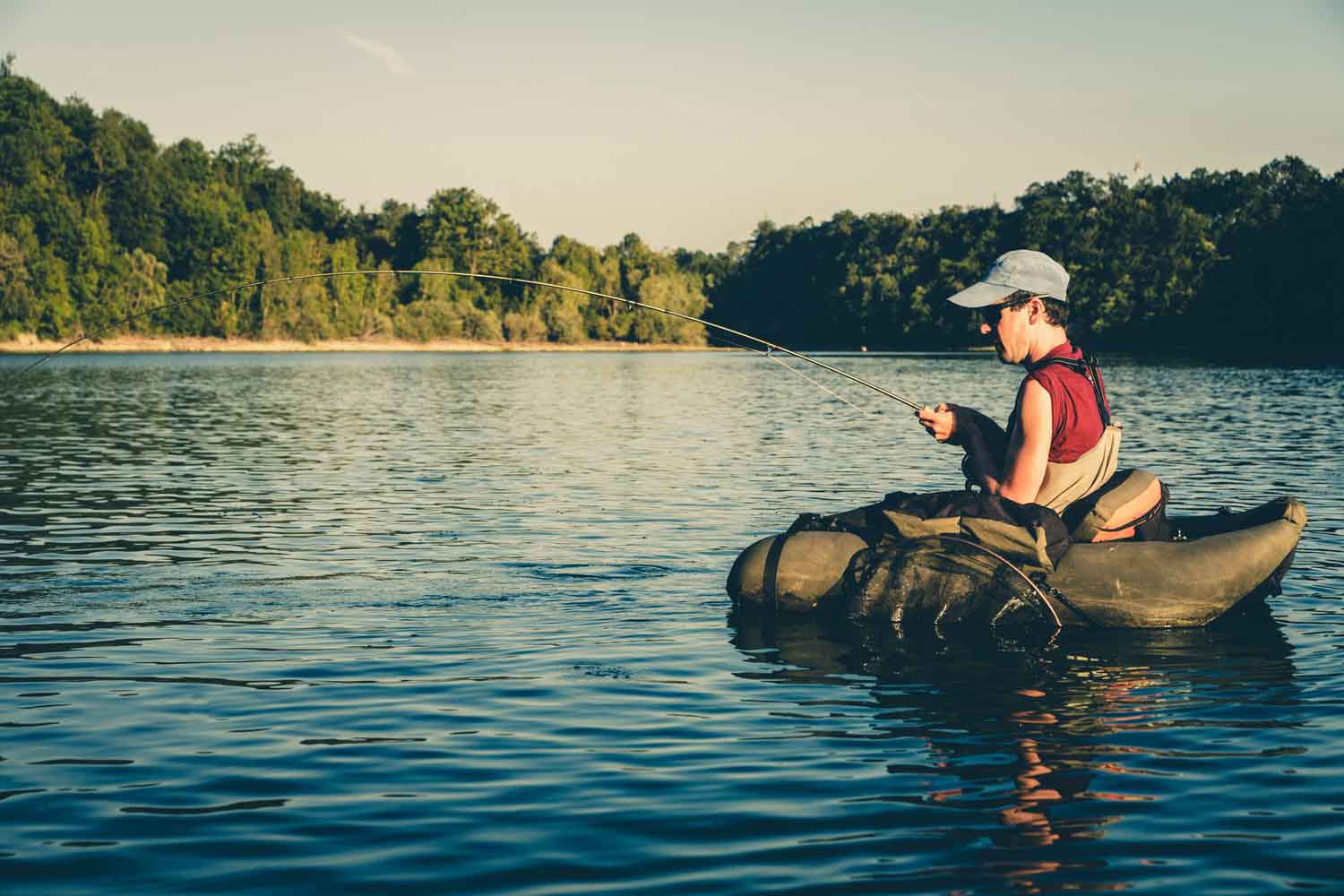
The biggest mistake float-tube anglers make is kicking straight for deep water on launch. The shallow nearshore zone — the first twenty to fifty yards — is often the most productive water in April, where warming, emerging vegetation, and forage concentrate together. Fish inward before you fish outward, and enter the water quietly.
Use wind to your advantage by drift-fishing along contours and structure edges with periodic pauses. The “hang” — a deliberate stall that lets your fly change angle and sink — is a proven strike trigger in stillwater. Most eats come during the pause, not the strip. In winds above fifteen miles per hour, a drogue slows your drift, maintains your orientation, and keeps you over productive water longer.
Wind direction matters, but not the way conventional wisdom suggests. Downwind banks can concentrate forage, but strong wind resuspends bottom sediment and reduces visibility. Moderate wind is the sweet spot — enough to create drift lanes without destroying water clarity.
April Float Tube Safety: What Most Anglers Get Wrong
Water temperatures between 50°F and 60°F feel manageable in neoprene but fall squarely in the cold-shock danger zone flagged by both the National Weather Service and the U.S. Coast Guard. Cold shock — the involuntary gasp reflex and loss of motor control — happens before hypothermia and is the real early-season hazard. Wear your PFD, carry a whistle, and plan your wind exit before you launch. The Coast Guard has formally classified float tubes as potential “vessels,” and PFD requirements vary by state — New Mexico requires wearing one on any float tube, while Wyoming largely exempts them. Check local regulations before you go.
Frequently Asked Questions
What weight fly rod is best for float tube pond fishing?
An 8-weight is the best all-around choice because fly size drives rod selection, and most pond bass flies — streamers, poppers, and articulated patterns — need that backbone to turn over. Drop to a 6-weight for panfish, small streamers, and nymph rigs where delicacy matters more than power.
Do I need a PFD on a float tube?
Yes — and you should wear it, not just carry it. The U.S. Coast Guard considers float tubes potential “vessels” under federal definitions, and a PFD tethered to the tube does not meet “readily accessible” standards. State requirements vary: some mandate wearing a PFD on any inflatable, others exempt float tubes entirely.
How deep can you fish from a float tube?
A full-sink line like the RIO Mainstream Type 6, which sinks at six to seven inches per second, lets you effectively probe eight to twelve feet on a typical slow-drift retrieve. For deeper targets, count down longer before stripping, or switch to a balanced fly under an indicator set at the target depth.
When is the best time of day to float-tube fish ponds in April?
Late morning through early afternoon typically produces the best fishing. April’s warmest two- to four-hour window concentrates both forage and predators in shallow zones, especially dark-bottom bays and protected coves that heat faster than the main basin. Watch for a two- to three-degree temperature bump as your cue.
How much does a float tube cost for fly fishing?
Entry-level float tubes start around $120 to $125 for models like the Caddis Nevada or Classic Accessories Teton. Mid-range options like the Outcast Fish Cat 4 LCS run about $315 with dual chambers and better durability. Premium rowable designs like the Outcast Cruzer Max reach approximately $700.


